

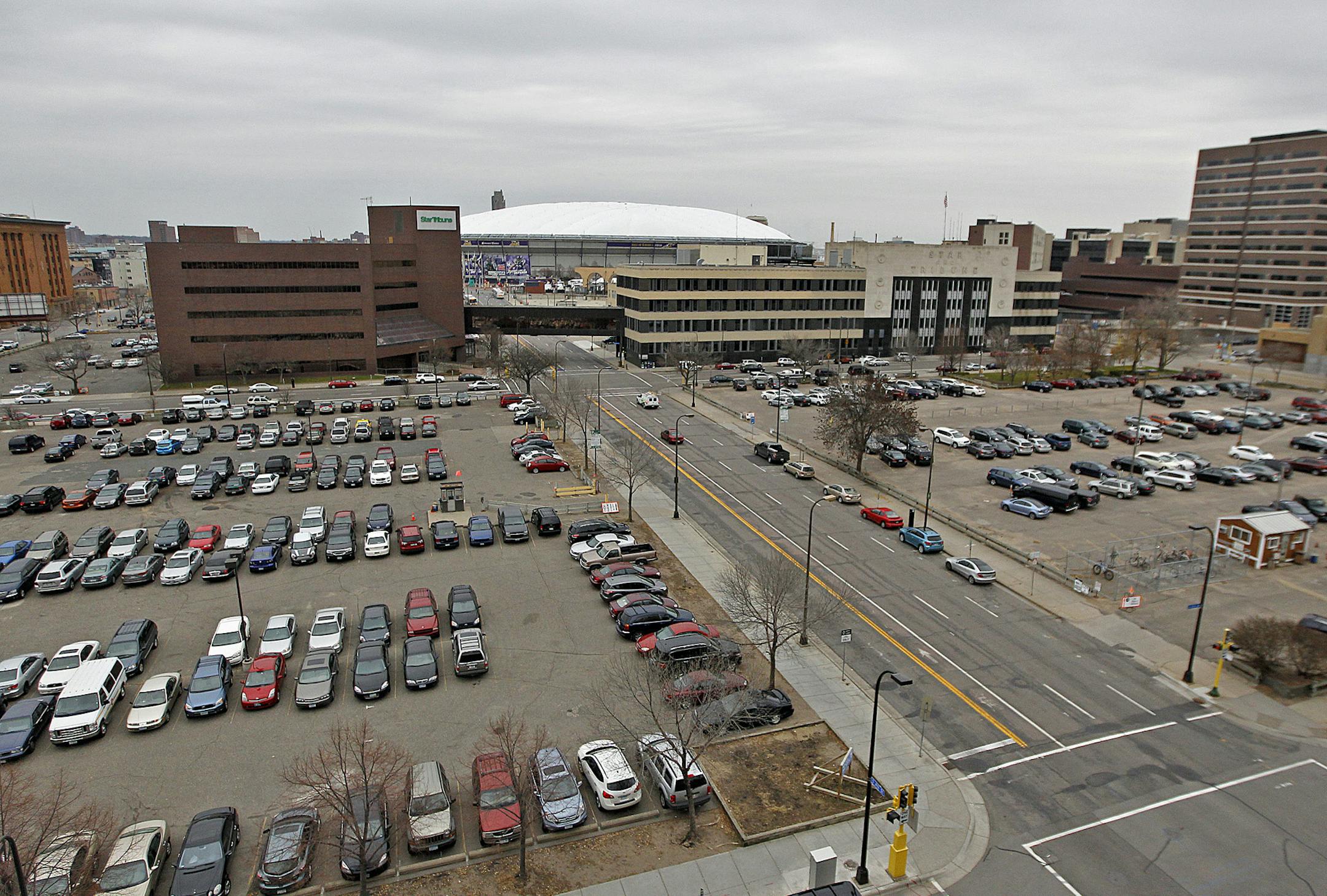
The largest downtown Minneapolis real estate project in a generation remains plagued by unresolved issues as city officials scramble to get it approved before City Hall leadership changes in just over six weeks.
The $400 million proposal to build a massive mixed-use development, parking ramp and park adjacent to the new Minnesota Vikings stadium is a complicated work in progress. The City Council has not yet reviewed the details of the public financing package, primary office tenant Wells Fargo & Co. is demanding controversial signage and historic preservationists Tuesday tried to save the Star Tribune building, which is in the middle of the project.
Many competing players have a stake in the outcome, including the city, developer Ryan Cos., Wells Fargo, the Vikings and the Minnesota Sports Facilities Authority, the public body overseeing construction of the stadium. Called Downtown East, the private development includes two office towers, apartments and retail space on five blocks now owned by the Star Tribune.
"It's one of the largest and most complicated development projects that has come before us in many years, " said Jeremy Hanson Willis, the city's chief development official. "So there are many issues still under discussion that need to be resolved."
Hanson Willis said the goal is to win City Council approval by the end of the year, before seven new council members assume power in January. Given that timetable, a groundbreaking is anticipated in the spring. But time is running short.
"We don't have a finance plan in front of us," said Council Member Lisa Goodman, head of the council's Community Development Committee. "And I'm not going to be party to moving something forward that's not specific and detailed."
But Rick Collins, Ryan's vice president of development, says a last-minute scramble is common in complicated projects like this one. "I think there's a concerted effort from all parties to overcome these issues," he said.
The public component of the deal involves the city borrowing about $65 million to help build a 1,625-spot parking ramp and basic public park, using expected parking revenues to pay off the debt. Hanson Willis said that the total that the city will need to borrow has changed but not significantly.


