

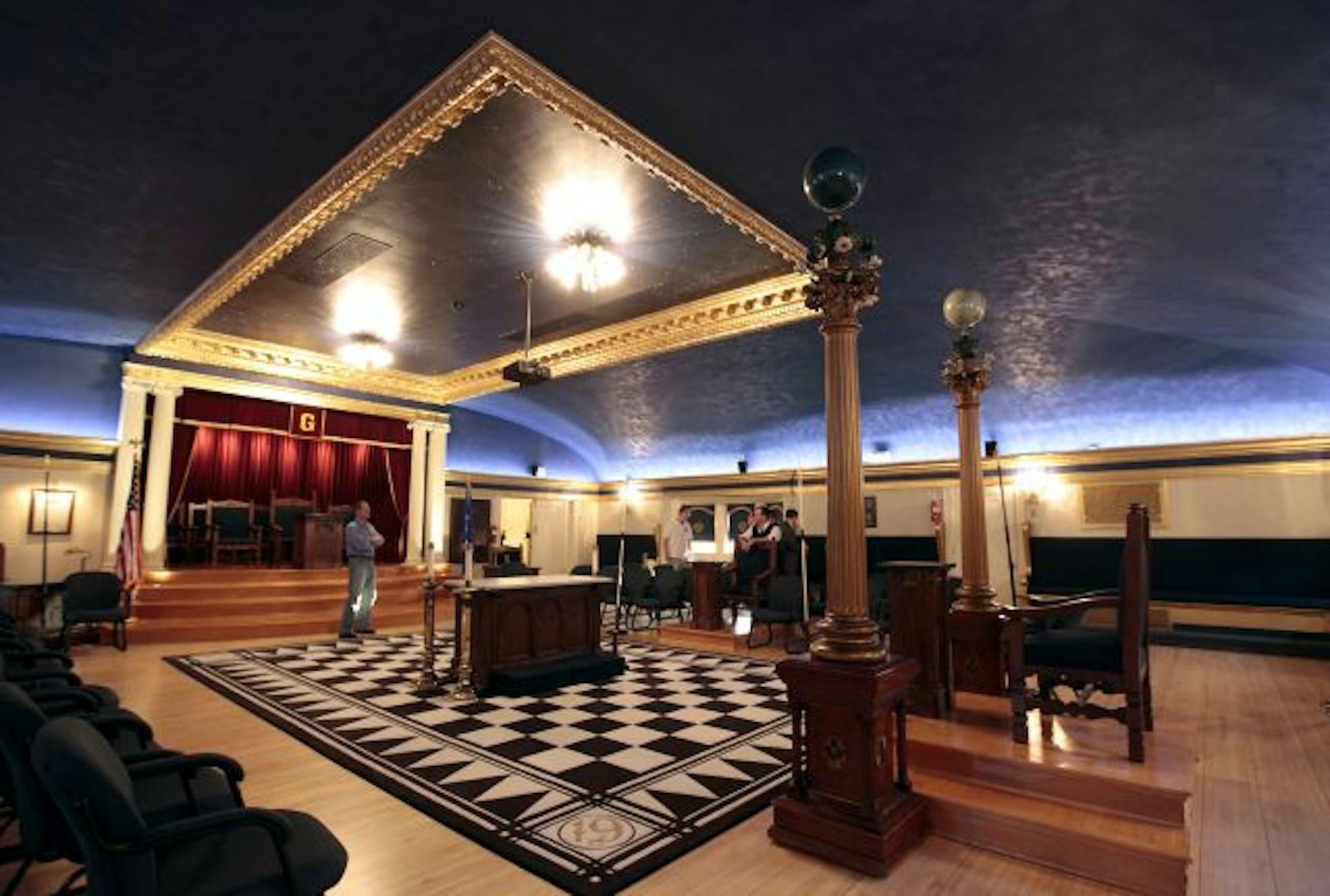
The Freemasons of Lodge 19 meet regularly in an old mansion, in a room filled with pomp and circumstance worthy of Harry Potter's Hogwarts: pillars topped by terrestrial and celestial spheres, throne-like chairs, a checkerboard floor pattern, and ominous-looking symbols -- pyramids, all-seeing eyes, a square and compass surrounding a letter "G."
Just who are these mysterious men who call each other "brethren," and what kind of skullduggery are they up to? Could this brotherhood be as full of deception and mayhem as the action involving Freemasonry in Dan Brown's latest novel, "The Lost Symbol"?
No such luck. After a recent Lodge 19 evening session, a huge wooden door creaked open to reveal ... a bunch of normal-looking guys standing around talking. Their conversations ranged from golf, boating, the $25,000 they recently raised to build a new playground, and the dinner of braised beef tips, egg noodles and blueberry cobbler they were about to enjoy.
The group included a radio programmer, a real estate agent, a lawyer, a doctor and a salesman. The mood was convivial, amicable, fraternal. One possible contributor to that feeling: "No talk of politics or religion allowed," said Nick Leavy, acting senior warden.
Brown, whose sequel to "The Da Vinci Code" sold more than 2 million copies in its first week, has once again stirred up interest in the Freemasons. This time around, hero professor Robert Langdon must hunt down a hidden pyramid in Masonic-symbol-rich Washington, D.C., and the villain is a Freemason who also happens to be a freak hellbent on becoming God.
The Masons, a centuries-old fraternity with worldwide reach, have sparked rumors of occult worship and undue government influence for ages, partly because of the shroud of secrecy required of members. They date to the unions of stoneworkers and architects who built King Solomon's temple, who by living and working together developed an unbreakable loyalty and a common code of conduct.
Not much secrecy left
To become a Mason, you must petition a lodge, whose members will do a background check (no felons allowed). Once initiated into the "first degree," members can work toward greater degrees -- 33 is the highest and a great, rare honor -- through study, good works and reputation, a sort of exalted version of Boy Scout badges for men.

