
Not all Black women jurists are the same

Judge them by the content of their life experiences, not the color of their skin.

February 2, 2022 at 11:45PM
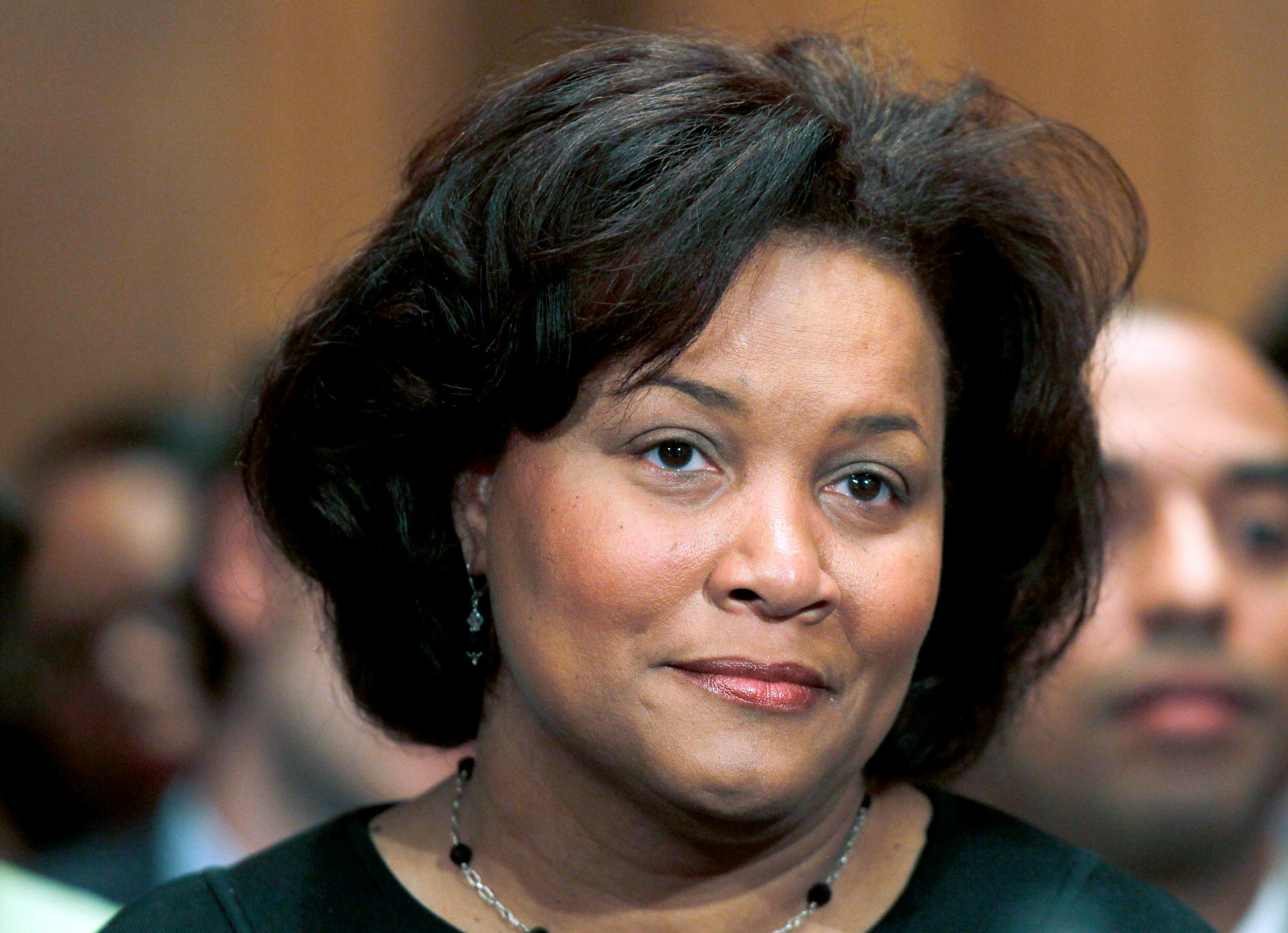
Judge J. Michelle Childs, who was nominated by President Barack Obama to the U.S. District Court, listens during her nomination hearing before the Senate Judiciary Committee on Capitol Hill in Washington, April 16, 2010. President Joe Biden has already narrowed the field for his first U.S. Supreme Court pick. One potential nominee is Childs, currently a U.S. District Court Judge for Southern California, who has been nominated but not yet confirmed to serve on the U.S. Court of Appeals for the District of Columbia Circuit. (Charles Dharapak, Associated Press/The Minnesota Star Tribune)

Leondra Kruger is the daughter of two doctors. She graduated from Harvard College and attended law school at Yale. Ketanji Brown Jackson's father was a lawyer, her mother a school principal. She went to Harvard too, for college and law school.

In other words, these judges are pretty much like everyone else on the U.S. Supreme Court — where eight of nine justices hold degrees from Harvard or Yale — except for one thing: Kruger and Jackson are Black women.

So is J. Michelle Childs. But Childs' father died when she was young, and her mother worked for telephone companies. She was the first person in her family to go to college, earning scholarships to attend the University of South Florida and the University of South Carolina School of Law.

Who would bring more "diversity" to the Supreme Court?

The obvious answer is why President Joe Biden should appoint Childs to replace retiring Justice Stephen Breyer. Childs has experienced a wider array of challenges than the other two leading candidates, who were born into much more privileged circumstances.

Her story also reminds us where Democrats need to go on the thorny question of diversity, which we too often imagine simply in racial terms. Of course we should want our Supreme Court to "look like America," as we often say. But we should want it to live like America too.

Most Americans aren't raised by lawyers and doctors. And most don't go to Harvard, Yale or any other elite private school.

Institutions composed only of people with that pedigree are not diverse, no matter their racial makeup. The people look different but come from the same places.

The Supreme Court recently agreed to hear a lawsuit against affirmative action policies at Harvard, where 71% of Black and Latino students come from wealthy backgrounds. The students share the experiences as their well-to-do white peers: prep schools, summer camps, international travel.

That contradicts the spirit of affirmative action, which is premised on the idea that people "do not learn very much when they are surrounded only by the likes of themselves," as former Princeton President William Bowen wrote. His comment was cited approvingly by Justice Lewis Powell in Regents of the University of California v. Bakke, the landmark 1978 Supreme Court case that upheld affirmative action.

That's why I want Biden to select Childs. When the Supreme Court hears the Harvard affirmative action case I'd like there to be at least one justice who isn't a product of rich-kid schools, who could encourage the others to "re-examine even their most deeply held assumptions about themselves and their world," to quote Bowen again.

To be clear, contenders Kruger and Jackson would surely bring a different set of experiences to the Supreme Court, by virtue of their race and gender. But they would not bring as much diversity to the court as Childs. And in the run-up to the November election, her selection would also send a wider signal about what Democrats value: differences in socioeconomic background, not just in race.

"One of the things we have to be very, very careful of as Democrats is being painted with that elitist brush," warned U.S. Rep. James Clyburn, Childs' most prominent advocate and a fellow South Carolinian. "When people talk to diversity, they are always looking at race and ethnicity — I look beyond that to diversity of experience."

So should we all.

Jonathan Zimmerman teaches education and history at the University of Pennsylvania. He is the co-author, with Signe Wilkinson, of "Free Speech and Why You Should Give a Damn." He wrote this for the Chicago Tribune.

about the writer

about the writer

Jonathan Zimmerman

More from Commentaries

See More
card image
Alex Kormann/The Minnesota Star Tribune

To me, the run of stories in 2025 has an uncomfortably familiar sound, yet each episode has come and gone with barely a flicker of concern.

card image
card image