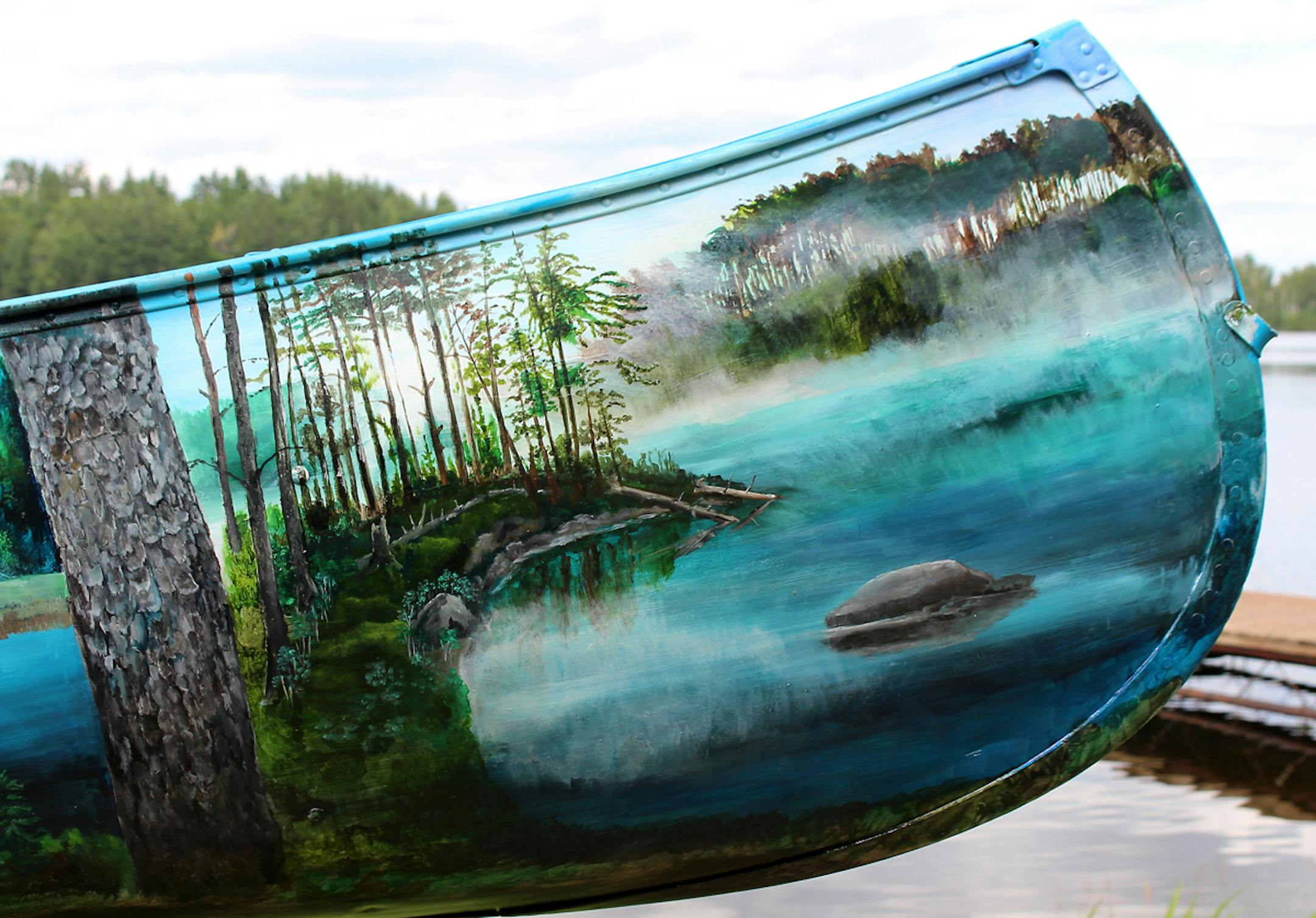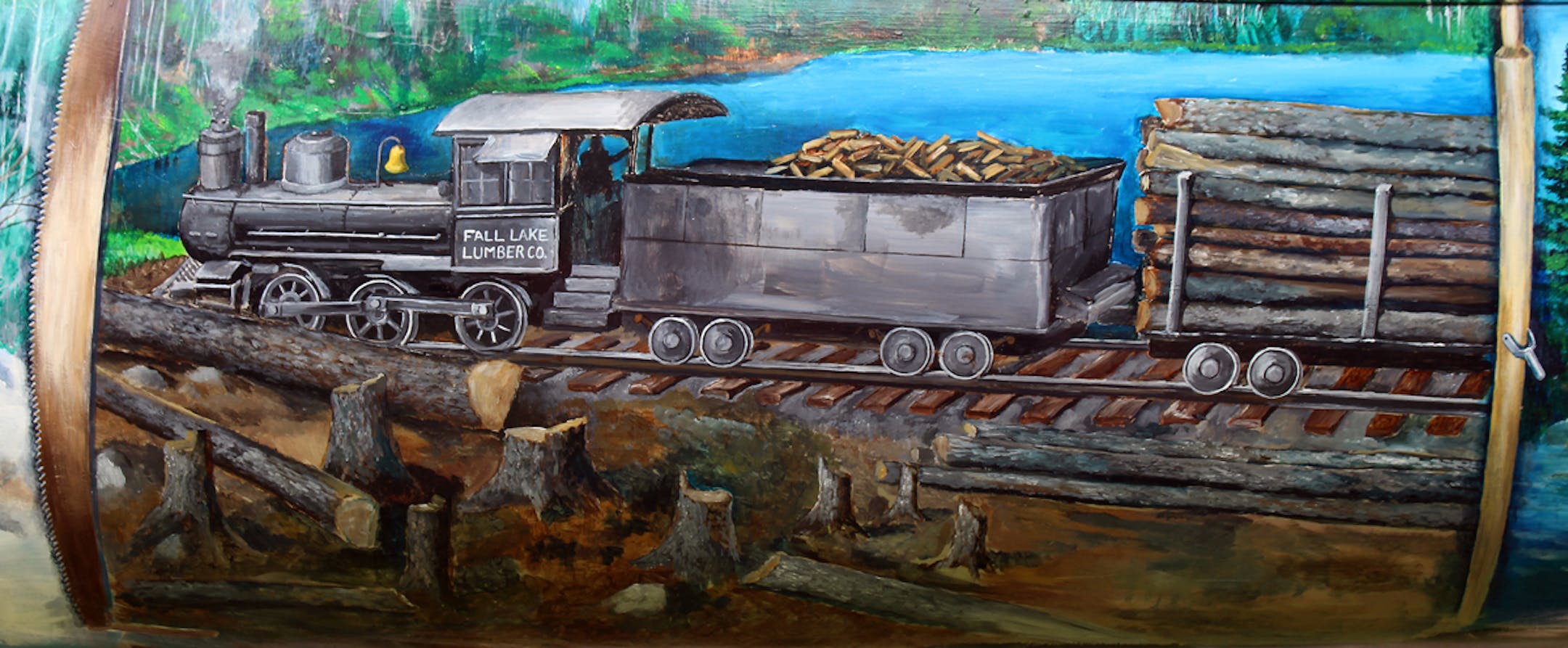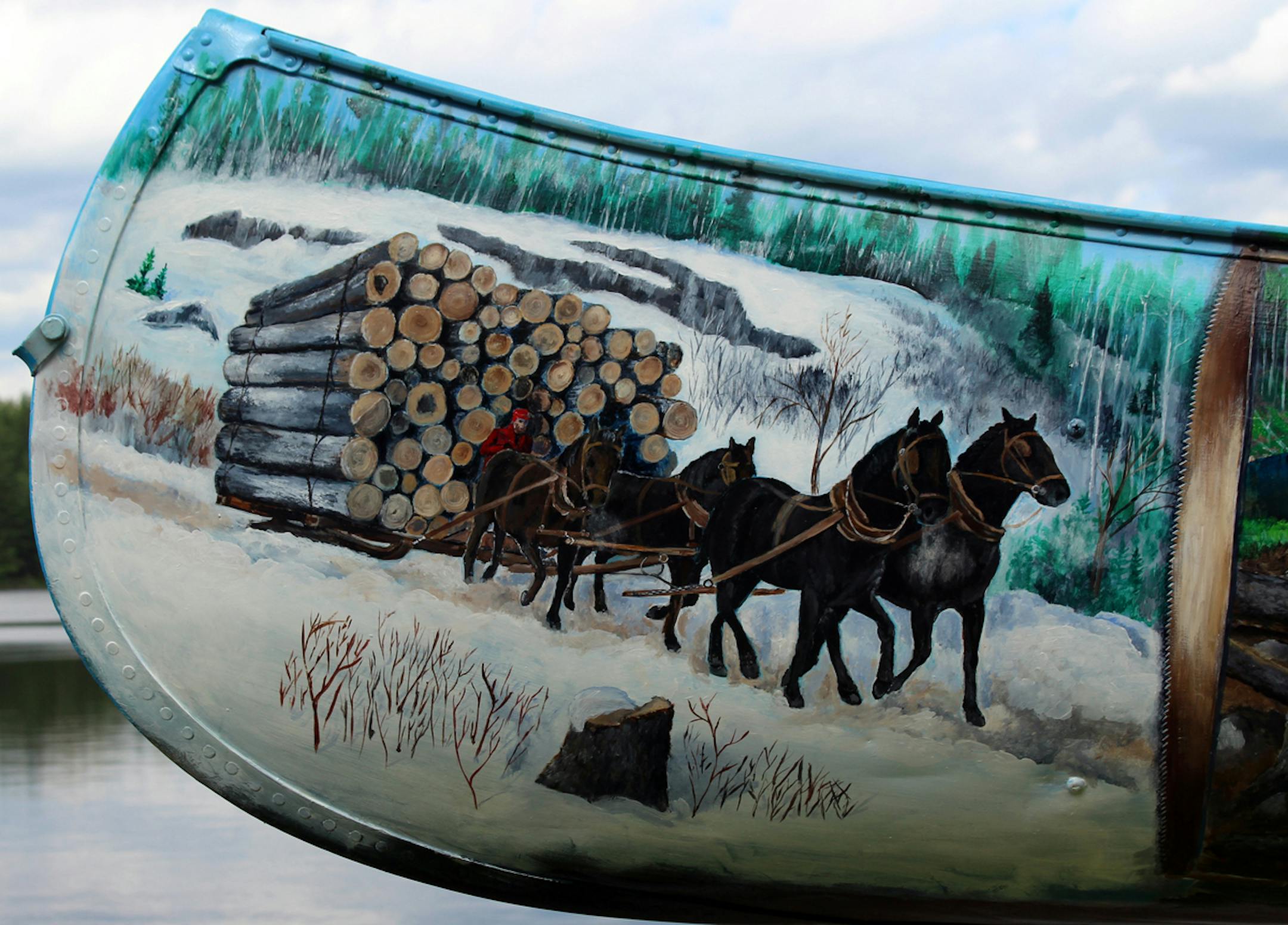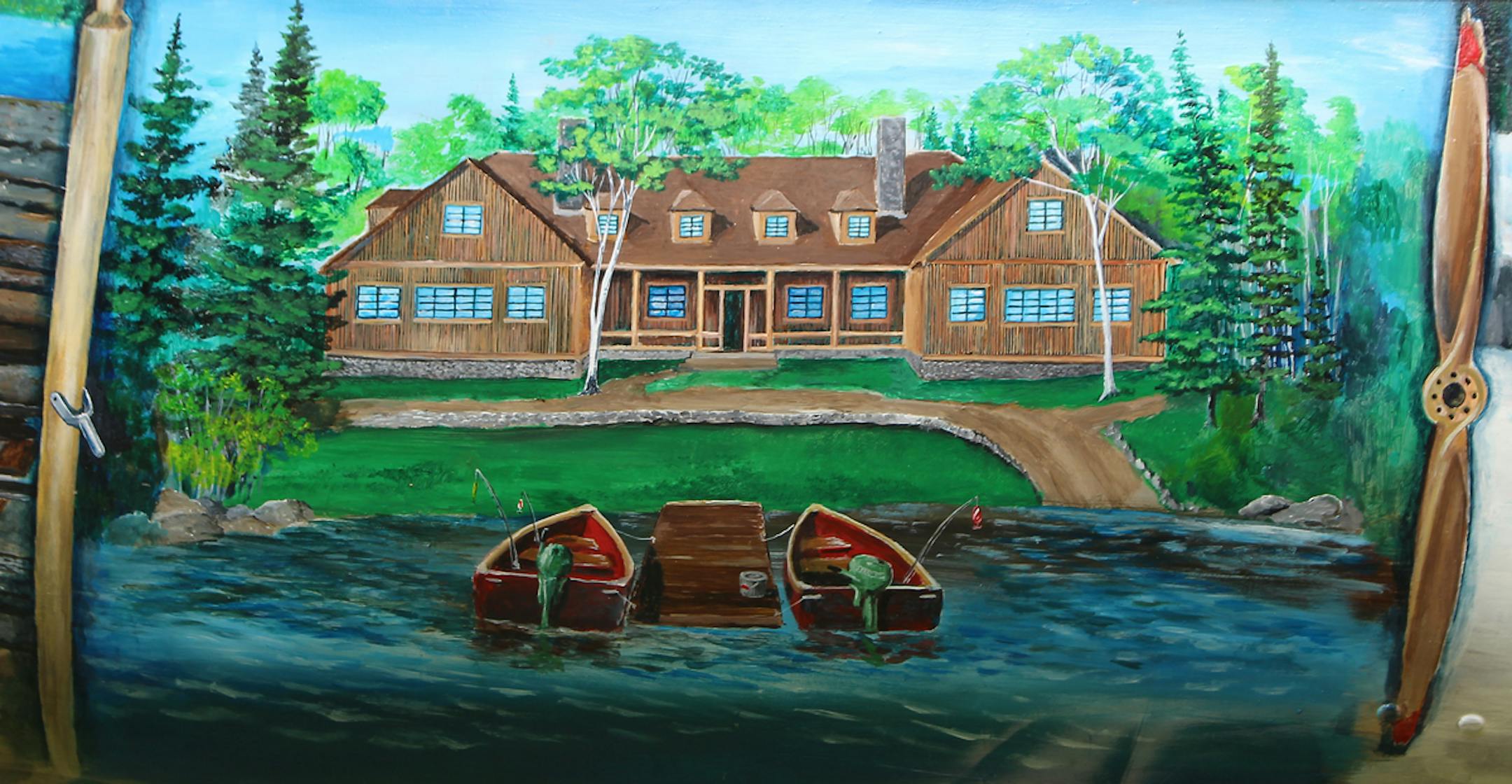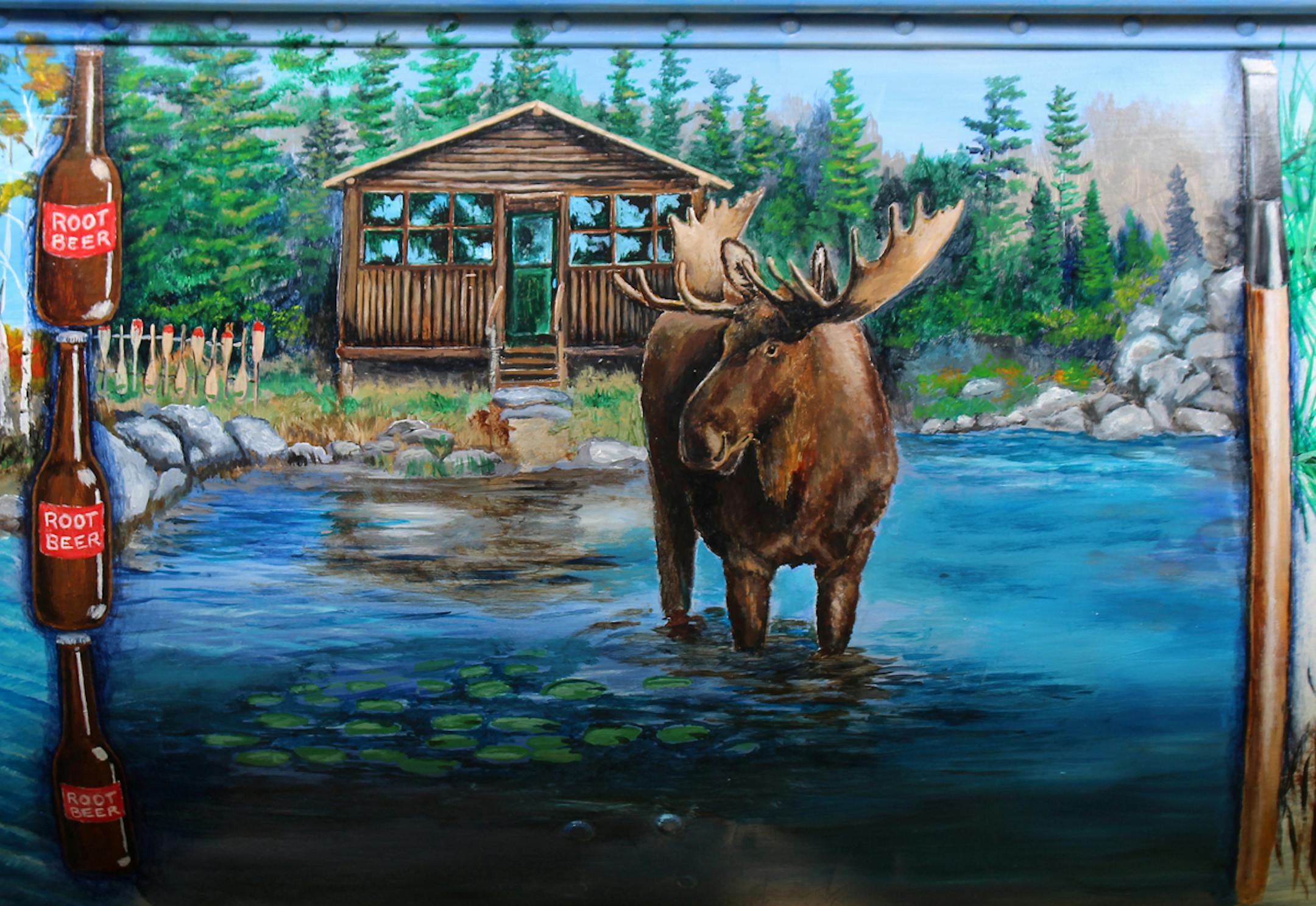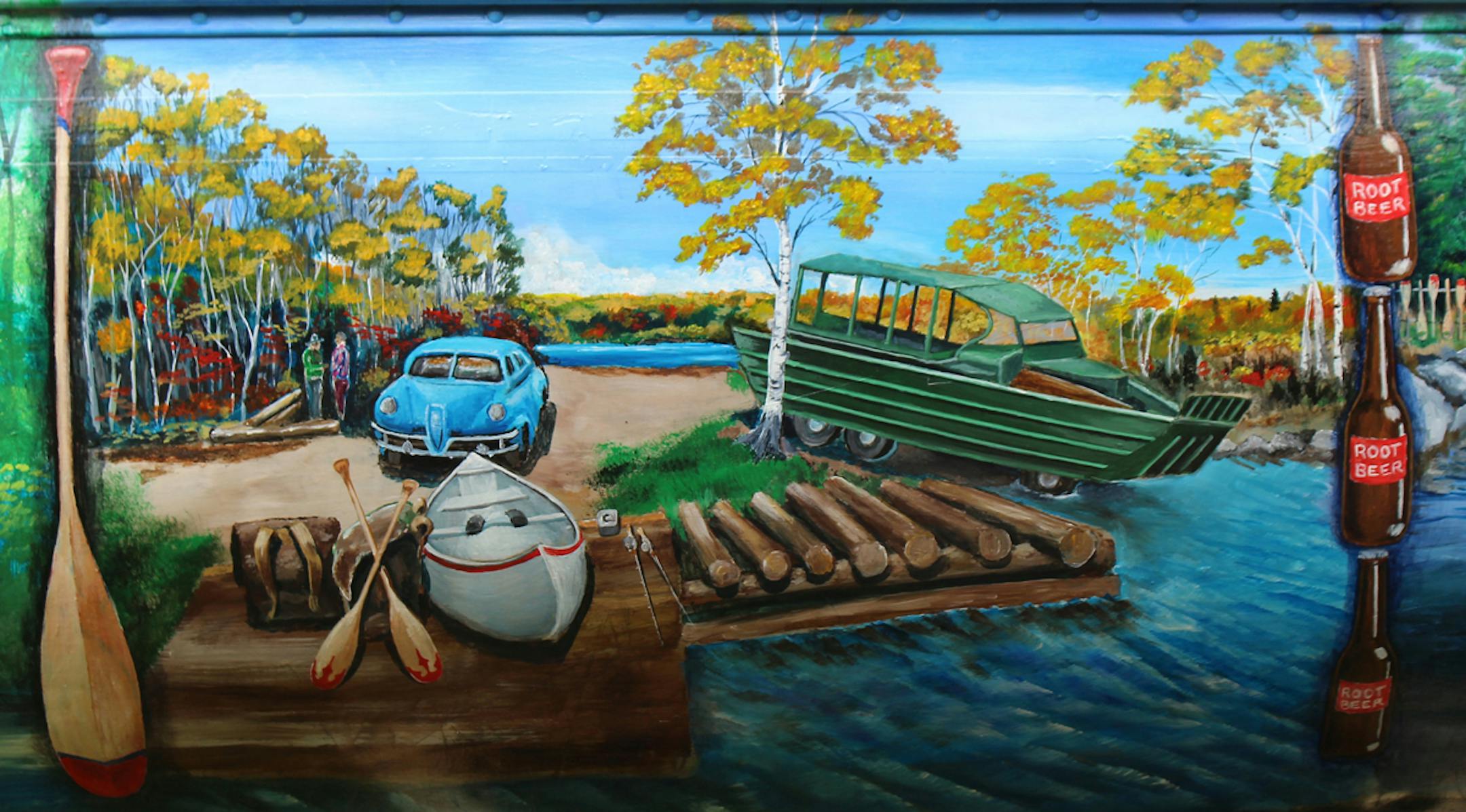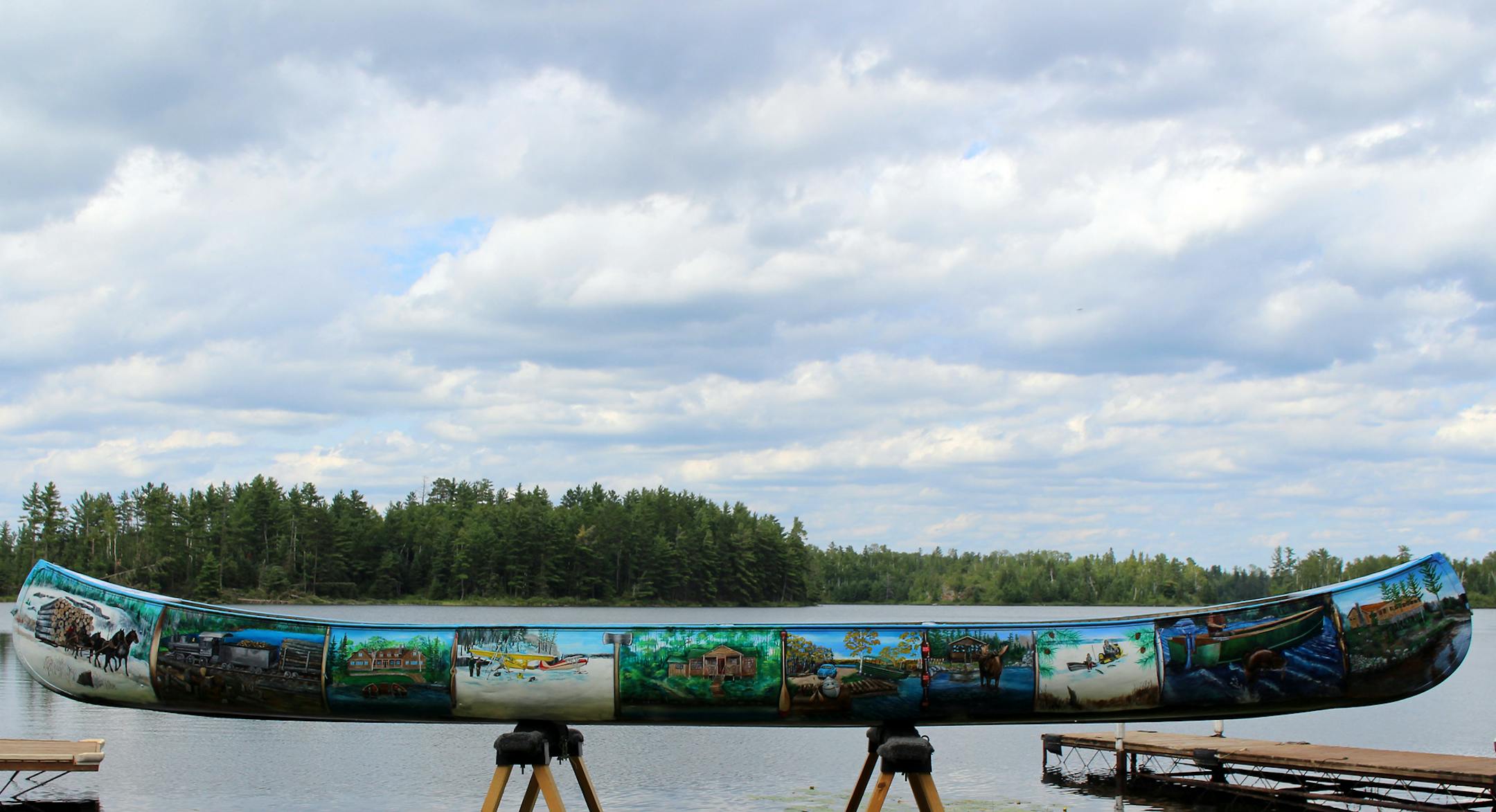
Wilderness guide and painter Joe Baltich Jr. had to choose between his passions. He painted throughout college but eventually stopped for 32 years to make a living as a fishing guide and operate Northwind Lodge outside of Ely. However, the great outdoors inspired him to return to painting in 2015. Then, during the doldrums last winter, he went creative. He followed both callings and turned canoe into canvas.
Baltich initially intended to paint only wildlife on both sides of a 17-foot Grumman canoe. But his employee, Jackie Hartleben, suggested he use the starboard (right) side to portray images from the current Boundary Waters Canoe Area Wilderness. The panels on the port side could then represent the BWCA 100 years before 1978 when it became a federal wilderness. So he took to research, summoned family experience, and created The Painted Canoe of Ely.
Baltich explained his goal was to artistically summarize Ely-area history onto one resource that books forgot and many people don't know: A time when what is now the BWCA was a center of commercial exploits unfettered by government.
"The big misconception is that this has been the pristine, untouched wilderness since the dawn of time," he said. "That couldn't be farther from the truth because the whole thing was clear-cut."
Baltich said lumber resources were in demand during the early days of local mines for shoring timber and constructing buildings and homes. Several timber companies began massive logging operations. Twenty-two resorts, some posh and others rough, plus private cabins resided there. The canoe's history lesson also includes stories of wolf eradication by airplane. At one time, wolf hunting was legal, common and profitable, paying a $35 bounty per wolf.
Baltich emphasized the importance of the Grumman brand canoe in establishing the boundary waters. During World War II, Grumman built the fast, efficient, Hellcat fighter plane. But when the war ended, the company retained its employees by channeling aerodynamic technology into hydrodynamics. No alternative canoe could compete. By standards of the time, a Grumman's light weight (73 pounds) and its durability allowed average people to more easily discover the wilderness.
"That's why my theory is that the wilderness is bigger now than it would have been if this canoe had not been invented," Baltich said.
Today the BWCA offers less commotion and more solitude. As another way of savoring those moments, Baltich formed a nonprofit called Into the Brush, a painting program he teaches at Northwind Lodge. He paddles participants into the wilderness for a couple hours of artistic observation, then they return to paint what they experienced.