

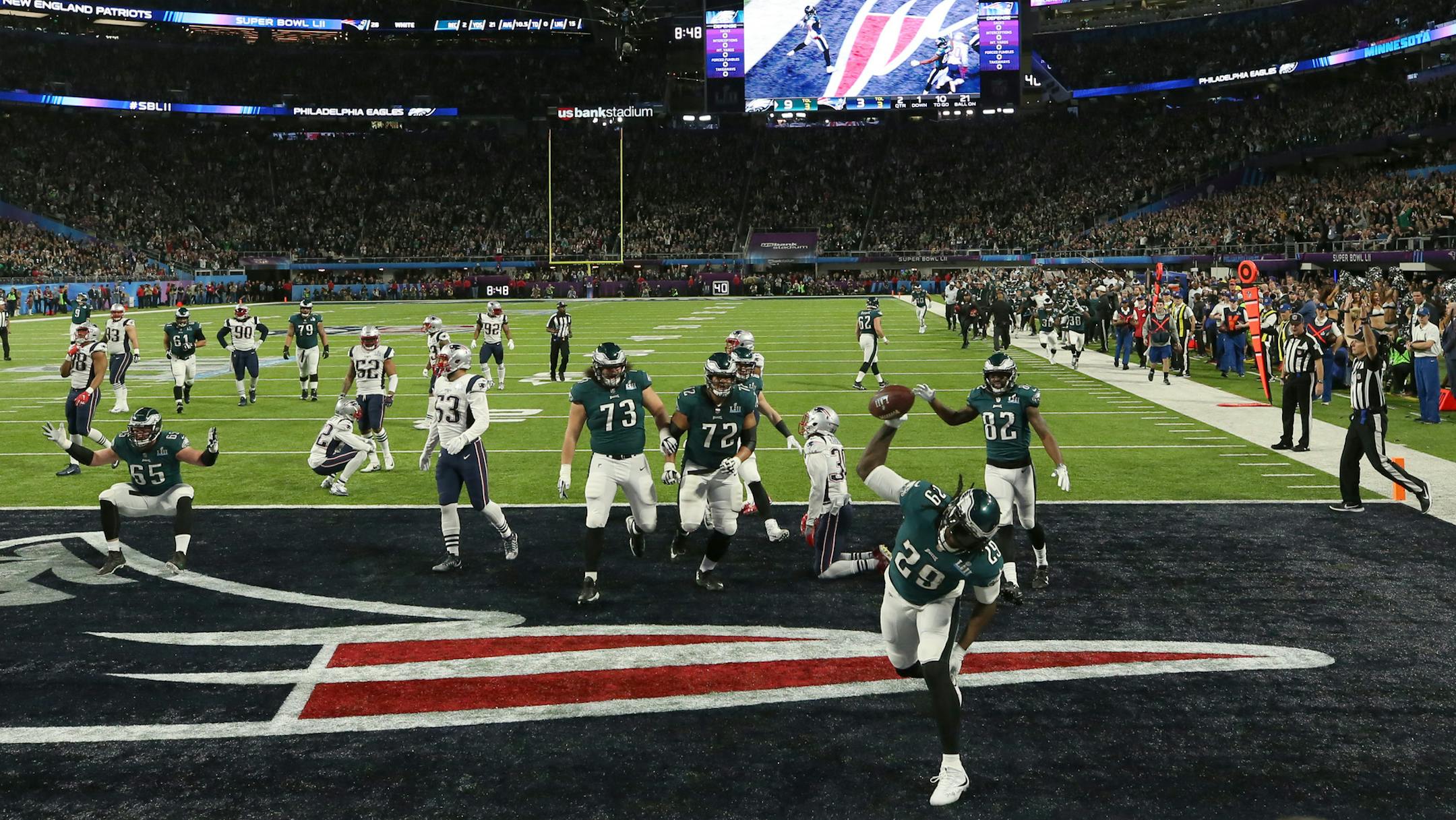
Players, fans and the NBC cameramen might want to call their chiropractors Monday, because a lot of people could have whiplash after the Eagles' 41-33 victory over the Patriots in Super Bowl LII.
An old mantra says defense wins championship, but that message must have gotten frozen in the frigid air on its way to U.S. Bank Stadium on Sunday.
Patriots coach Bill Belichick made his bones in the NFL as a defensive mastermind. The Eagles made it to the Super Bowl in part because of strong defense and a pass rush that was among the best in the NFL.
But offenses that provided more fireworks than Justin Timberlake's halftime show etched this game in the record books.
No number from the game is as remarkable as this one — Sunday represented the most net yardage of any game in NFL history. That includes regular season and postseason games. All the years of evolution to the game of football and all the players and coaches who helped change and shape the game to make offenses more potent and prominent — all that history led to Sunday, when a 68-year-old record fell.
The Patriots and the Eagles combined for 1,151 yards — .65 miles of offense — to beat the record of 1,133, set Nov. 19, 1950, during a game between the Giants and Rams.
The teams had broken the record for most yards in a Super Bowl set in 1987 by the end of the third quarter, according to statistical data firm Sportradar.
At 40 years old, Patriots quarterback Tom Brady threw for 505 yards, the second most in his storied career. That tied him for the 15th-most passing yards in any game in NFL history, and if he had converted a last-second Hail Mary pass, he would have broken Warren Moon and Matt Schaub's NFL record of 527 set in 1990 and 2012, respectively.


