Northern wildfires have smoked out Minnesota’s summer, but in Canada it’s been devastating

August 22, 2025
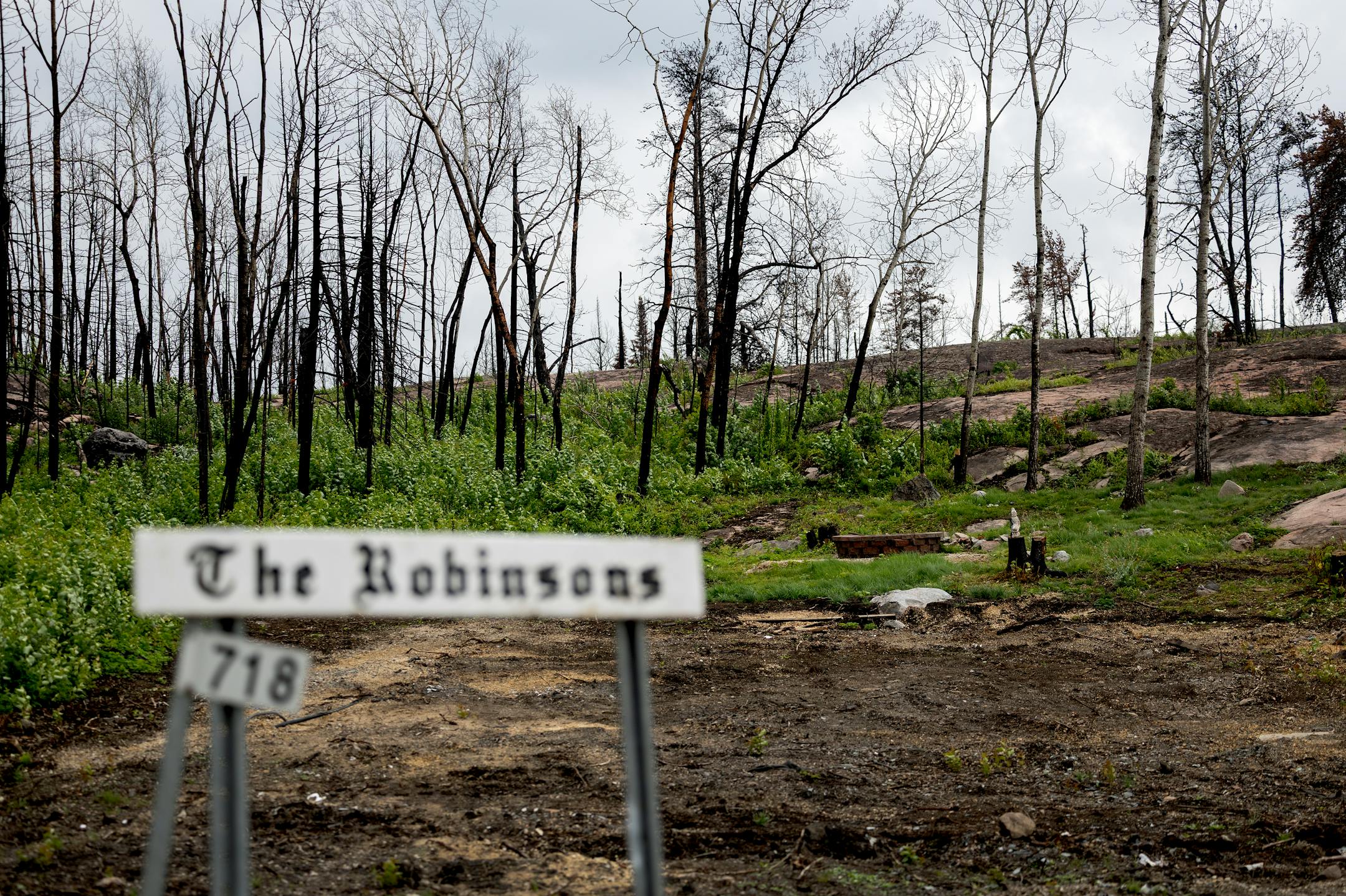
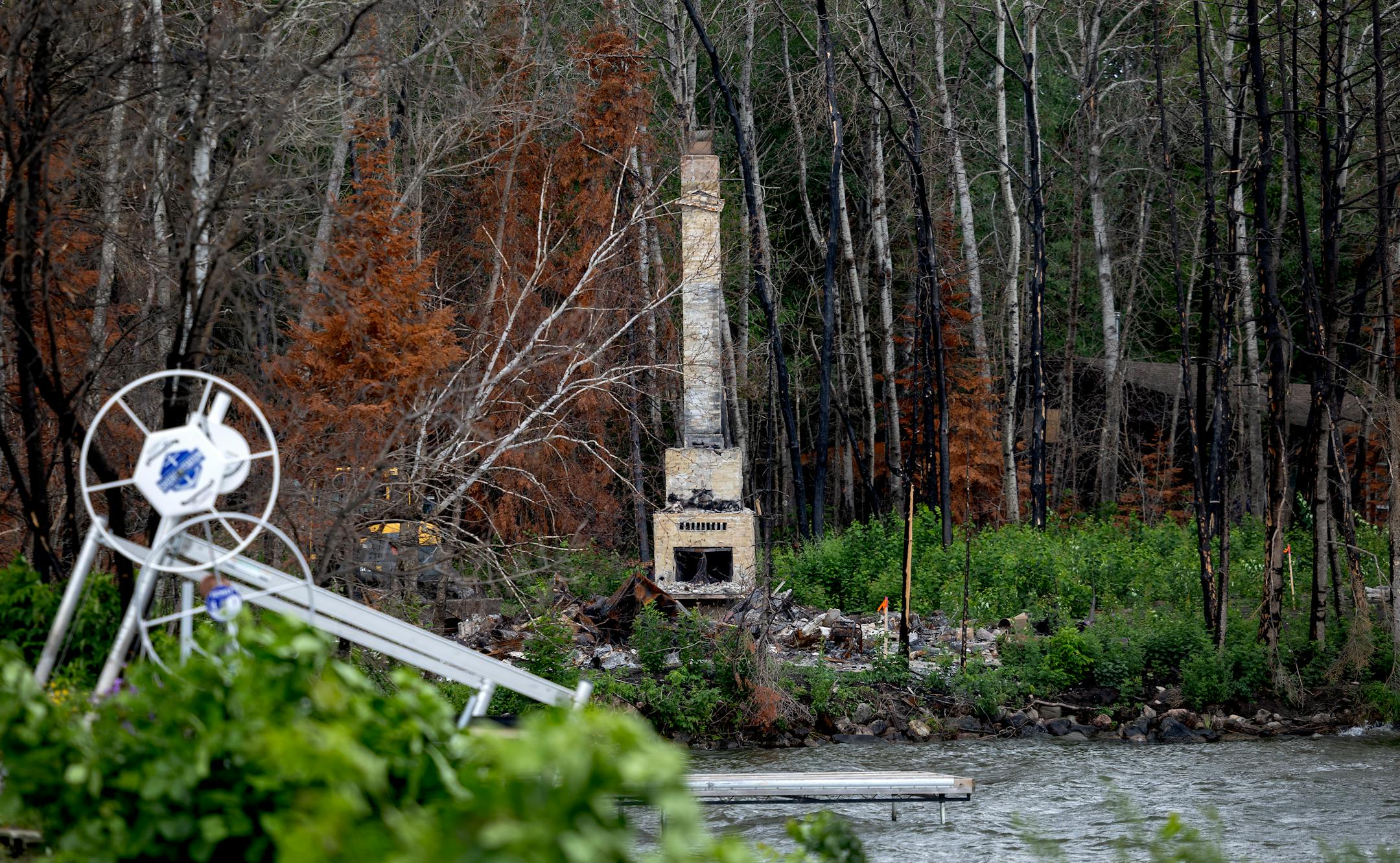
The address and the family name marks where a lake home once stood near Lac du Bonnet in Manitoba. Wildfire destroyed nearly 30 homes and killed two people in the lakeside community. (Carlos Gonzalez/The Minnesota Star Tribune)

The smoke that has drifted south is evidence of Manitoba’s worst wildfire season in three decades.

The Minnesota Star Tribune

WINNIPEG — Ken Lachnit had done what he could. All that remained was prayer.

For three days this spring, Lachnit and dozens of other volunteer firefighters had labored to beat back a fast-growing wildfire as it advanced on his hometown of Woodridge, a hamlet 60 miles southeast of Winnipeg.

Some plowed fire breaks with bulldozers. Helicopters dropped water along the edges of the blaze. Lachnit, a 66-year-old who normally works as the town’s mechanic, was assigned to sprinkler duty, erecting a wall of sprinkler systems around Woodridge and nearby towns — the last line of defense.

On the fourth day, when Lachnit set out to work, what he saw scared him. The fire was spreading too fast, growing sevenfold overnight. Just two miles from Woodridge, flames licked the treetops. The sky was bright orange, embers dancing in gusts of wind.
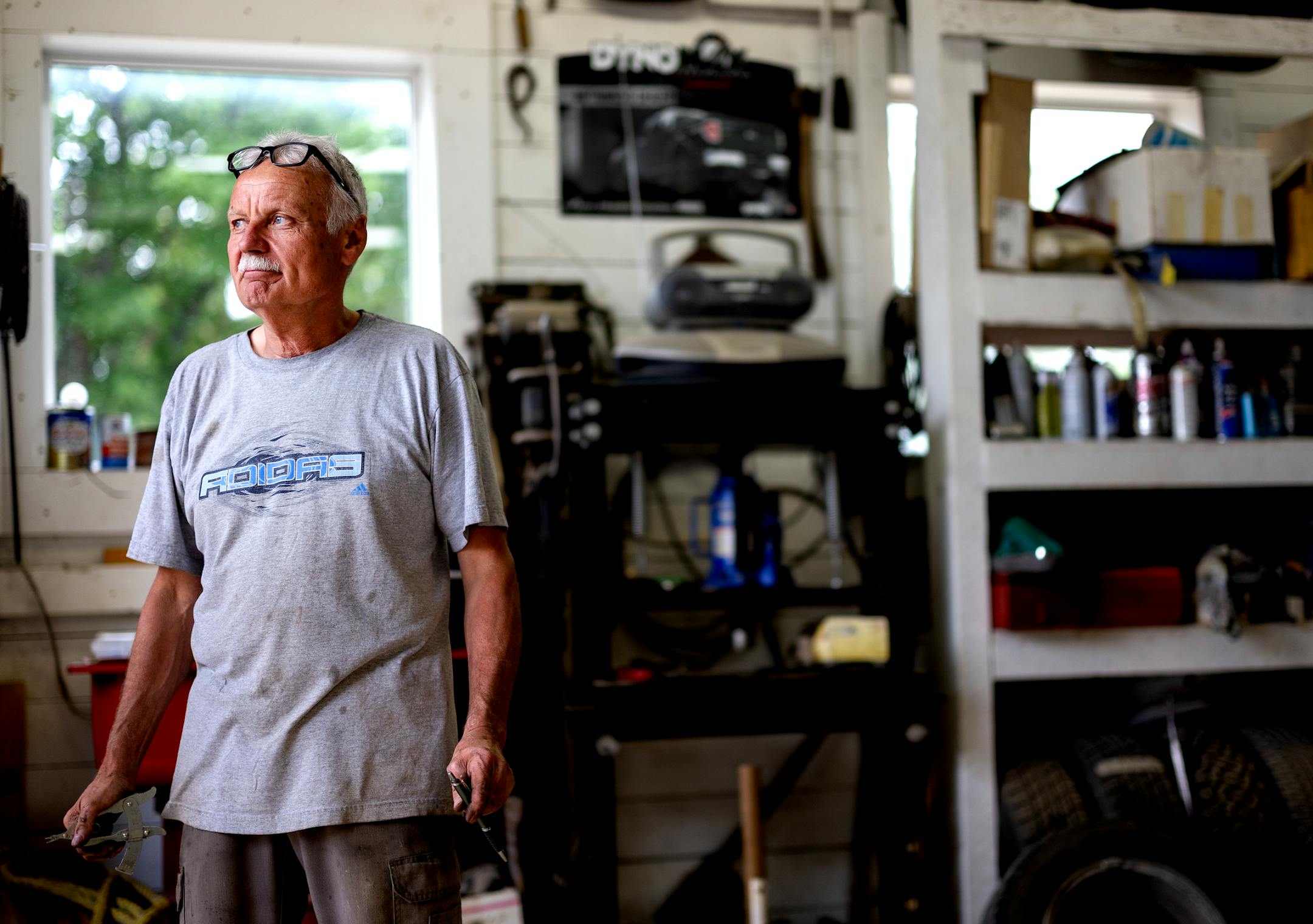
Ken Lachnit, 66, a mechanic in Woodridge, Manitoba, worked to beat back the wildfire as it bore down on his town. (Carlos Gonzalez/The Minnesota Star Tribune)

“We chased it from Kerry, Badger, St. Labre, and then it was coming toward Woodridge,” Lachnit recalled. “We lost one house in St. Labre. It was a family house. They just couldn’t get to it, the smoke was too thick.”

Canada’s wildfires have scorched more than 25,000 square miles of forest this year, spawning hurricane-sized plumes of smoke that have forced Minnesotans indoors, ignited political tensions and given the state some of the worst air quality in the world on several occasions this summer.

But in Manitoba, which is experiencing its worst wildfire season in 30 years, the fires have devastated communities and taken a serious human toll.

This year, more than 72,000 Canadians have been forced to evacuate their homes, with thousands of Manitobans still displaced, a government spokesperson told the Minnesota Star Tribune.
The drama in Woodridge played out in May just 17 miles from the Minnesota border. On day six, with the wildfire two miles from Woodridge, Lachnit and his crew got the break they needed.

“It started to rain, thank God,” he said. “The way it was, it would have been ugly.”

A chimney remains from a destroyed house on Lac du Bonnet in Manitoba. (Carlos Gonzalez/The Minnesota Star Tribune)

Cornelia Jackson, one of roughly 300 Woodridge residents told to evacuate, called the rain their “saving grace,” but noted that not every community shared their fortune. That same week, a separate fire tore through a neighborhood near the popular lakeside town of Lac du Bonnet, about two hours north of Woodridge. That fire burned dozens of houses and vacation cottages and killed a married couple trapped in their family home.

“It would have been very different if people had lost homes,” Jackson said. “We were lucky — very lucky.”

Four months after the wildfire fight, Lachnit was back at work in his auto shop. An electric drill whirred loudly in his hand, followed by the soft clink of a lugnut hitting the concrete floor.

The summer months so far have been relatively wet, he said, but in May, the forests near Woodridge were primed to burn.

Not only was Manitoba’s spring especially dry, Lachnit said, it was also incredibly windy, with gusts reaching upwards of 40 miles per hour some days.

“The winds were a big factor,” he said. “That’s how the fire got so big.”

Weather data from the Manitoba government shows that southern parts of the province received a meager half inch of rain for all of April. On top of that, a heat dome settled over the region on the same day the fire broke out, bringing temperatures as high as 98 degrees Fahrenheit that dried out the forest underbrush.

Scientists say that kind of spring weather will only become more common in Canada as greenhouse gases continue to raise the average global temperature.

In Nopiming Provincial Park, charred trees litter a rocky shore. Blackened wood marks the forests around Lac Du Bonnet in Manitoba.

Canadian provinces have seen record-breaking wildfire seasons in six of the last eight years, said Lori Daniels, an ecologist with the University of British Columbia. “We’ve had low snow packs. We’ve had early starts to springs. We’ve had record-breaking temperatures,” she said. “We’re getting weather events that are exceeding anything that we have on record.”

Jackson, who moved to Woodridge 11 years ago, said she has seen at least three major fires nearby during that time — in 2018, 2021 and now this year.

Earlier this month, the smoky skies marring the Midwestern summer became a source of political tensions between Canada and the United States. In July, six Republican members of Congress, including four from Minnesota, wrote a stern letter to the Canadian government, urging it to do a better job managing the country’s 1.4 million square miles of forest — roughly 16 times the size of Minnesota.

Across Minnesota, from Bde Maka Ska to Duluth, smoke from Canadian wildfires triggered air quality alerts throughout the summer.

Since June, at least 33 days in Minnesota were smoky enough to trigger air quality alerts. The smoke blowing south is now largely coming from blazes in northern Manitoba and Saskatchewan, which continue to burn at alarming speeds. Minnesota has deployed 71 firefighters to Manitoba to help with those fires since the beginning of summer, officials said.

Minnesota similarly experienced an active spring wildfire season, following a relatively dry winter, though summer rains have largely subdued the fires since June, according to a spokesperson for the state Department of Natural Resources.

Robert Lachance, who lives near Woodridge in the neighboring town of La Broquerie, called the ongoing tension between Canada and Minnesota “mind boggling,” noting that people from rural Manitoba were just like anyone from “small-town America.”

“Do they think that they can wave a magic wand and put the fires out?” Lachance asked as he waited for Lachnit to finish tuning up his car. “People have lost their homes and livelihoods. It’s not like we’ve gone around and started these fires just for the hell of it.”

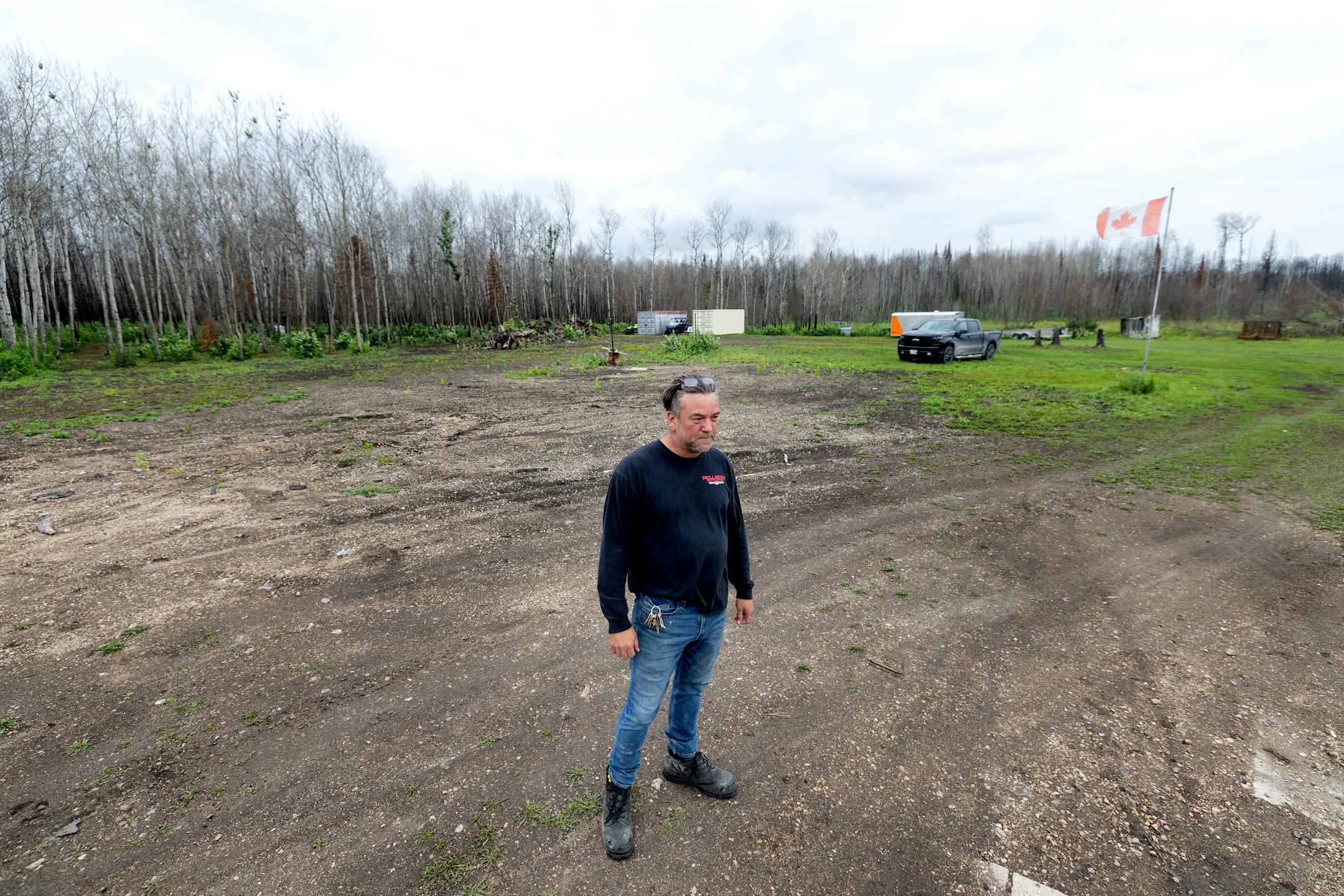
Neil Pellaers on the site where his family lake home stood for 60 years. He plans to rebuild there, on Lac Du Bonnet. (Carlos Gonzalez/The Minnesota Star Tribune)

Lac du Bonnet holds a special place in Neil Pellaers’ heart.

The lake in southeast Manitoba, popular for its fishing, cross-country ski trails and other outdoor recreation, has been a fixture in Pellaers’ life for as long as he can remember. On May 13, a wildfire razed his cottage to the ground. It had been in Pellaers’ family for more than 60 years.

“It was a great place,” the 55-year-old Winnipeg resident said. “We just redid the flooring last year, new windows last year, and then whoopsie daisy, the fire comes through.”

The blaze swept through the lakeside community overnight, destroying nearly 30 homes and cottages and taking the lives of Sue and Richard Nowell. They were trapped in their home when flames blocked the only road out. One of their three sons was also home when the fire broke out, but managed to flee, according to local media. The Nowells’ deaths are the only ones linked to the fires this year in Manitoba.

“The news of this loss of life changes what was an emergency into a tragedy,” Manitoba Premier Wab Kinew said at a news conference the next day, adding that the Canadian flags would fly at half-staff in their honor.

Days later, when the fire died down and officials lifted the evacuation order, Pellaers returned to take stock of his losses. The cottage was gone. So were his boats, four-wheelers, rifles and a collection of irreplaceable family heirlooms, including his grandfather’s vintage vinyl collection. Small chunks of burnt tree, roughly the size and shape of marshmallows, littered the plot of land.

The fire caused about half a million dollars in damage, Pellaers said. His insurance will cover about half of it.

Pellaers said he feels lucky that was the only thing he lost. “There’s [three] kids who are missing their parents right now,” he said. “I can’t feel bad about this or that, or whatever I lost. I got a great family.”

Pellaers has begun construction of his new cottage. Behind the lot, rows of blackened aspens and pines stood in contrast to the blue sky.

In the months since the fires that threatened Woodridge and swept through Lac du Bonnet, more fires have broken out across Manitoba. Thousands of refugees — predominantly Indigenous people from the northern part of the territory — fled hundreds of miles south to Winnipeg. Last week at the Winnipeg convention center, one of two massive ad hoc shelters run by the Red Cross for fire refugees, a handful of evacuees registered their names at the check-in table. Outside, families sat on benches chatting as their children played on the sidewalk.

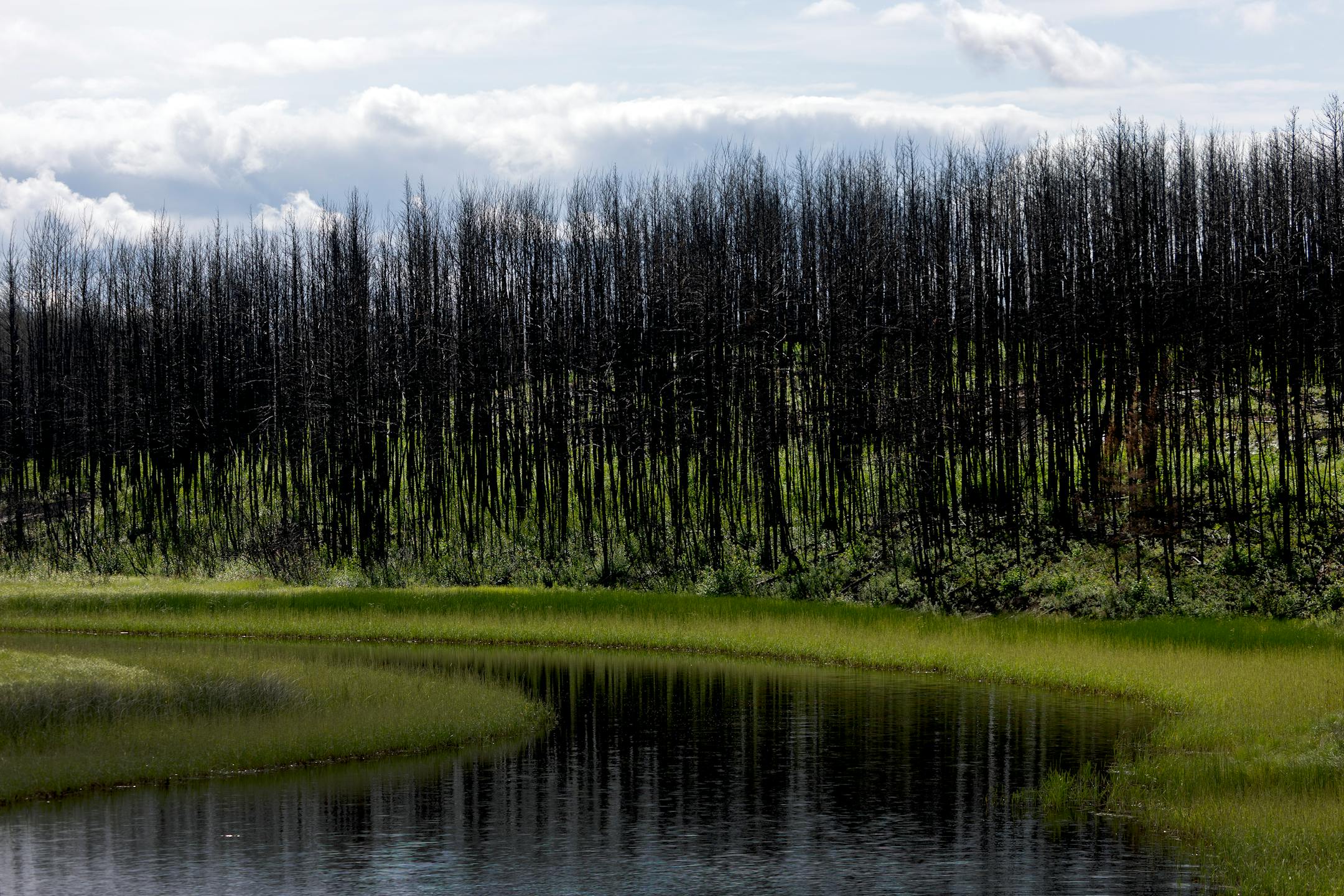
A creek in Manitoba's Nopiming Provincial Park is lined with blackened trees. (Carlos Gonzalez/The Minnesota Star Tribune)

Beyond Winnipeg, the scale of Manitoba’s forests, and the destruction, becomes clear. Two hours northeast of the city, charred trees, resembling burnt matches, lined both sides of the highway through Nopiming Provincial Park, the center of a wildfire that burned 1,386 square miles this year. That fire contributed significantly to Minnesota’s poor air quality in June.

It’s now mostly out, and provincial officials reopened the park earlier this month. Here and there, patches of ground still smolder, the smoke slowly dissipating into the summer air.

about the writer

about the writer

Kristoffer Tigue

Reporter

Kristoffer Tigue is a reporter for the Minnesota Star Tribune.

See Moreicon

More from Environment

See More
Rising above the treeline (Top of this photo), on the shore of Birch Lake, the Twin Metals Copper Nickel Mine Plant site and Tailings Management site is part of the proposed plan. ] In theory, the copper-nickel mine Twin Metals wants to build in the headwaters of the Boundary Waters Canoe Area Wilderness is a zero-discharge mine — a closed loop that will endlessly recycle millions of gallons of water, including rainwater and the polluted process water it uses to extract ore and
Brian Peterson/The Minnesota Star Tribune

The copper-nickel mine is controversial for its proximity to the Boundary Waters Canoe Area Wilderness, and the Biden Administration had canceled its leases.

card image
card image