When you move as much as we have, you buy and sell a lot of houses. The required real estate inspections scrutinize roofs and plumbing, rain gutters and floorboards; yet they never tell you about the more interesting aspects of the house you plan to call home.
The sellers sometimes forget or fail to let you know about the man-eating mutt behind the too-short fence or the lady ghost who shot herself in the front bedroom of an Illinois Victorian. It's not always bad; one time what I supposed to be a sweeping lawn infested with wild garlic was actually a thousand heirloom "pheasant-eye" daffodils.
In Minnesota there were warnings about ravenous deer and blood-sucking bugs, but no mention of amphibious assaults. No one told me about the snapping turtles. It wouldn't have changed my mind about making a home out in the watery wetlands. But it would have been nice if someone had given me a heads up, or better yet, a toes-up. Despite the fact that they can't swallow above water, it didn't keep them from chomping chicken legs on that TV news piece the other night.
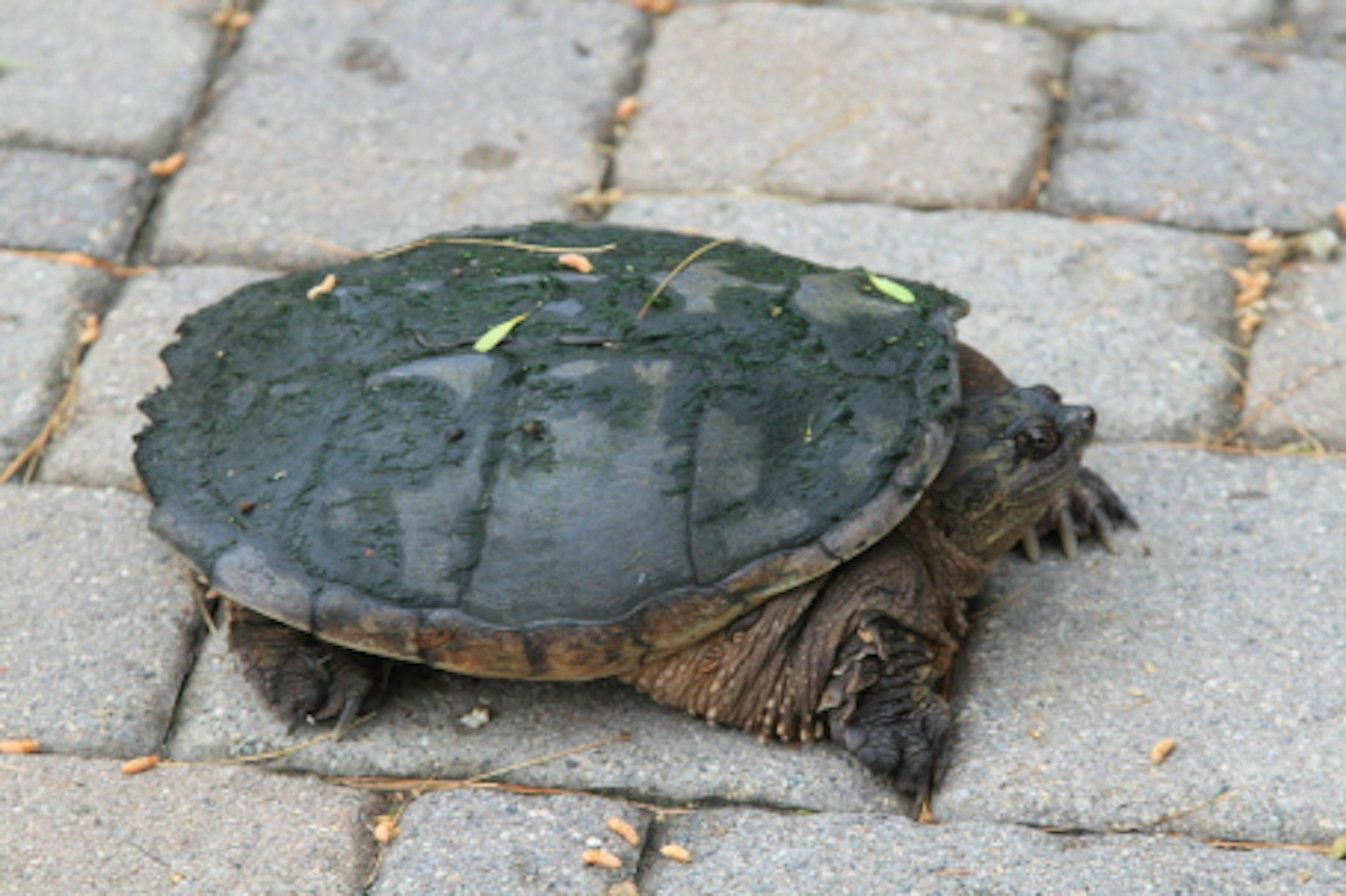
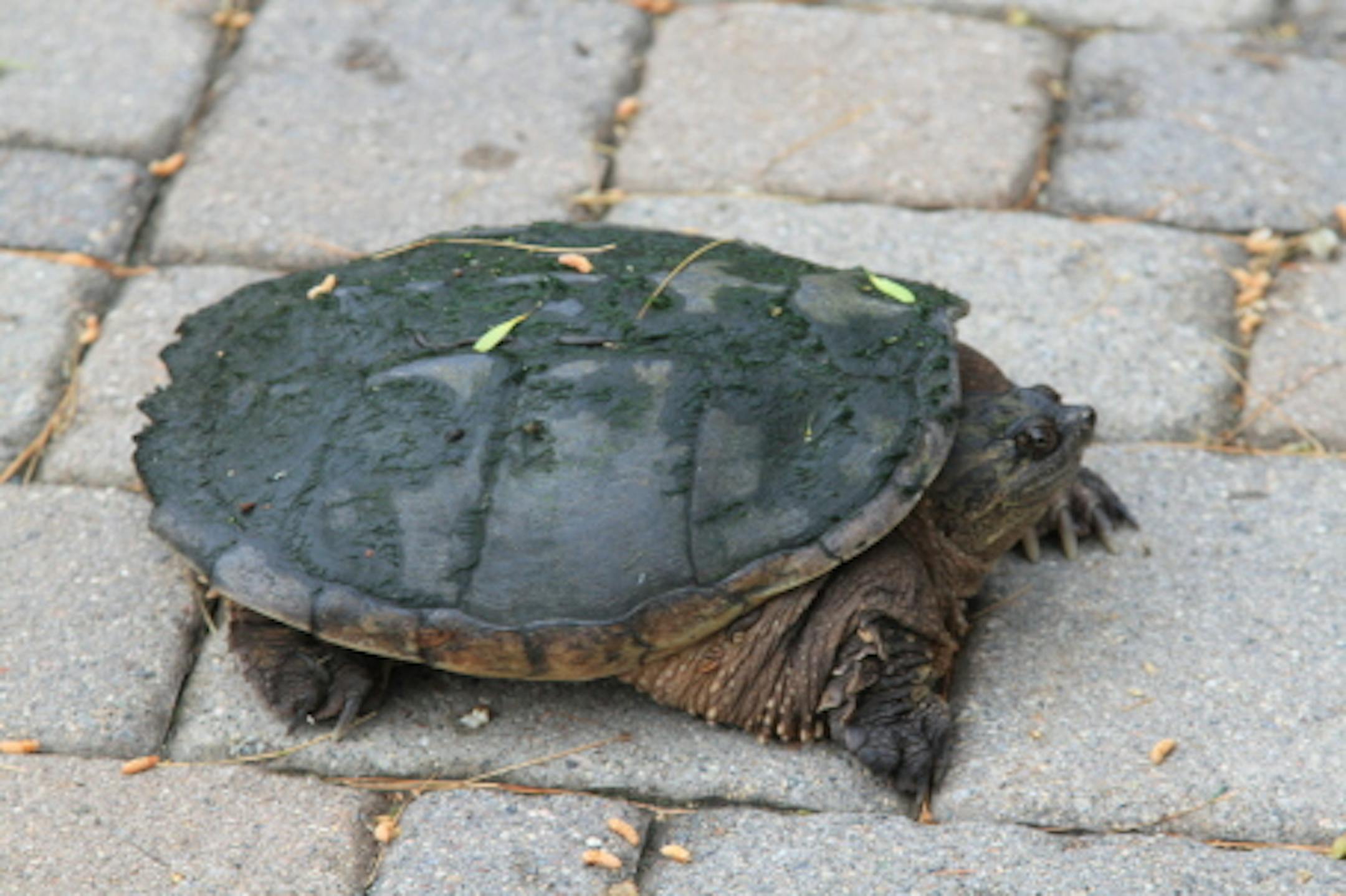
I became aware of the snappers when the mosquito guys launched their dinghy one day and came back impressed by the enormity of the turtle patriarch of our pond. They used their best fish story stance with outstretched beefy arms the width of their good-sized shoulders to describe the circumference of the creature's shell. Their incredulity was convincing.
In early spring as the waters warm, the turtles float like phantoms just below the surface, their relatively tiny heads barely peeking out. I can feel them watching me as I garden, even with my backside turned to them.
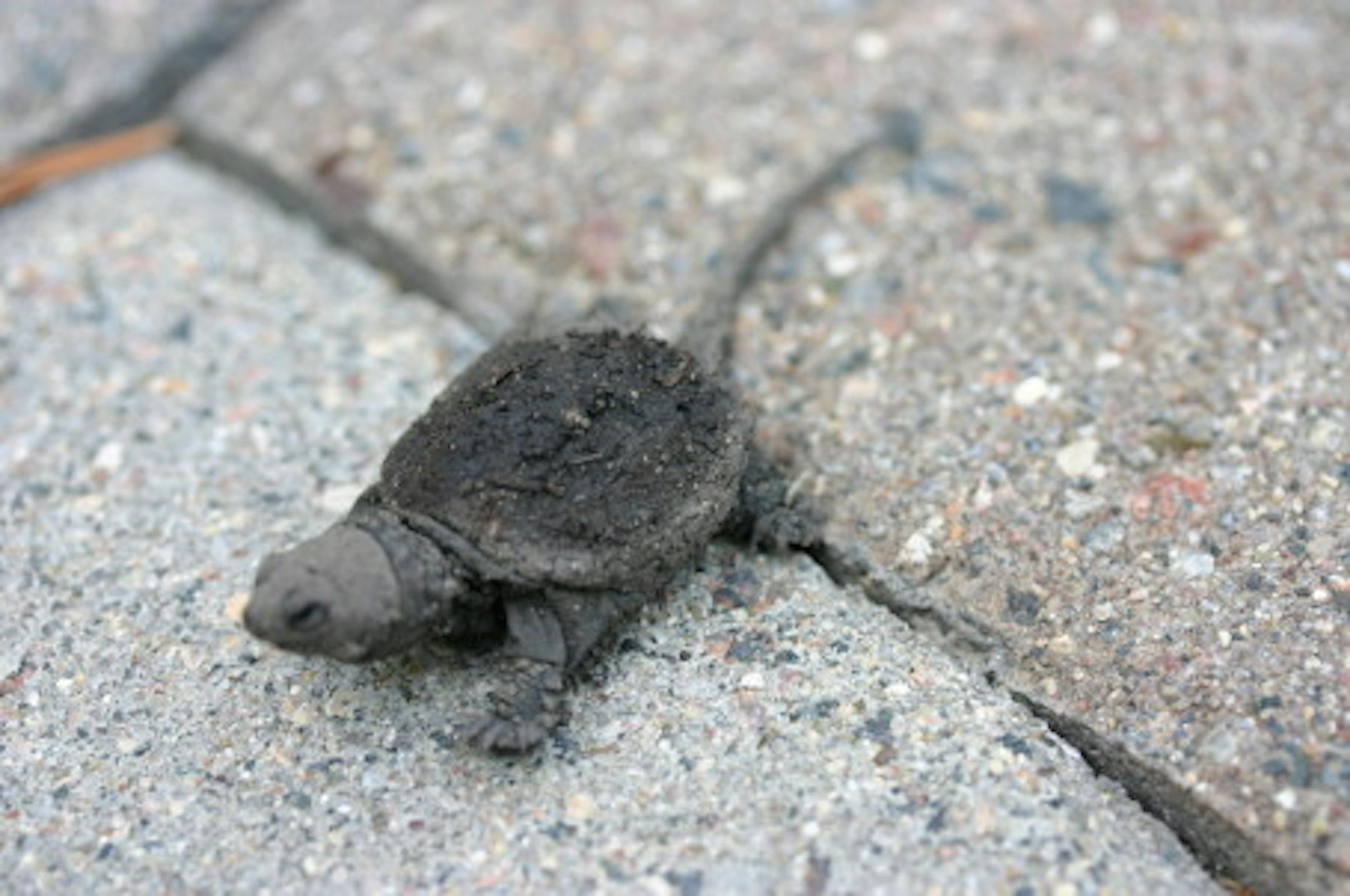
Three hundred and sixty days a year, the garden is snapping turtle-free. However, June brings them out and up the banks looking for suitable sites for egg-laying; with the odds improved when there are 150 potential turtle babies. In defense, I have learned that their exodus times out with the bloom of euphorbia, better known as leafy spurge.
Looking positively prehistoric with crested tails and mossy armor, these mothers are drawn by some lunar-like maternal tide. They seem to return to the same nesting area time after time, no matter that the landscape might have changed; paths turned, stone walls erected and trees planted.
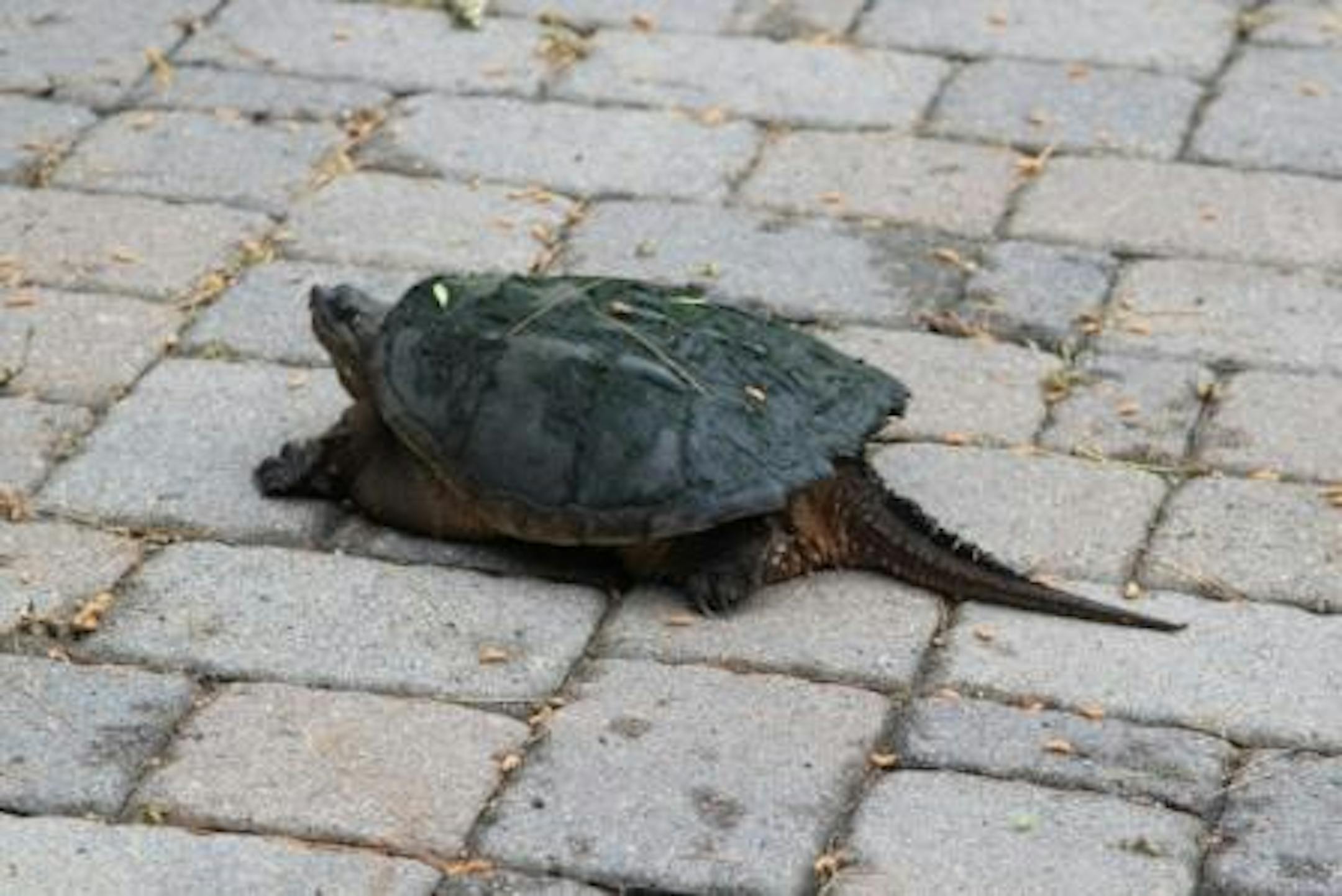
Still not in tune with the rhythm of their reproductive cycle, we were surprised last year, when the red-letter day coincided with our backyard grad party. I worried that it was a bad mix what with scads of strippy-strappy sandal-clad young ladies tripping around the pool and patio. We made the best of it and fenced the nest with a garden teepee and hastily scrawled warning sign. As the party wound down, the she-turtle left discreetly and without incident.