

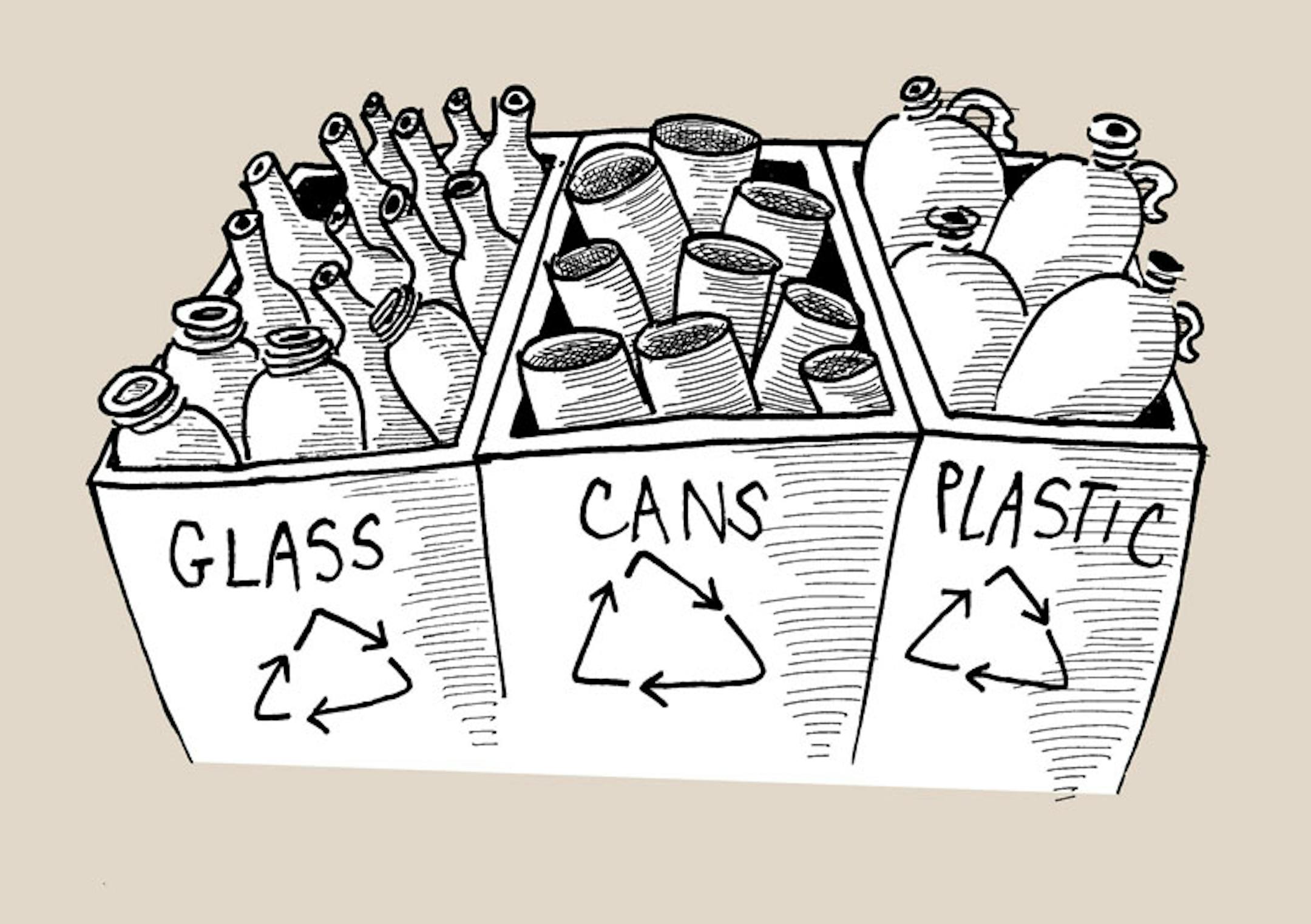
When I looked out the kitchen window into the twilight and saw my 60-year-old husband hunched over our new recycling bin, a pang of worry crossed over me. Were long, cold days out delivering the mail taking a toll on him?
I headed out the back door, but he had already turned toward the house -- head down, in thought. "Just reading the instructions on the recycling bin," he explained.
It's doubtful the city of Minneapolis considered the unintended consequences of the new, no-sort recycling program that it is rolling out in stages. Certainly, no-sort will increase the volume of recyclers and decrease our city's garbage output. But we are not Oakland, New York or Memphis. We are Minneapolis -- a city settled by Scandinavians and Germans, whose traditions are to this day steeped in a profound need to organize.
Think about our streets, so precisely ordered alphabetically or numerically. Our bike and walk paths, carefully divided and designated. The even/odd day snowplow system. And until this week in parts of the city, the sorted recycling program.
And so it is in our home -- a well-thought-out system that creates order while benefiting our environment. Our roles are clear: My husband manages the household recycling program while I play the part of eye-roller and irritant. The rules include: All bottles and cans must be scrubbed (with soap), labels removed.
Unfortunately for him, he's married to a Jewish woman from Chicago whose traditions oppose his sensibilities: Rules invite argument, disdain and occasional refusal. Out of respect and love, I do wash the cans, though I cannot bring myself to remove the labels -- it's just too much.
We're well-matched, though. I like to rebel, while he likes to peel the labels and call it a job well-done.
He's got his upstairs presorting stations, the basement holding center and the garage prefinal staging area. Each day he picks through the kitchen recycling bin -- shiny paper/magazines, metal, glass, brown paper bags, cardboard to break down, all headed to the basement dividers; plastic by the back door to be taken out to the garage prefinal staging area, and newspapers into paper bags.


