

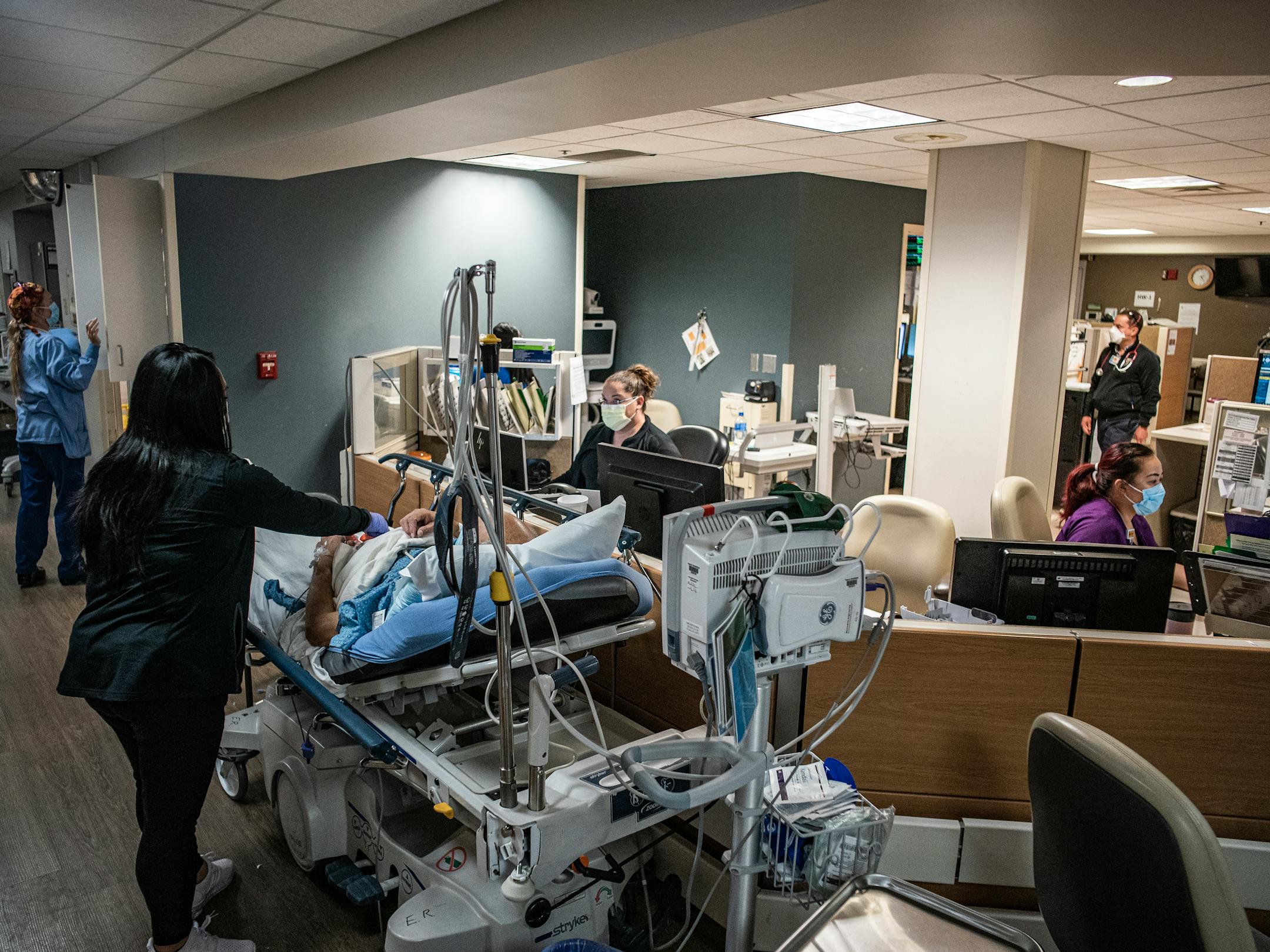
Infectious disease levels didn't increase over the holiday week, defying historical flu season trends and easing pressure on Minnesota's hospitals.
Hospitals had one of their busiest days in the nearly three years of the pandemic on Dec. 7, when 8,324 patients filled inpatients beds as a result of COVID-19, influenza and other health issues. That number dropped to 7,378 on Tuesday, and the number of inpatient cases involving COVID-19 dropped from 633 to 560 over those two dates.
The 168 flu-related hospitalizations identified in Minnesota the week ending Dec. 31 were only one higher than the prior week. Both represent a decline, though, from the nearly 600 hospitalizations per week during an unusual fall influenza surge in late November and early December.
Health officials warned that there are reasons for concern and caution, including the potential for a second seasonal influenza wave and the possibility of a new viral variant causing more COVID-19 again.
Sewage sampling last week at the Metropolitan Wastewater Treatment Plant in St. Paul found increases in two concerning variants, BA.2.75 and XBB, of the coronavirus that causes COVID-19. The viral load in sewage samples rose in mid-December to its highest level since May, but has dipped since then.
Any surge in the XBB variant over the next four weeks could be a sign of trouble because of the way it has fueled COVID-19 elsewhere — even in people with prior infections or vaccinations, said Michael Osterholm, director of the University of Minnesota's Center for Infectious Disease Research and Policy. For now, the relative lack of change in COVID-19 levels in Minnesota and surrounding states is itself surprising.
"This High Plains plateau just continues," he said.


