

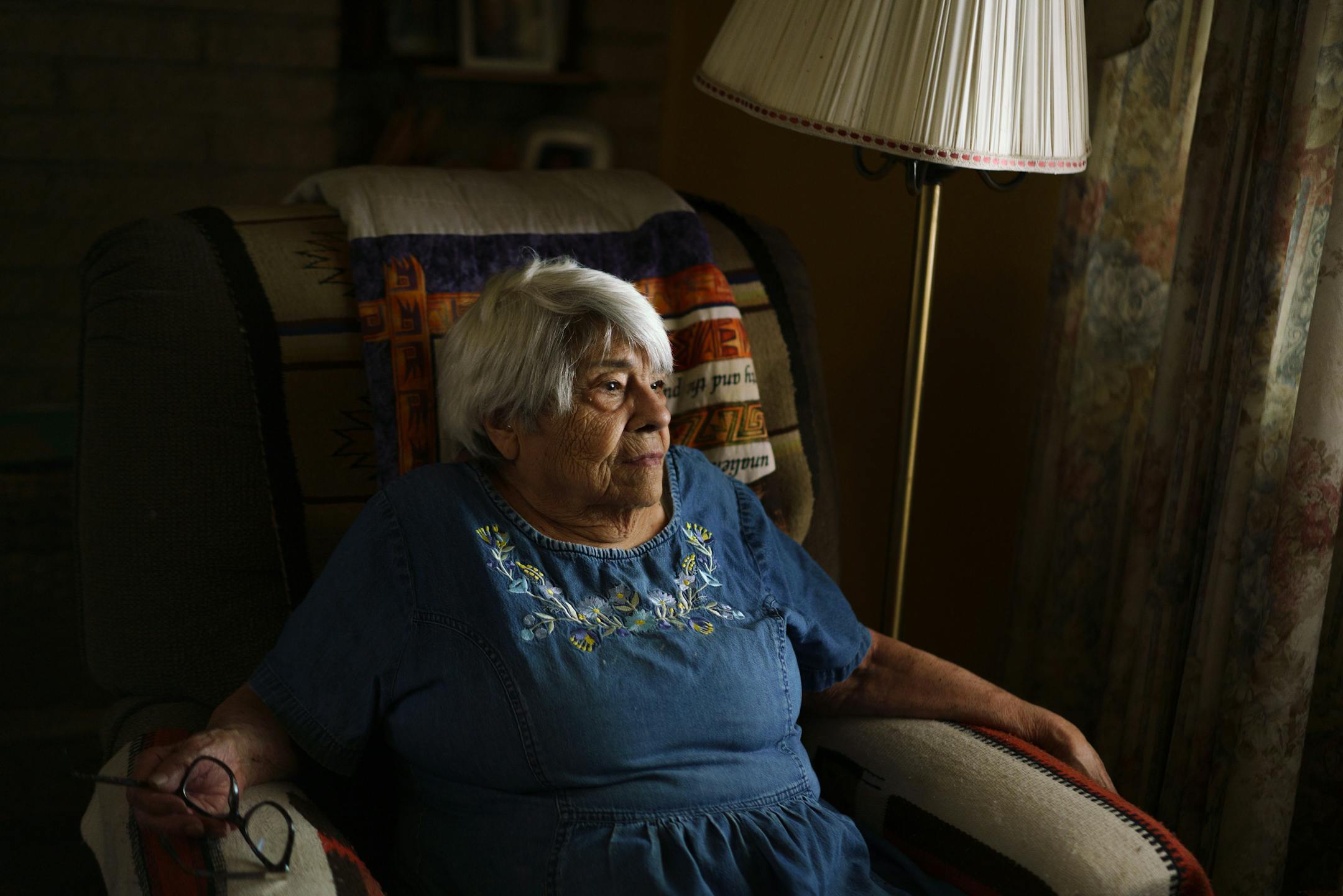
TULAROSA, N.M. - A strong rumble woke 13-year-old Lucy Benavidez Garwood in the darkness, shaking the three-room adobe house where she and her family lived and rattling dishes in the kitchen cupboard. Neighbors who gathered that morning agreed it must have been an earthquake.
They learned the truth three weeks later when U.S. forces attacked Hiroshima, Japan. The atomic bomb dropped on the city had been developed and tested in Tularosa's own backyard - that pre-dawn blast jolting communities across southern New Mexico, shooting a mushroom cloud 10 miles into the sky, then raining radioactive ash on thousands of unsuspecting residents.
What happened here in the aftermath, surviving "downwinders" and their relatives say, is a legacy of serious health consequences that have gone unacknowledged for 78 years. Their struggles continue to be pushed aside; the new blockbuster film "Oppenheimer," which spotlights the scientist most credited for the bomb, ignores completely the people who lived in the shadow of his test site.
Yet for all their ambivalence about the movie's fanfare - the northern New Mexico city of Los Alamos, where J. Robert Oppenheimer located the Manhattan Project, just threw a 10-day festival to celebrate its place in history - locals also have hope that the Hollywood glow may elevate their long quest to be added to a federal program that compensates people sickened by presumed exposure to radiation from aboveground nuclear tests.
"They were counting on us to be unsophisticated and uneducated and unable to stick up for ourselves," said Tina Cordova, a Tularosa native who for 18 years has led the Tularosa Basin Downwinders Consortium, which she co-founded after being diagnosed with thyroid cancer. "We're not those people anymore."
The Trinity test site, about 60 miles northwest of tiny Tularosa, was chosen in part for its supposed isolation. Nearly half a million people lived within a 150-mile radius, though. Manhattan Project leaders knew a nuclear explosion would put them at risk, but with the nation at war, secrecy was the priority. Evacuation plans were never acted upon. The military concocted a cover story: The boom was an explosion of an ammunitions magazine.
"I feel like we weren't valued," said Garwood, now 91, with a family tree scarred by cancers. "Like they didn't value our lives or our culture."
The July 16, 1945, blast was more massive than Oppenheimer and his fellow scientists expected, equivalent to nearly 25,000 tons of TNT, according to recent estimates. Witnesses said the plutonium ash fell for days, on areas where people grew their own food, drank rainwater collected in cisterns and cooled off in irrigation canals that made the arid region fertile.


