

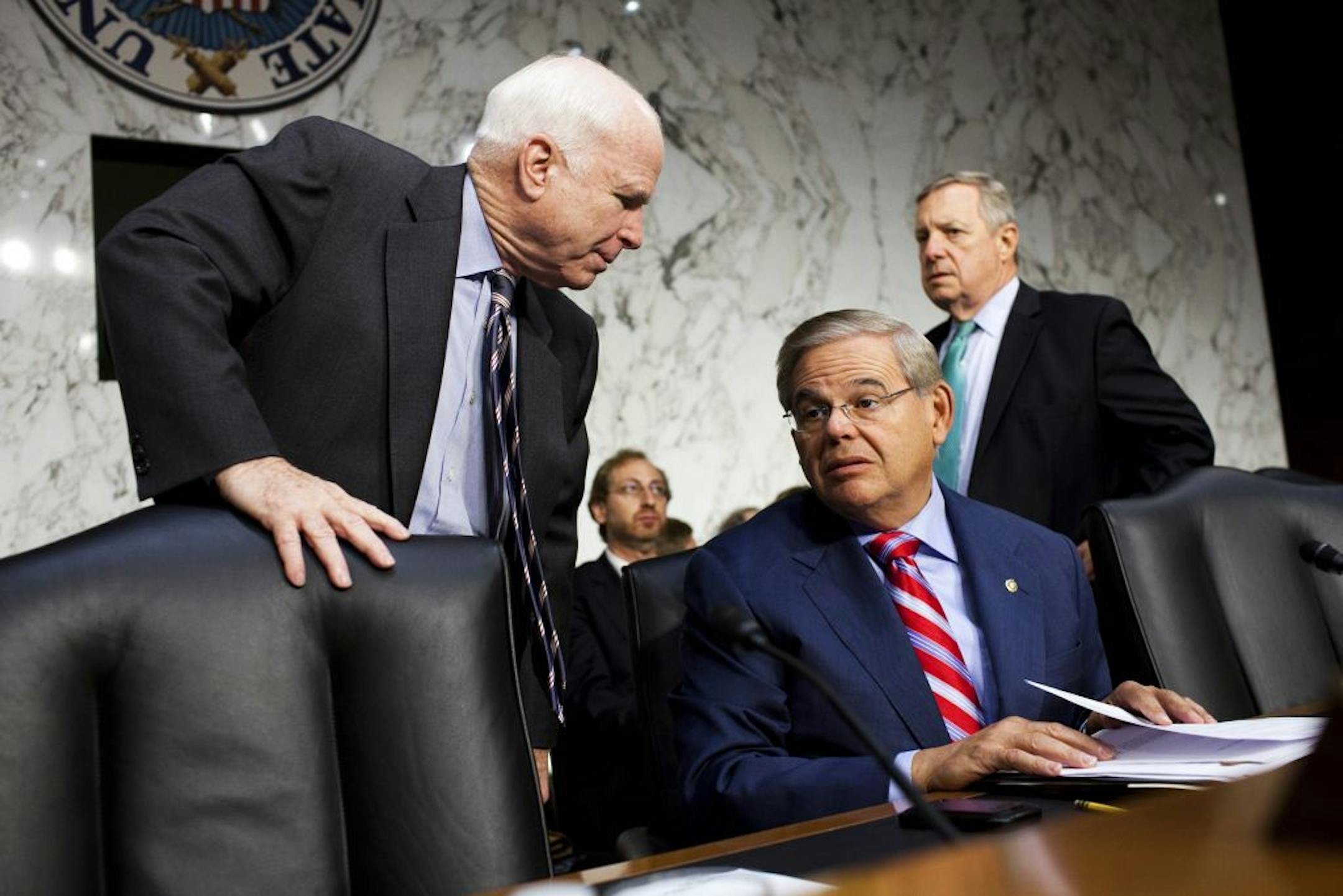
With so much on the line, President Obama made a wise decision to consult with Congress before launching punitive missile strikes on President Bashar Assad's regime in Syria. Congressional support for the president's request to meet limited foreign policy goals of deterrence and disruption of Syria's WMD capabilities would give important legitimacy to multilateral and legally justified action.
Political leaders have a responsibility to protect the human rights of their people — and the international community acts when individual governments break inviolable standards of conduct. The civilized world has a strategic interest in enforcing the rules against chemical weapons use.
Yet, even as that debate happens, more global diplomatic and legal action can be taken against Assad, while Congress and the nation can resolve a serious foreign policy resources crisis.
The next right thing for Congress to debate is not only authorization for the use of force, but also resources for what comes next. In more than a vote of authorization on Syria, Congress should also decide to eliminate the sequester, and to make a commitment to funding U.S.-led diplomatic, development and intelligence operations around the world.
The past 10 years have certainly taught America that we must prepare for the worst possible contingencies, not for theoretical, lowest-cost outcomes. Congress may authorize a strike against Syria, but it must also equip our people overseas with the resources necessary to carry out their jobs — not just for this mission, but for future conflicts and emergencies.
I returned from my experience as a young Marine officer in the 2003 invasion of Iraq motivated to help then-presidential candidate John Kerry promote important changes in the way America engages in war, combats terrorism and provides necessary resources for foreign policy. I found it inexcusable that the Bush White House had not adequately analyzed intelligence about WMDs nor fully debated strategic objectives and risks before sending me and other troops into a heavy conflict.
This week, now-Secretary of State John Kerry made an articulate and fact-based presentation of evidence to Congress that Assad used chemical gas on civilians, killing more than 400 children in a single strike. The attack fits within a broader context of sectarian civil war that has already taken more than 100,000 lives and forced millions of innocents to seek refuge from the violence — but that single incident is a trigger to the White House and the world, because it violates international humanitarian legal standards about the use of chemical gas.
Red lines have been overcome by events and are now immaterial. Assad's regime simply must be held accountable for its crimes, and dangerous chemical weapons must not fall into the hands of other dangerous people operating in Syria. President Obama and Secretary of Defense Chuck Hagel have set the stage for limited operations with specific goals related to deterrence and disruption of any further use of these horrible weapons.


