

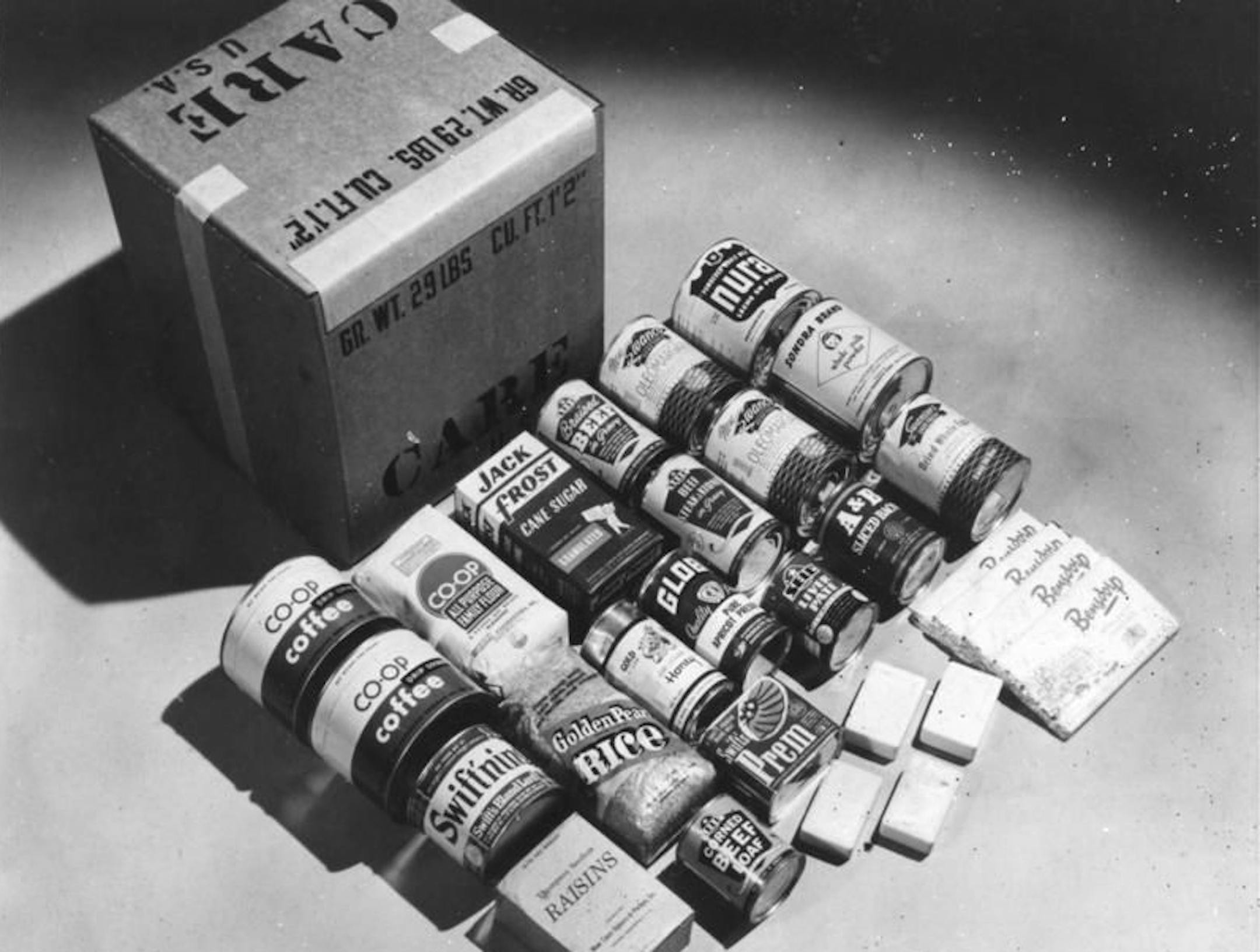
The CARE package, a national icon after World War II, has come out of retirement -- retooled for the 21st century.
The cardboard boxes stuffed with lard, egg powder, canned meat and other food essentials were a critical part of U.S. humanitarian aid to war-ravaged Europeans in the 1940s. Similar boxes were part of the war against hunger in Korea, Vietnam and other nations. But in 1967, the official CARE packages ended.
Now the CARE package has been resurrected to mark its 65th anniversary. This time, however, it's a virtual package that funds modern tools to fight global poverty, such as education and health care.
"Instead of delivering food and supplies, we are providing aid that can last generations," said Sarah Moser, a spokeswoman for CARE, the Atlanta-based humanitarian aid agency that launched the packages in 1946.
"You can fund a girl's education in Afghanistan, or a small business run by a woman in Niger," she said.
For Minnesotans such as Gerhard Weiss, it's the revival of a powerful symbol of U.S. generosity. The food helped both his family and friends living in Berlin, which was in ruins after relentless aerial bombardment during the war.
"It was a lifesaver for so many people," said Weiss, 85, retired chairman of the German, Scandinavian and Dutch Department at the University of Minnesota.
"My parents and I got one or two boxes before we left [Berlin] in 1946. I also sent some CARE packages to friends from the United States.


