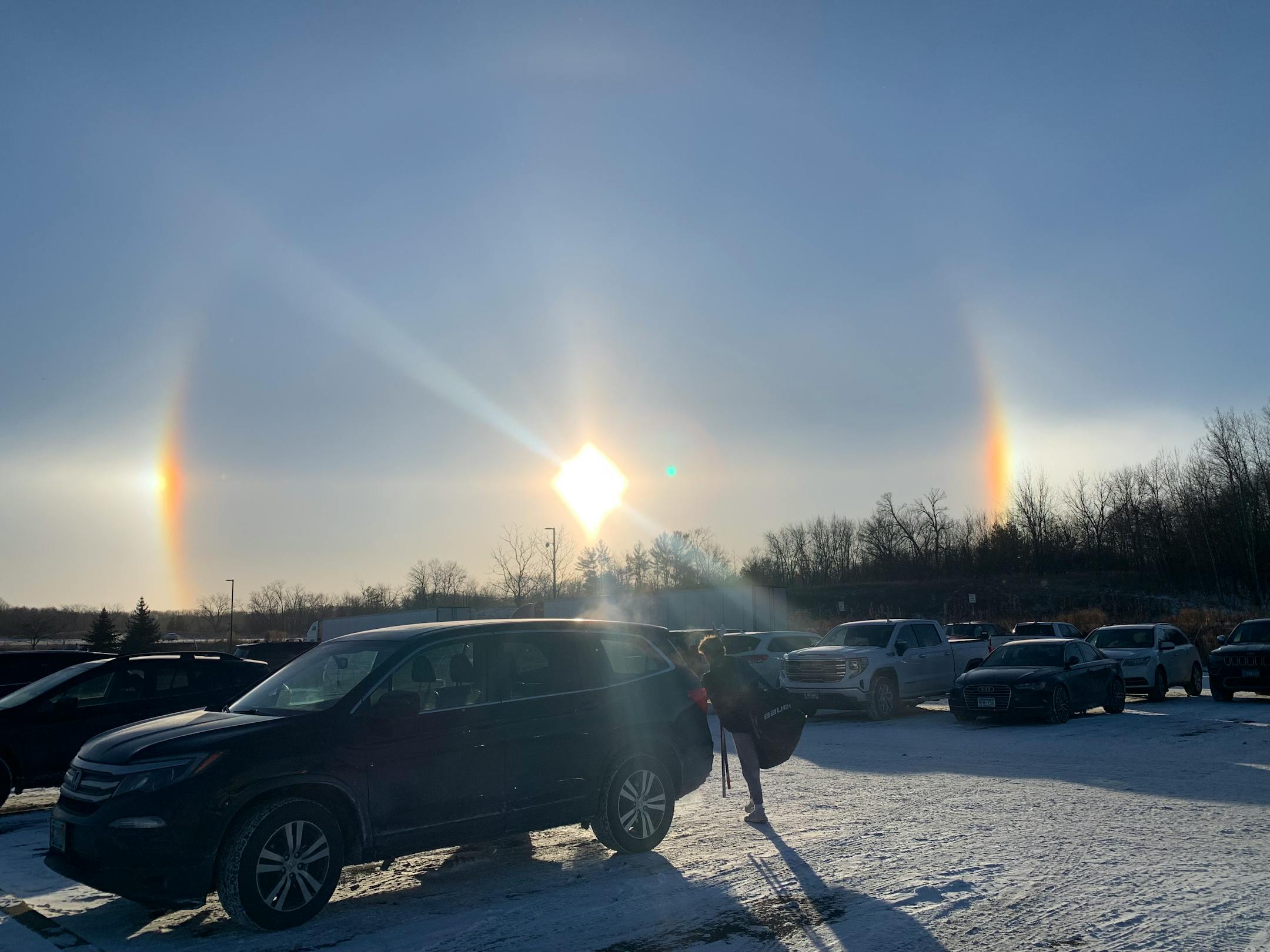
What are sundogs and how do they form?
"A sundog is a concentrated patch of sunlight that is occasionally seen to the right or the left of the sun or even on both sides of our star in the sky simultaneously. Also called mock suns or parhelia, meaning "with the sun," according to the National Weather Service. Sundogs are part of a family of atmospheric optical illusions including moon haloes and the closely related sun haloes. All of these phenomena are caused by the refraction of sunlight by ice crystals in the atmosphere. Sundogs typically appear as a pair of patches of light with subtle colors which manifest at the same altitude over the horizon as the sun. They can appear in a variety of forms, sometimes as colorful spots, or other times, so intense and bright they appear to be two additional suns in the sky. Sundogs are formed when light passes through hexagonal plate crystals of ice, suspended in cirrus or cirrostratus clouds located at altitudes of around 20,000 feet (6,000 meters) and higher, up to 40,000 feet (12,000 meters). These ice crystals can also be found much closer to the ground in extremely cold climates where temperatures drop below -22 degrees Fahrenheit (-30 degrees Celsius) as a meteorological phenomenon called "diamond dust."
Welcome to the Arctic
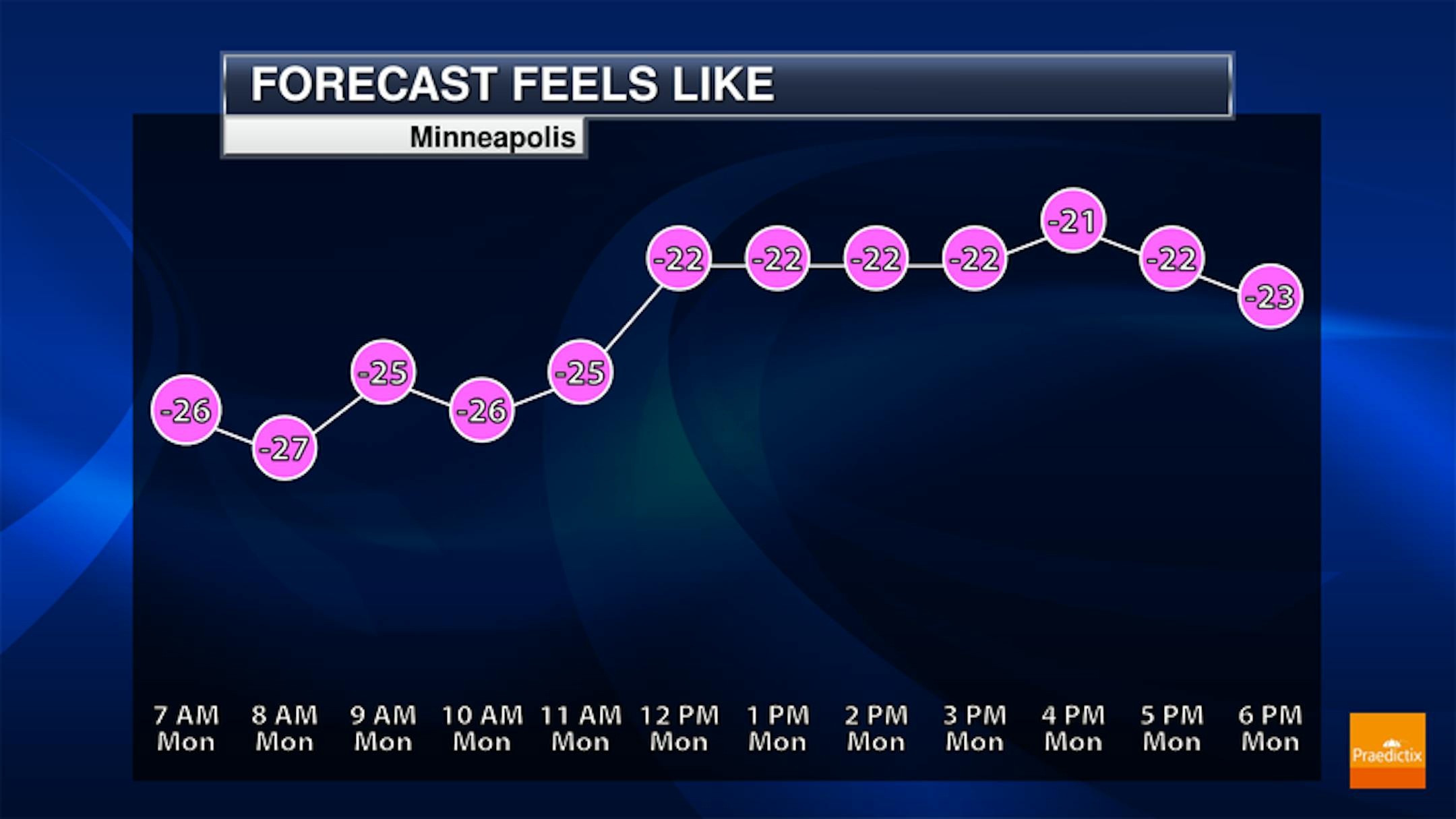
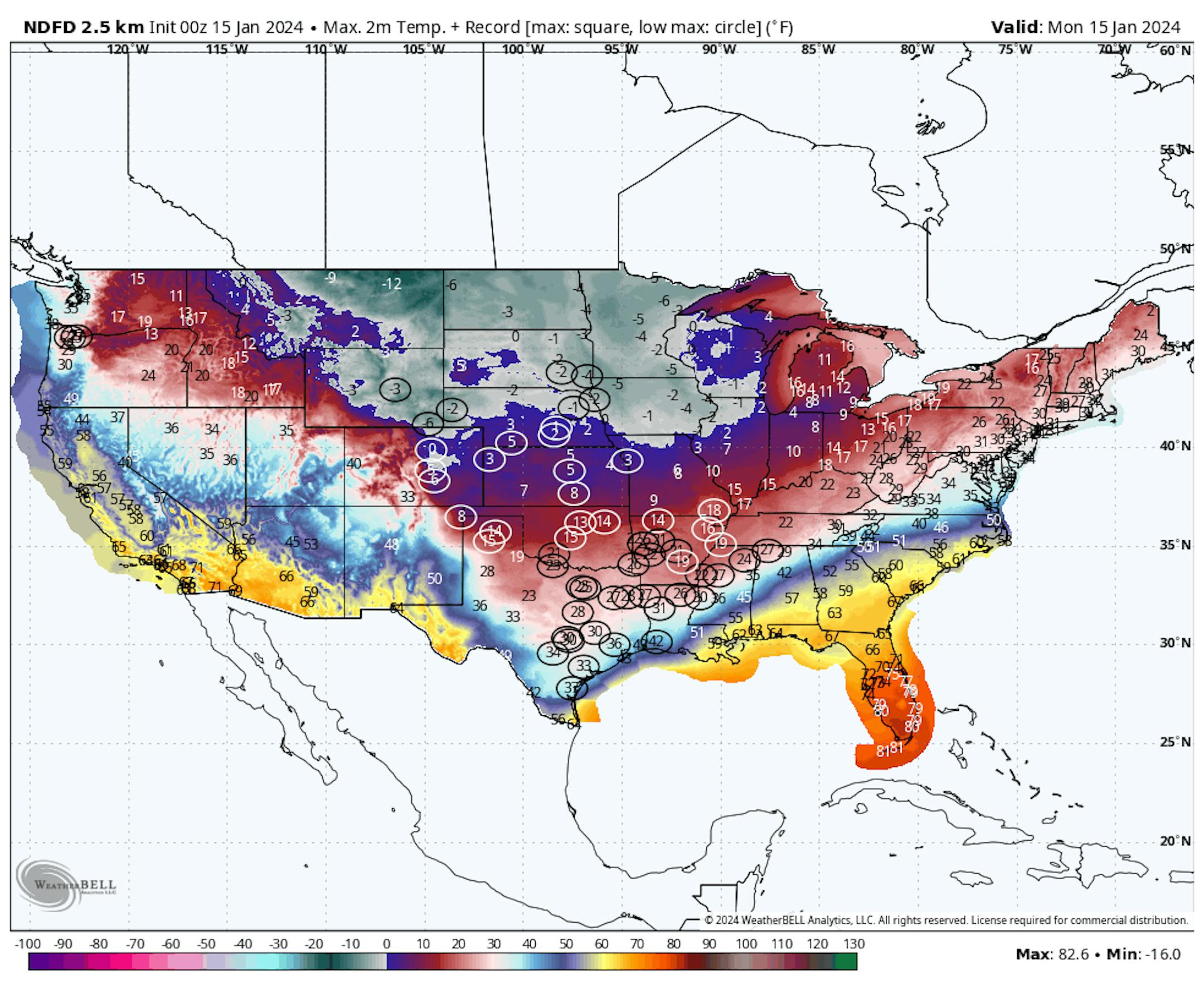
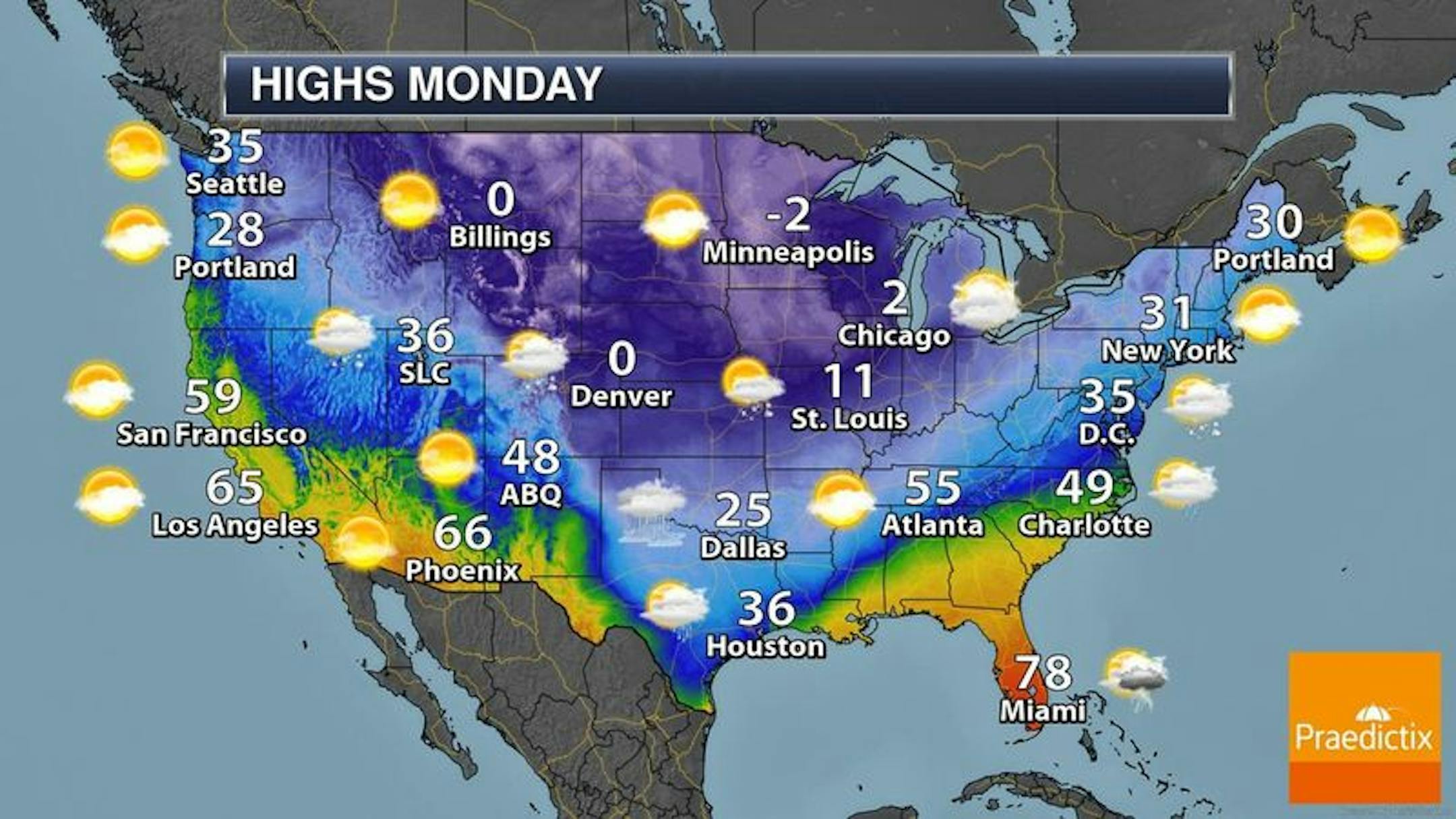
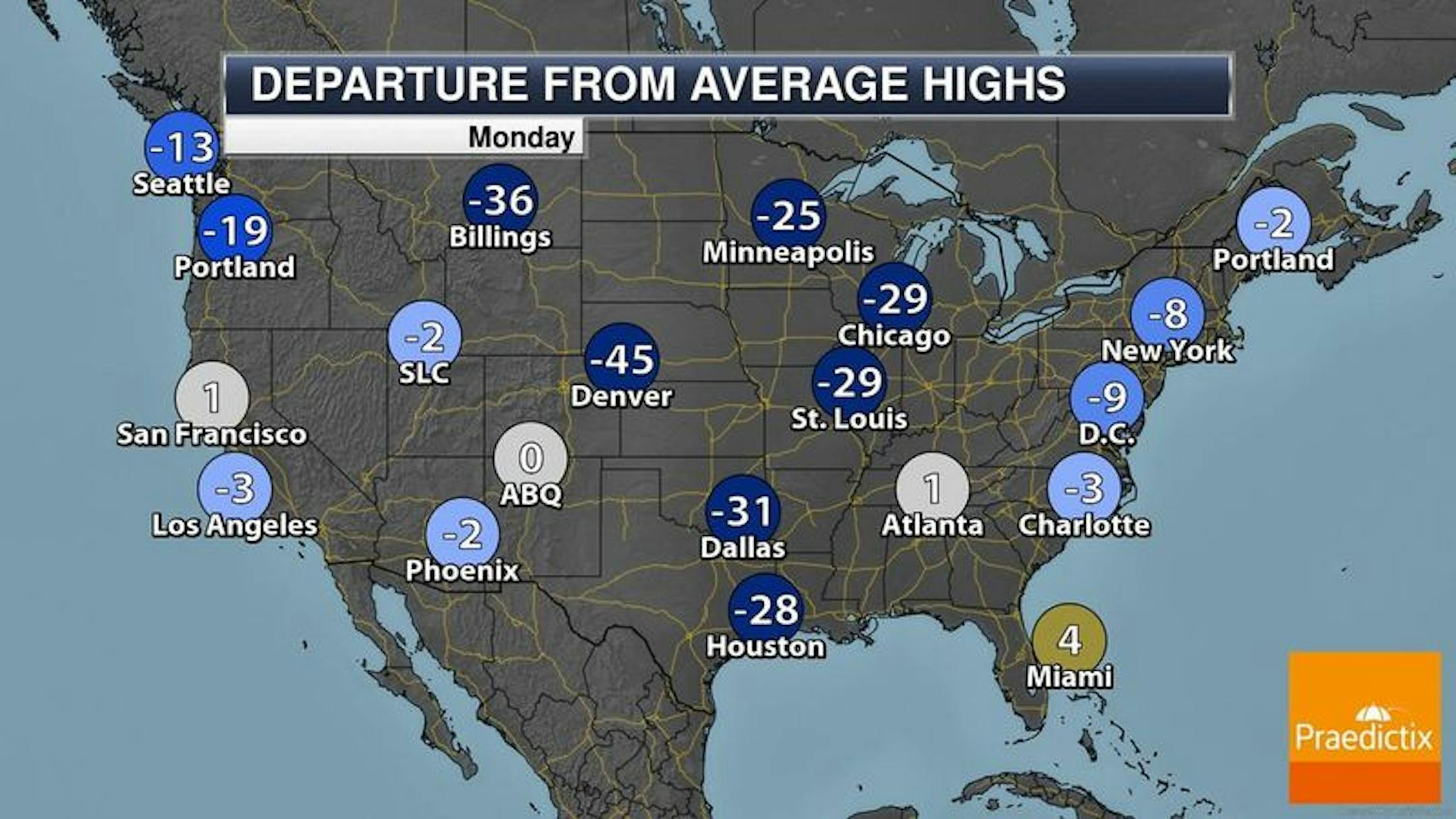
Take a look at the 850mb temp anomaly across the nation as we head through the next 7 days. Some of the coldest air of the season by far will continue across much of the nation with many dealing with subzero wind chill values.
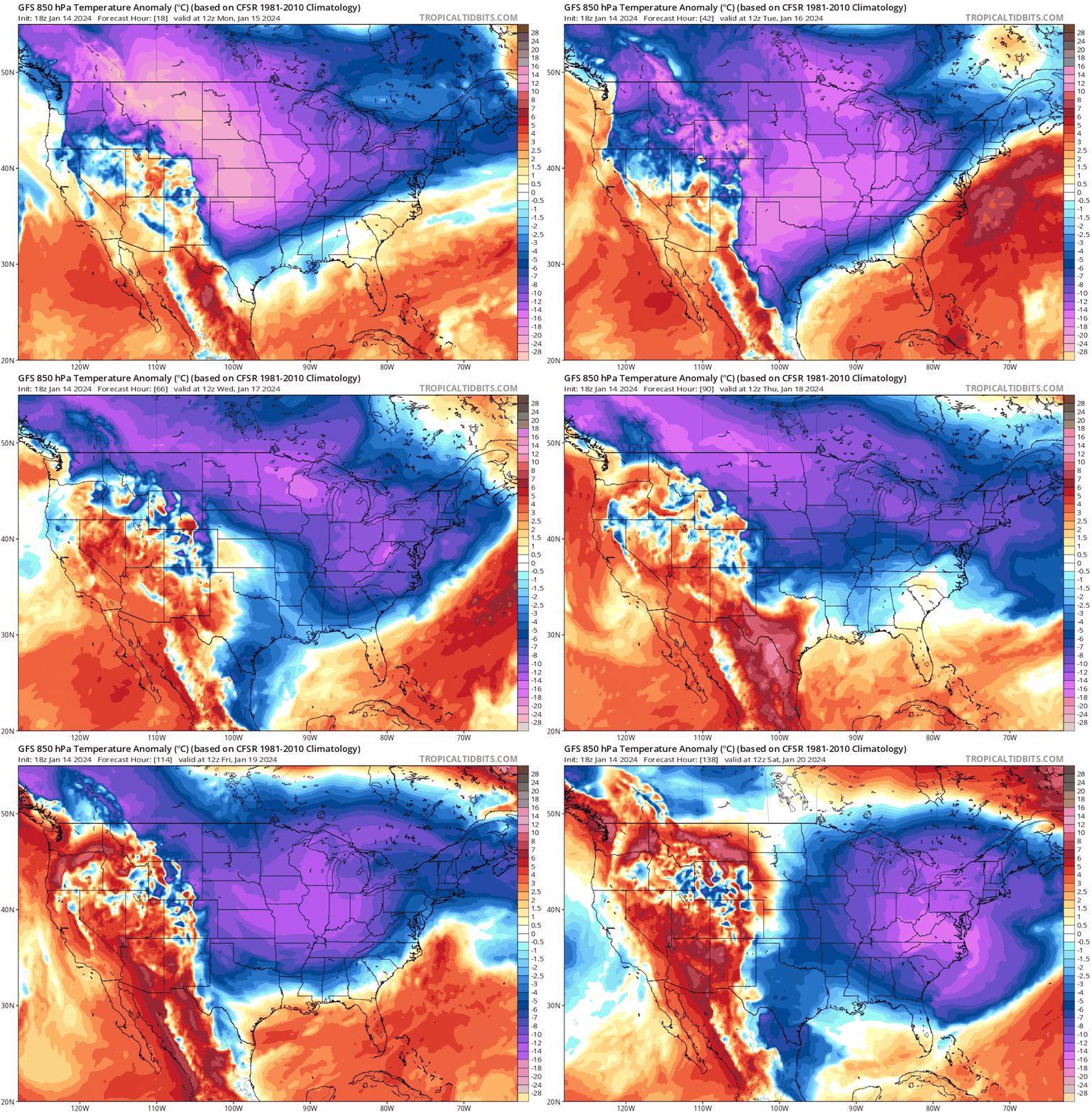
COLD Mid January Temperatures
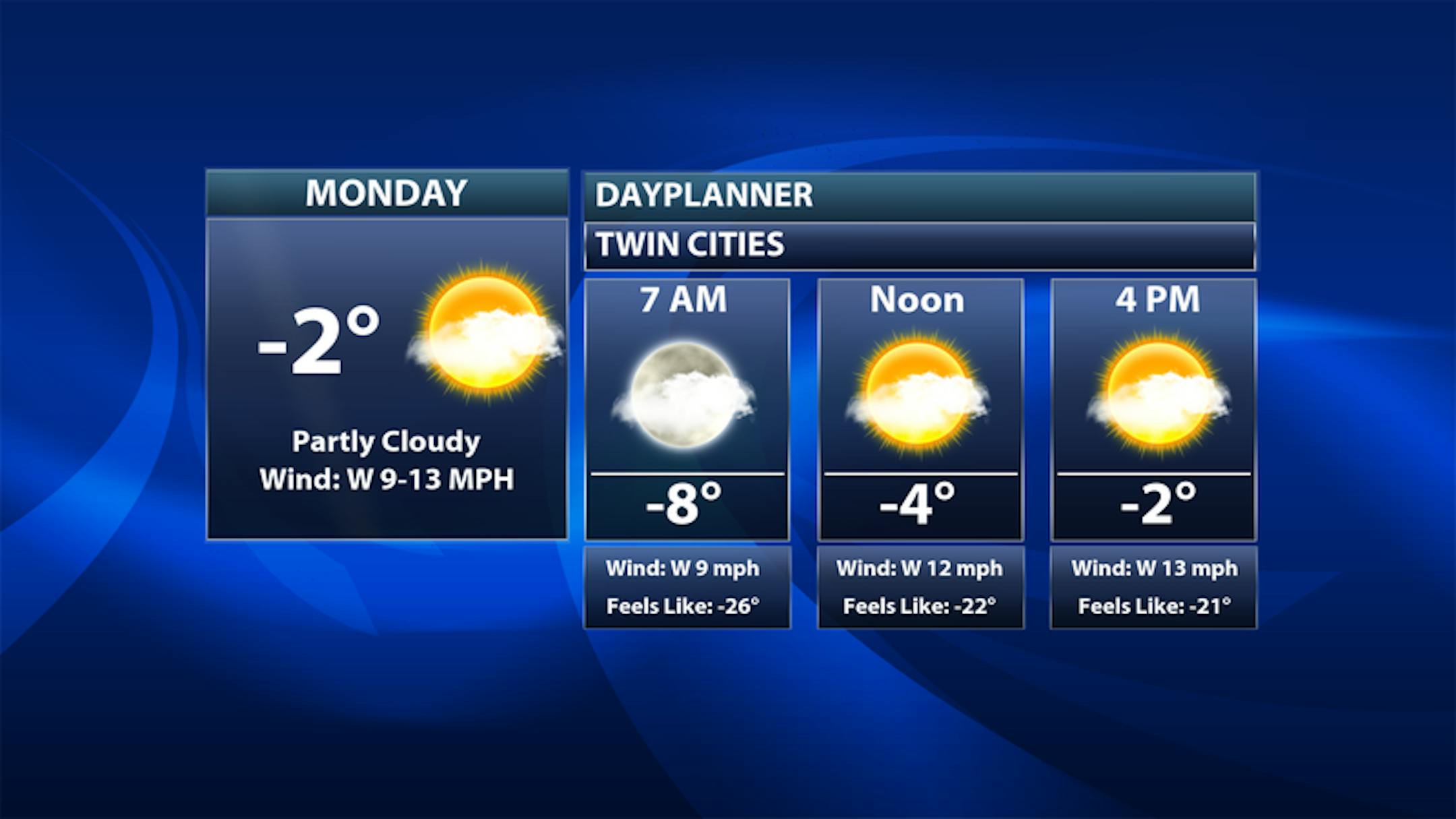
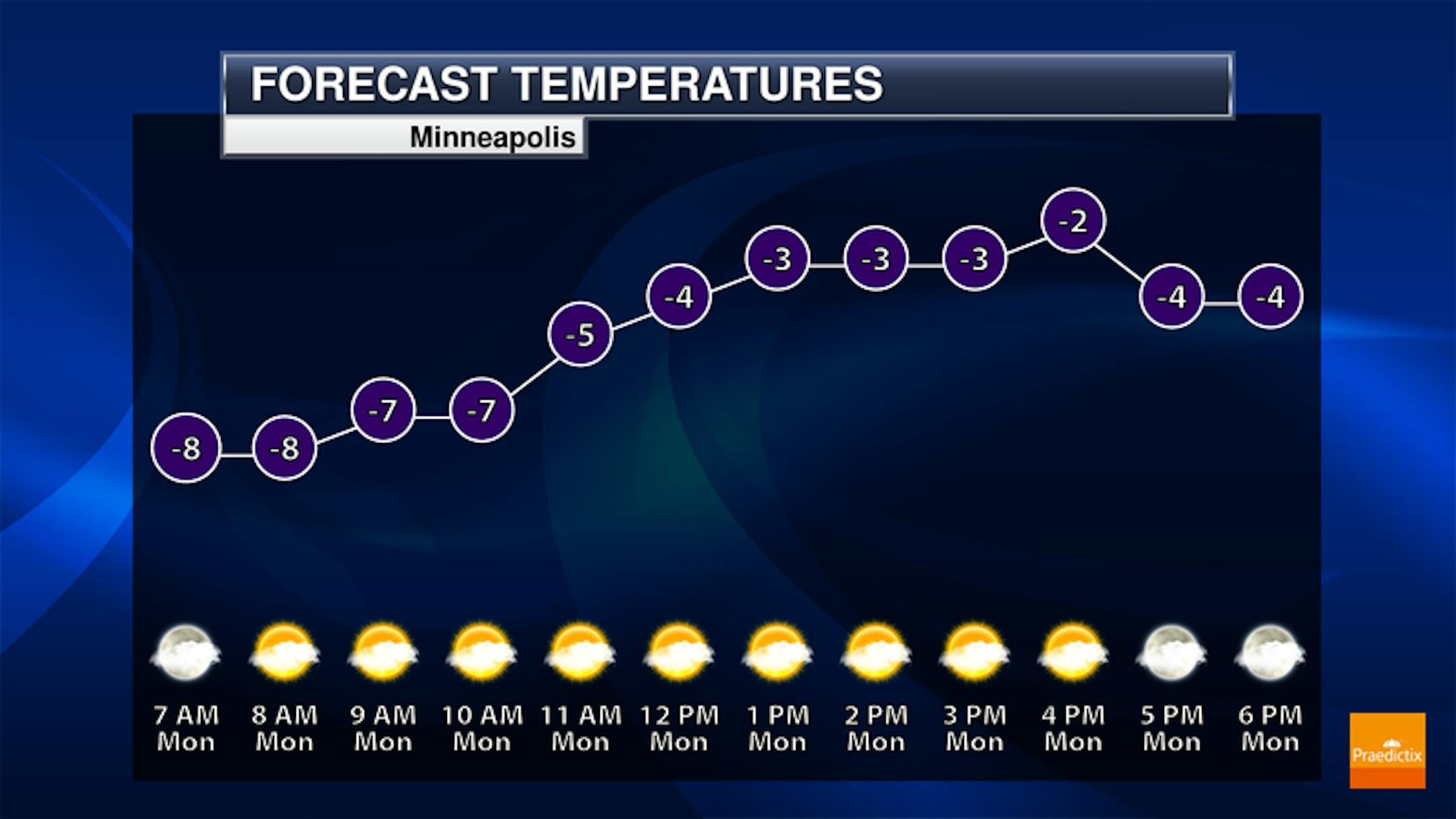
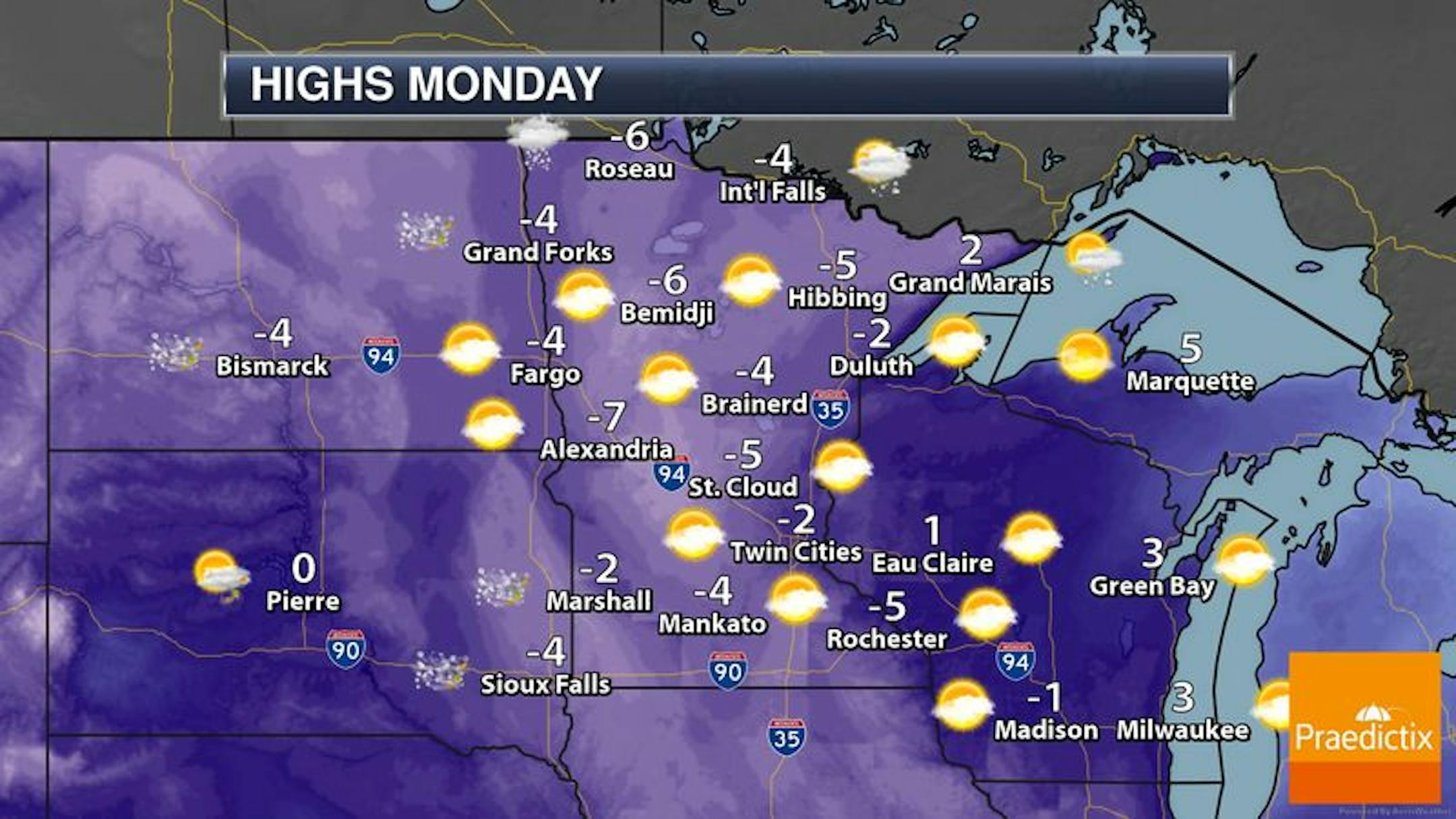
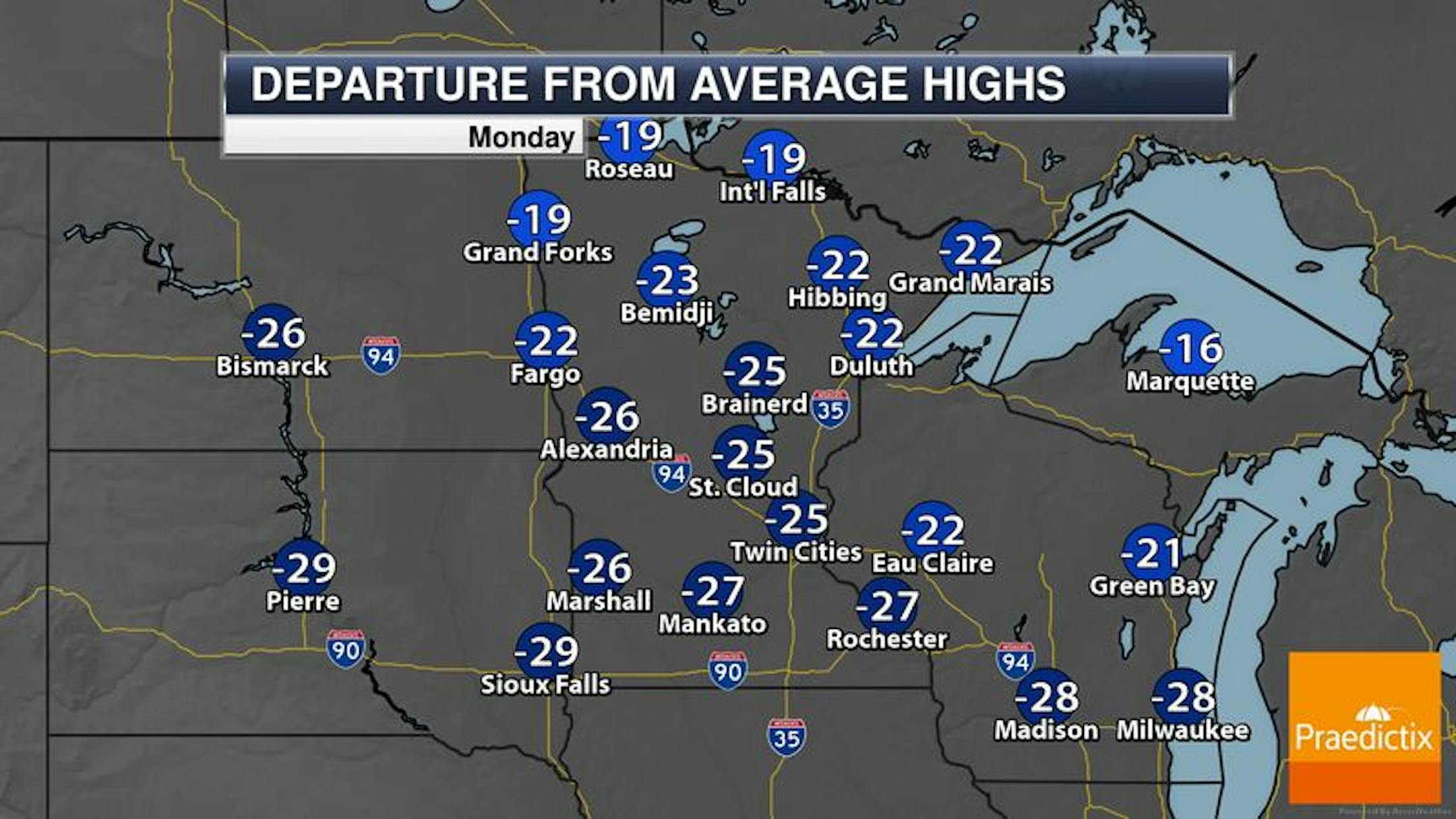
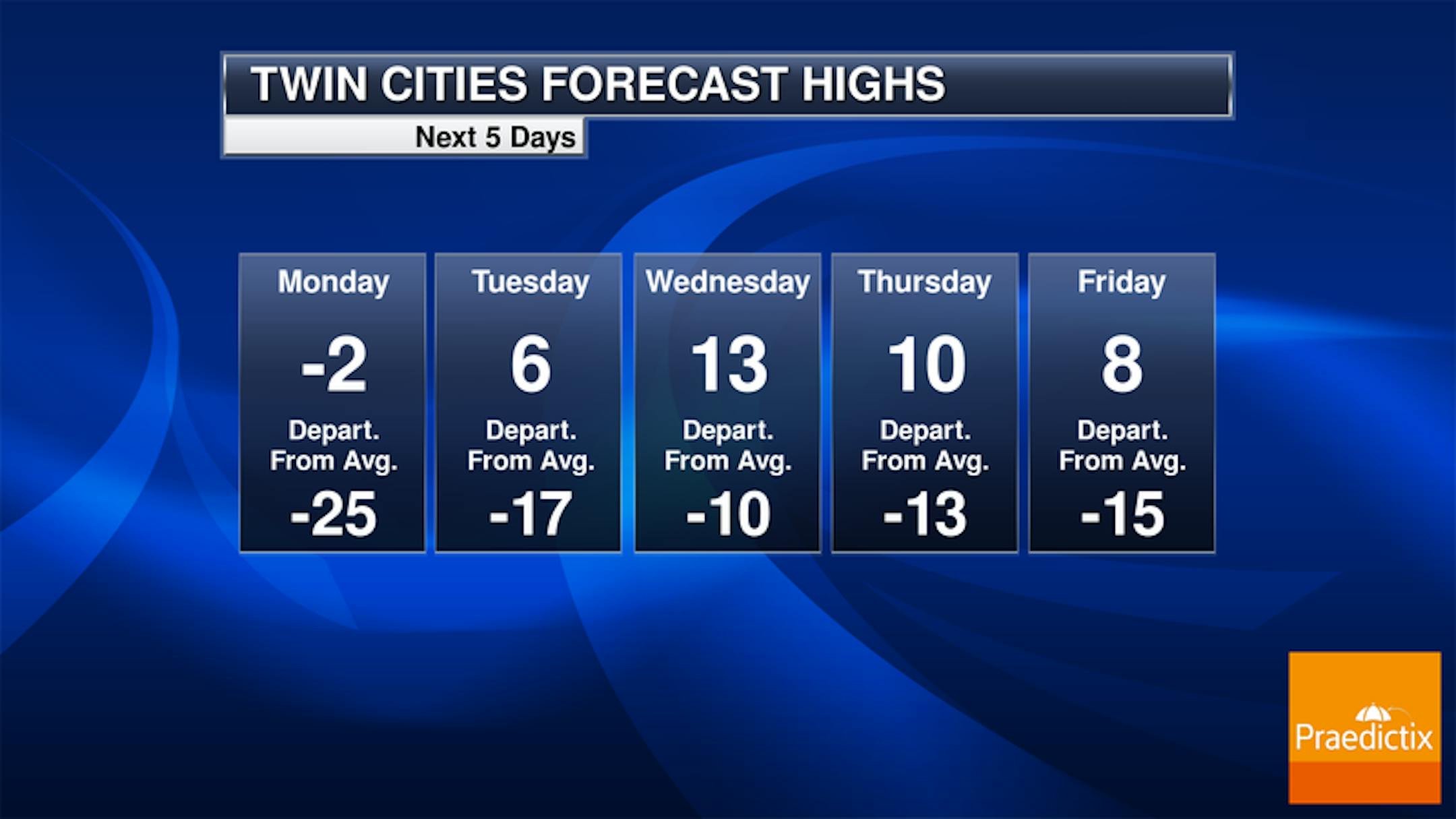
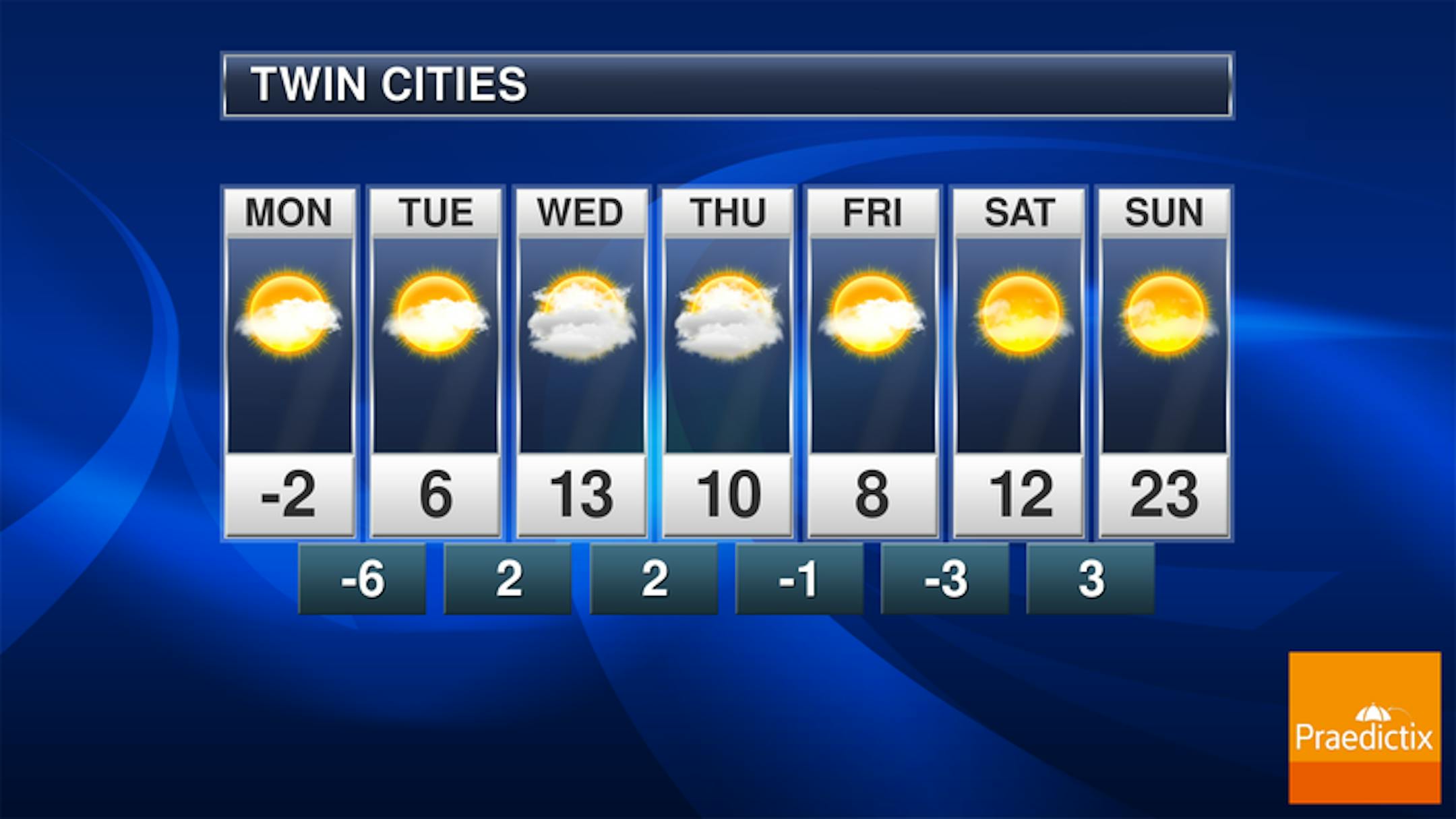
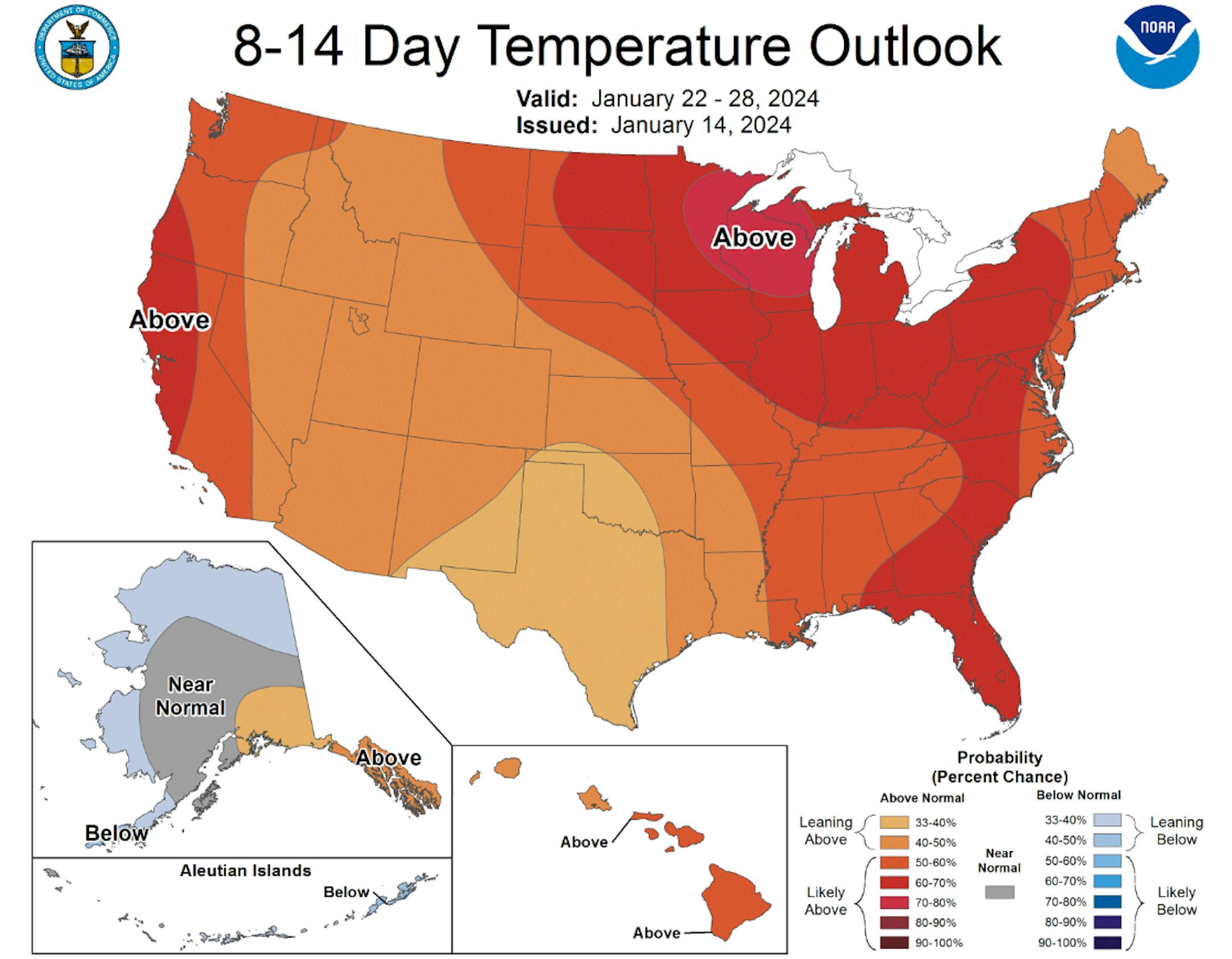
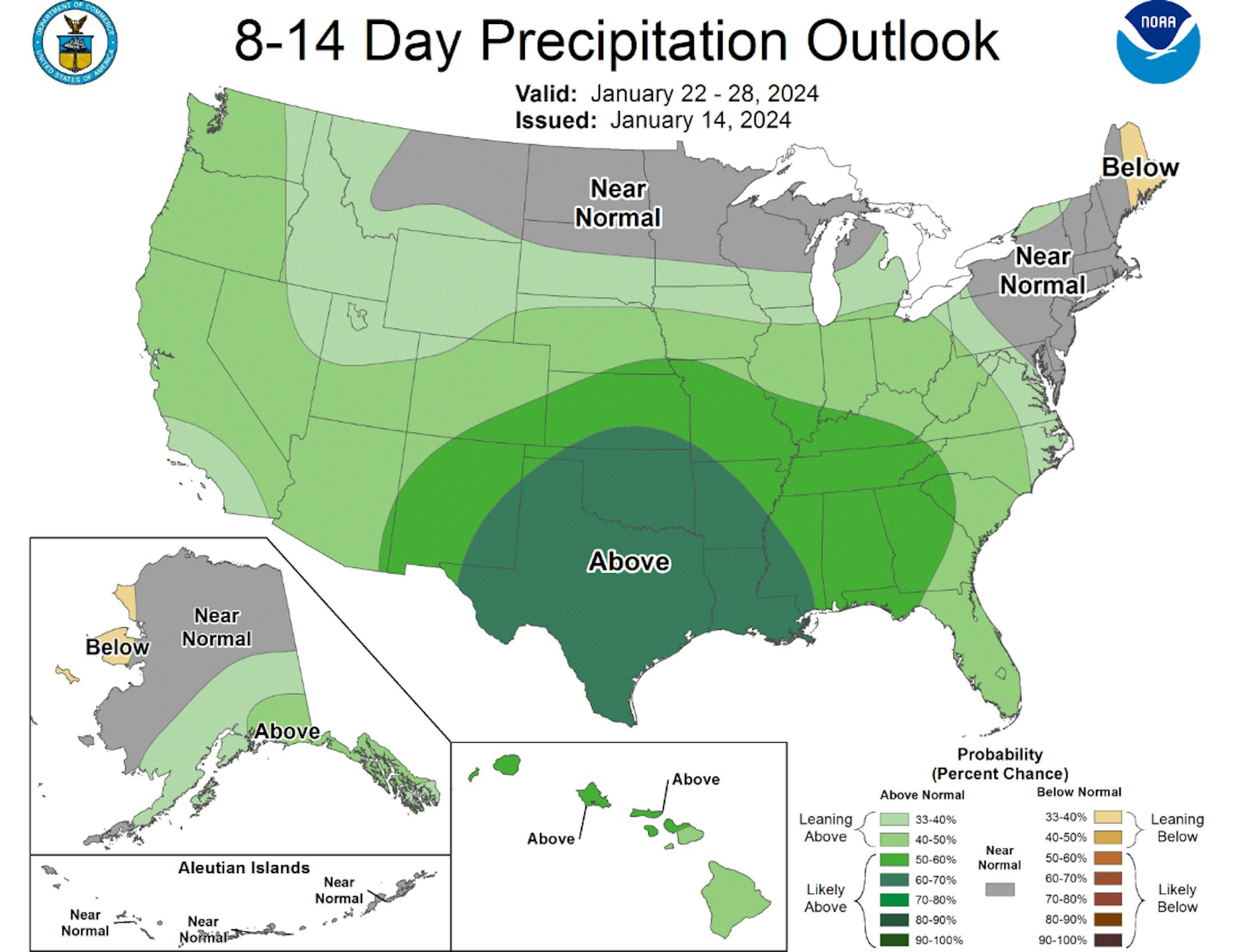
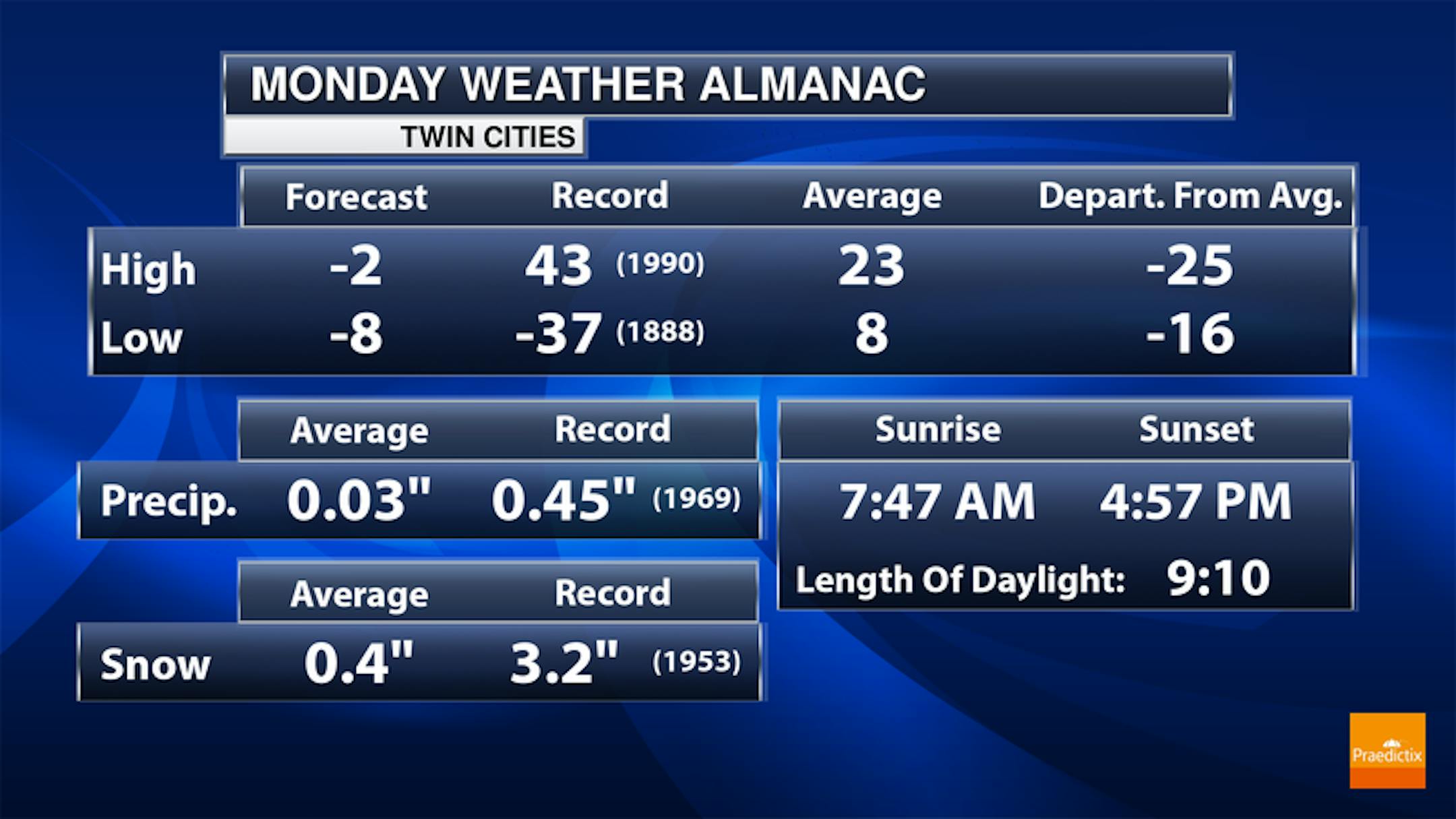
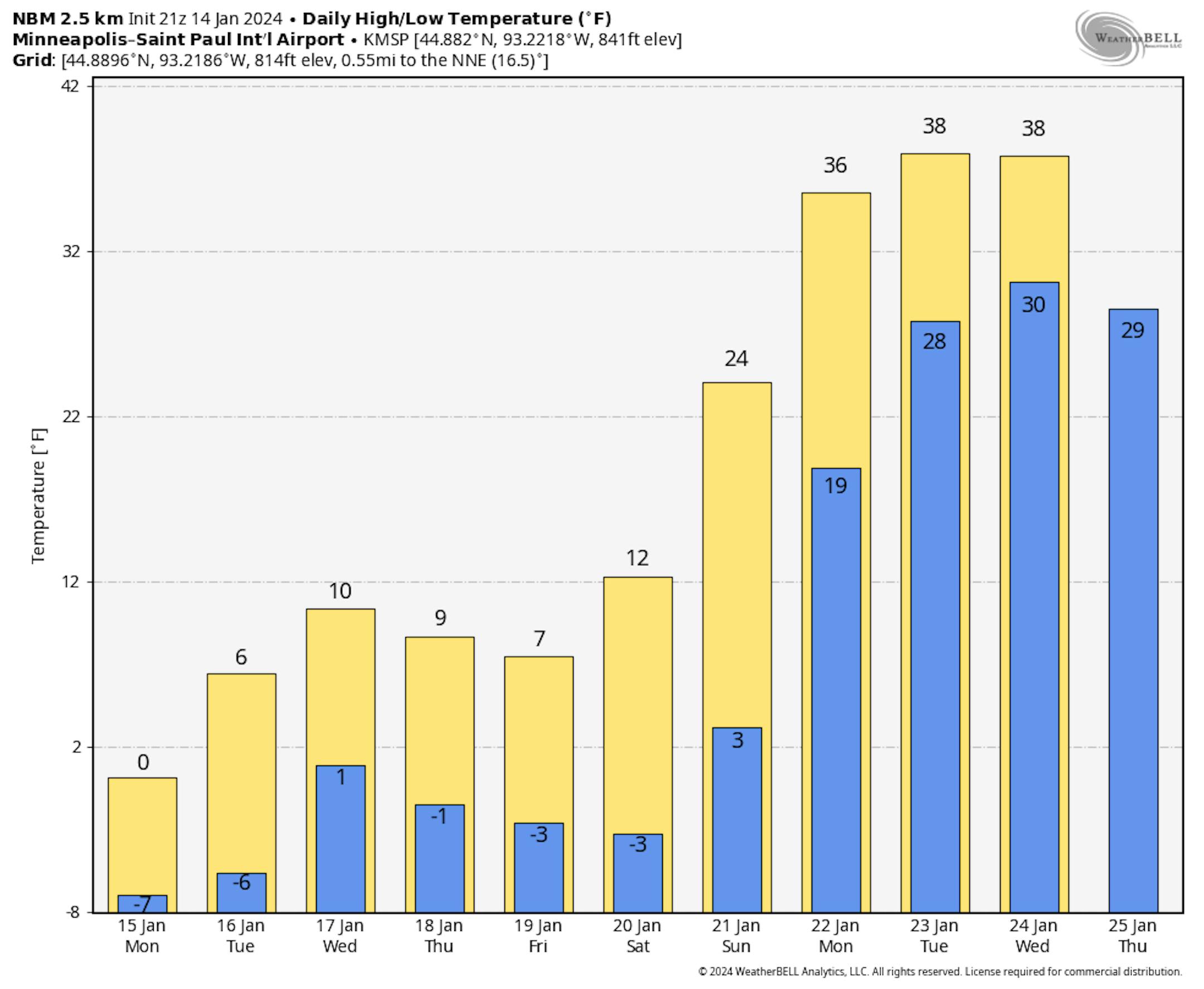
Temps in the Twin Cities over the next several days will continue to see very cold temps with readings running well below average for this time of the year. As we approach the weekend and into next week, we'll see a pretty dramatic shift toward warm temps once again.
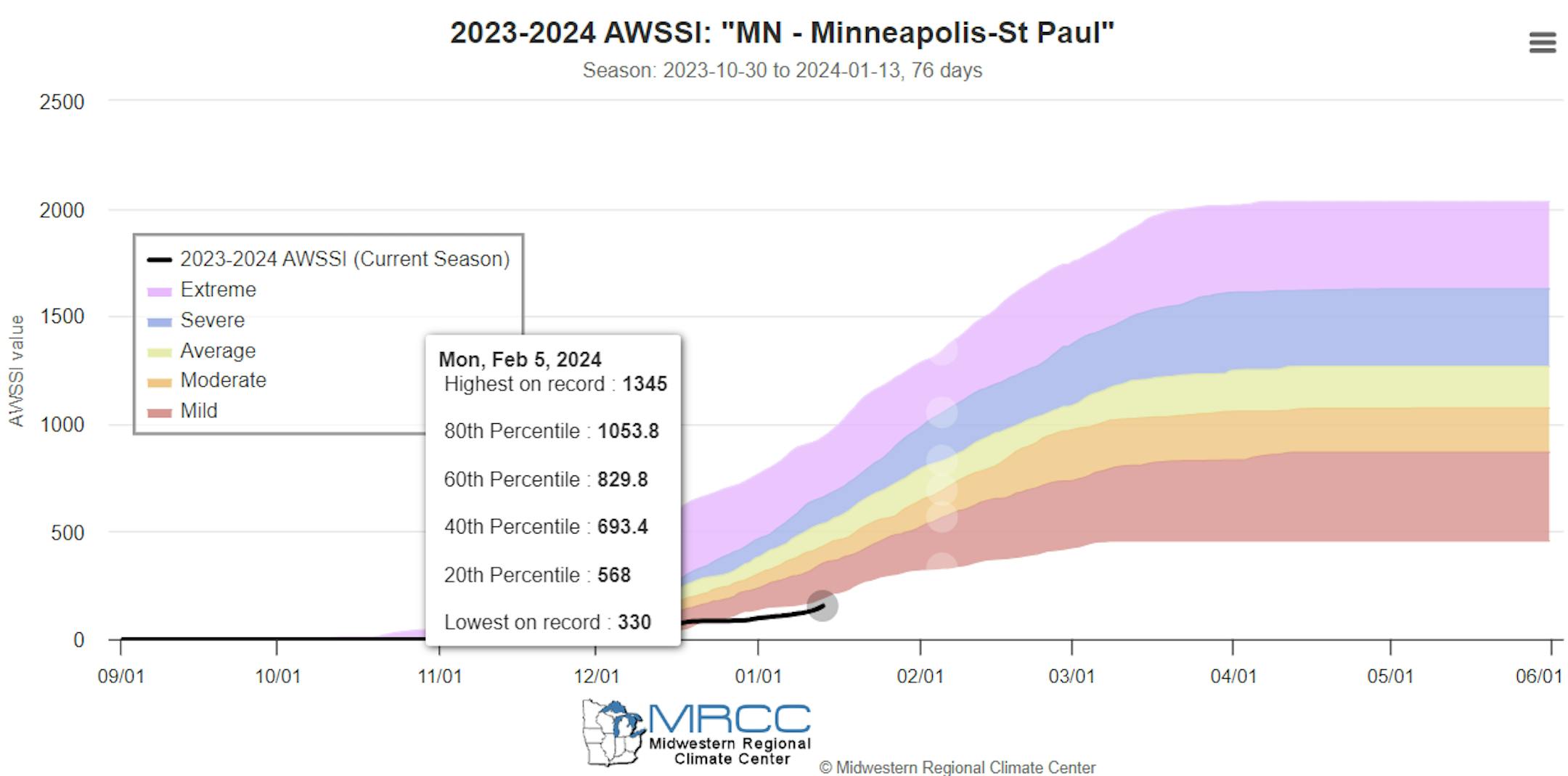
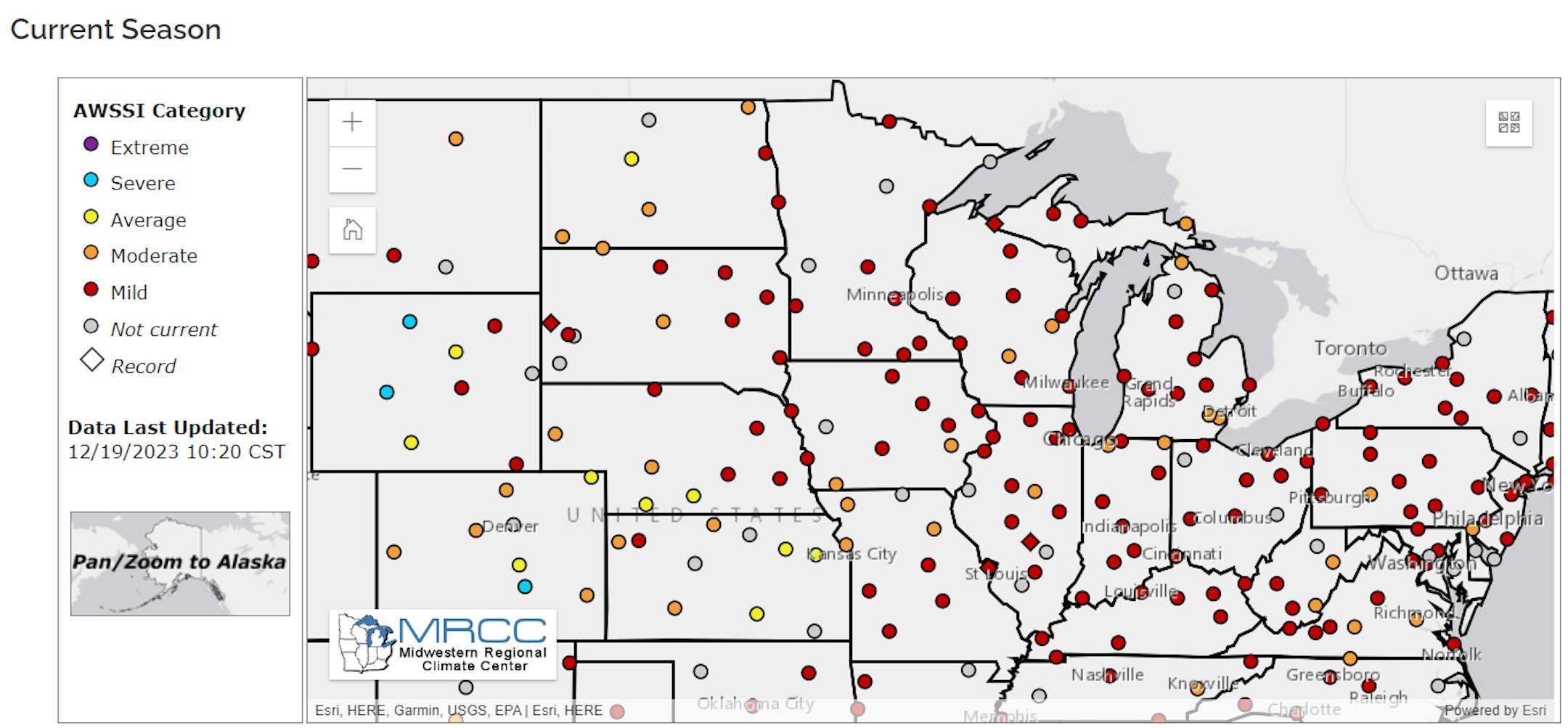
Accumulated Winter Season Severity Index (AWSSI)
"Winter seasons have significant societal impacts across all sectors ranging from direct human health and mortality to commerce, transportation, and education. The question "How severe was this winter?" does not have a simple answer. At the very least, the severity of a winter is related to the intensity and persistence of cold weather, the amount of snow, and the amount and persistence of snow on the ground. The Accumulated Winter Season Severity Index (AWSSI) was developed to objectively quantify and describe the relative severity of the winter season."
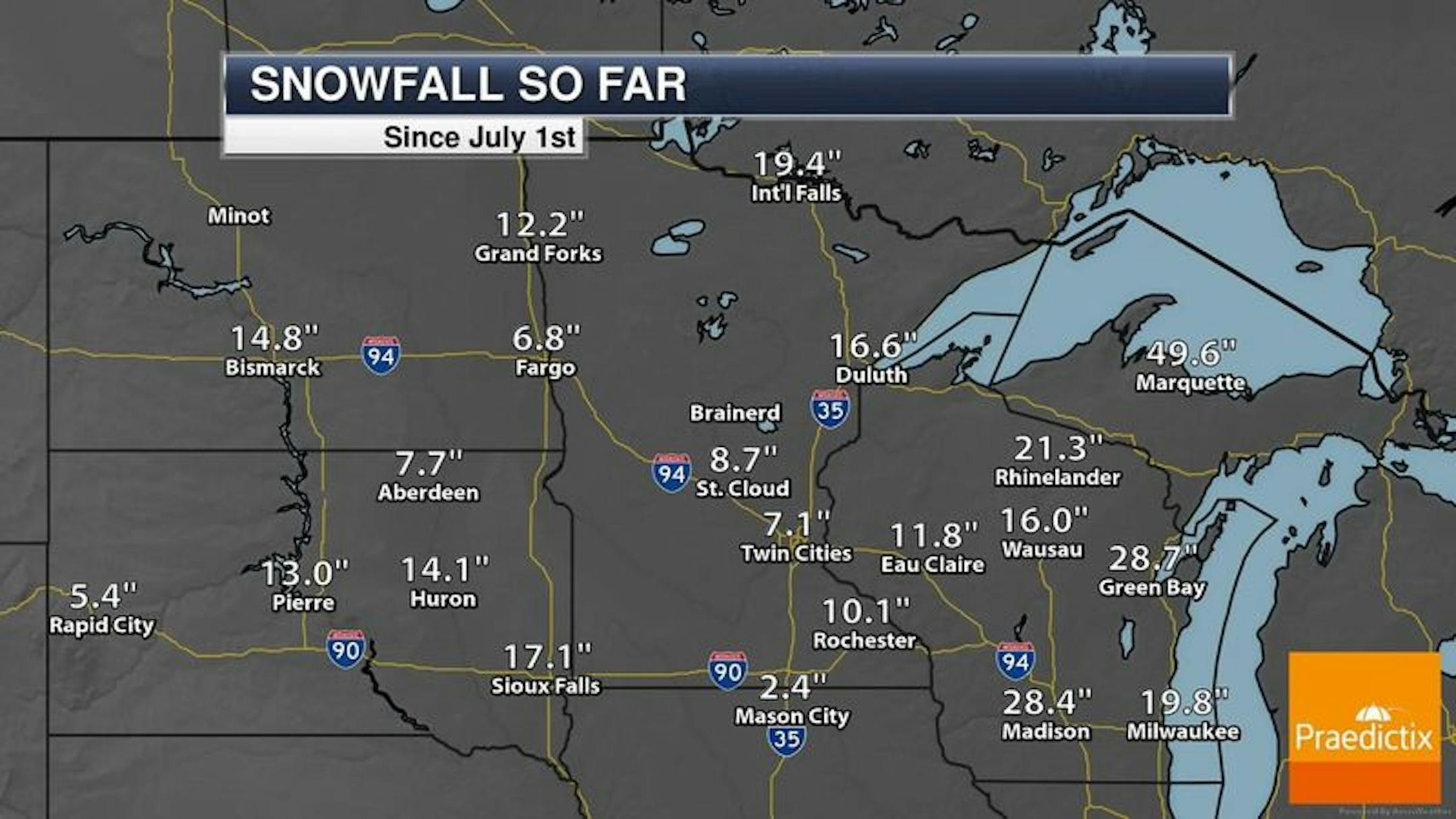
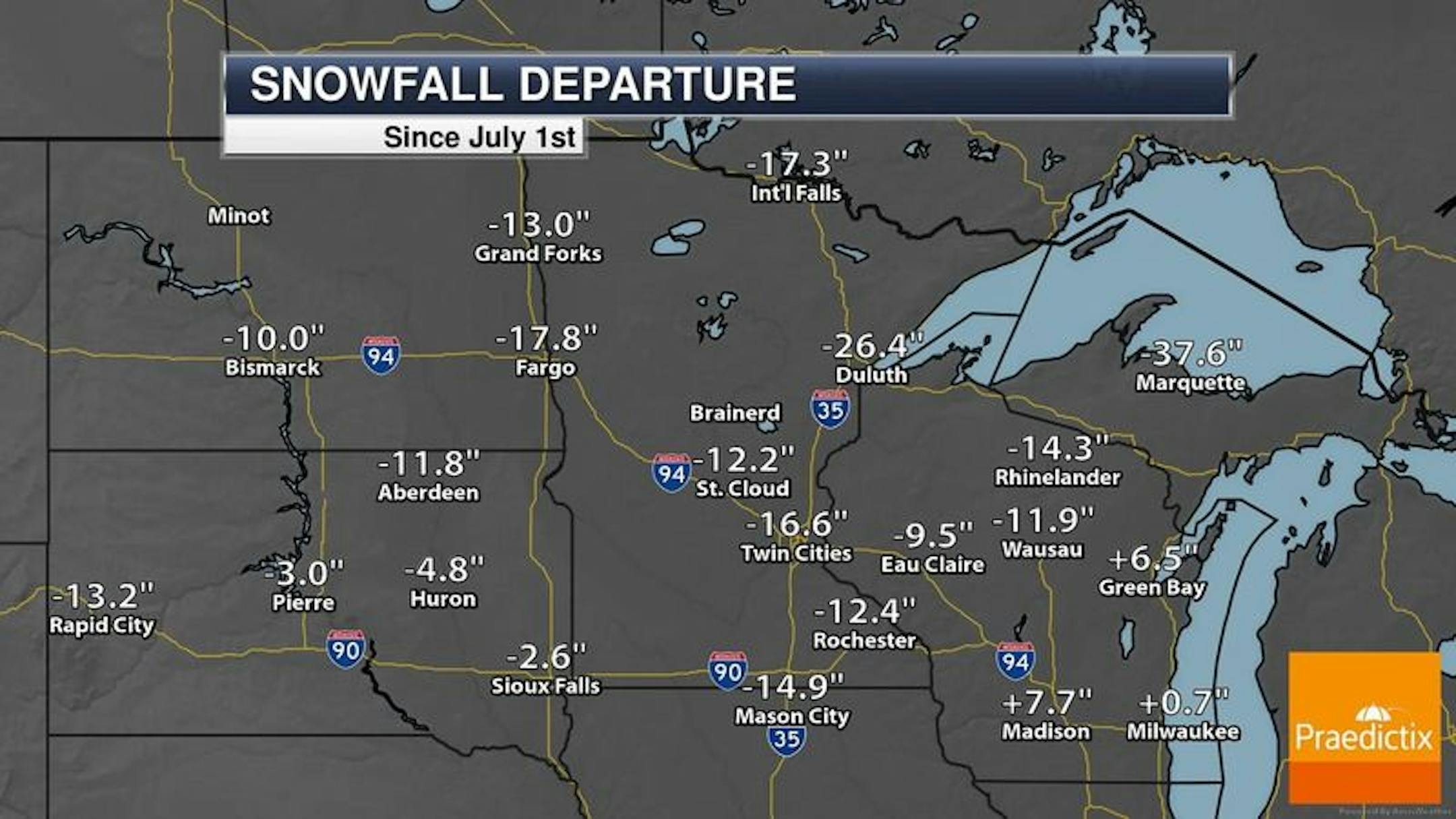
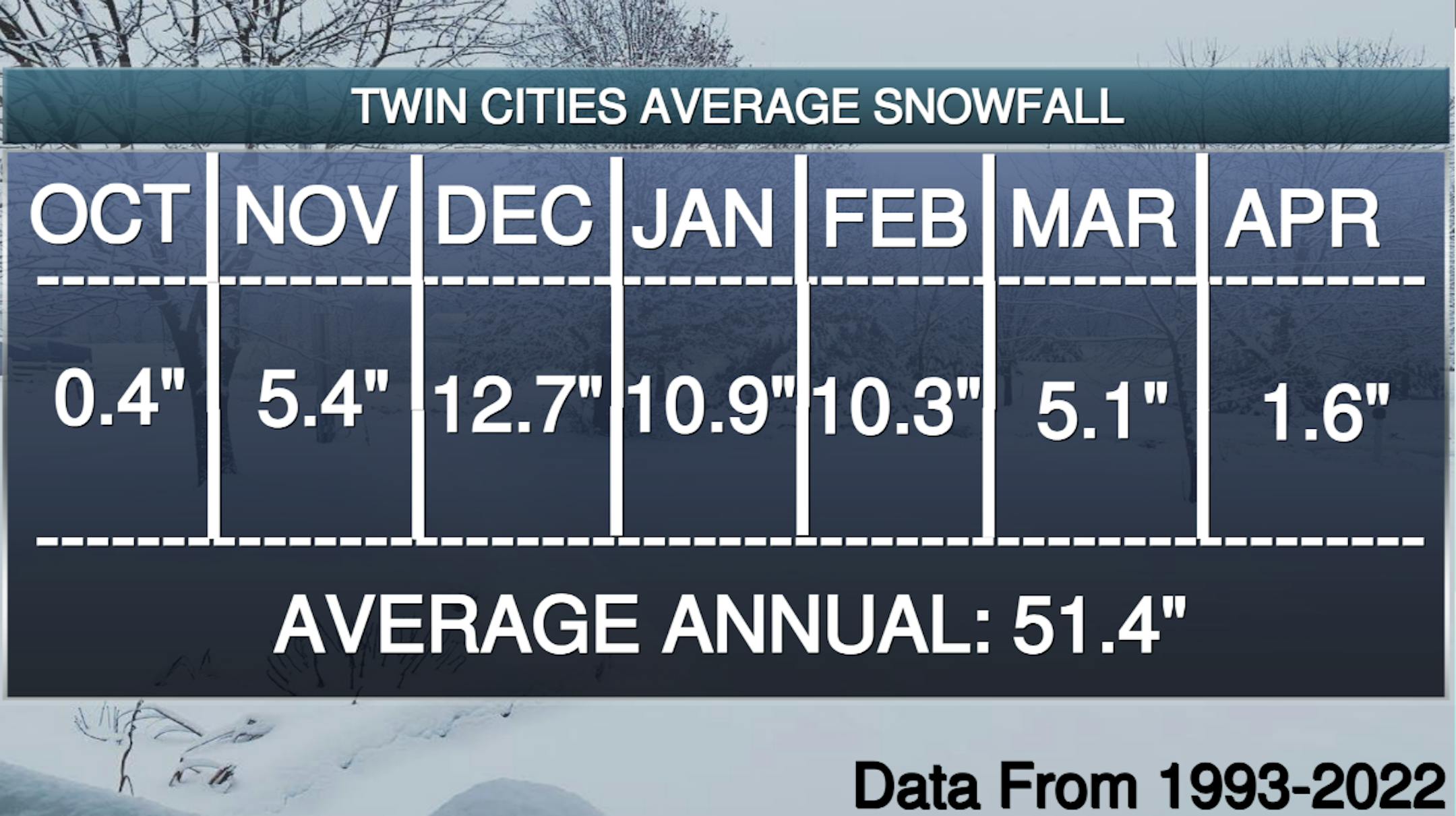
It's probably no surprise, but most locations around the Midwest and Great Lakes have had a "Mild" winter so far. Again, we're still waiting for the other boot to drop, but being in an El Nino setup, a winter like last year is not really in the cards. The Midwest will likely see an overall warmer and less snowy winter.
"Mild" Winter So Far in for the Twin Cities
Here's a look at the Accumulated Winter Season Severity Index (AWSSI) for Minneapolis, MN so far this winter season. With a lack of cold temps and snow, it may be no surprise that we are currently sitting under a "Mild" winter rating so far.