

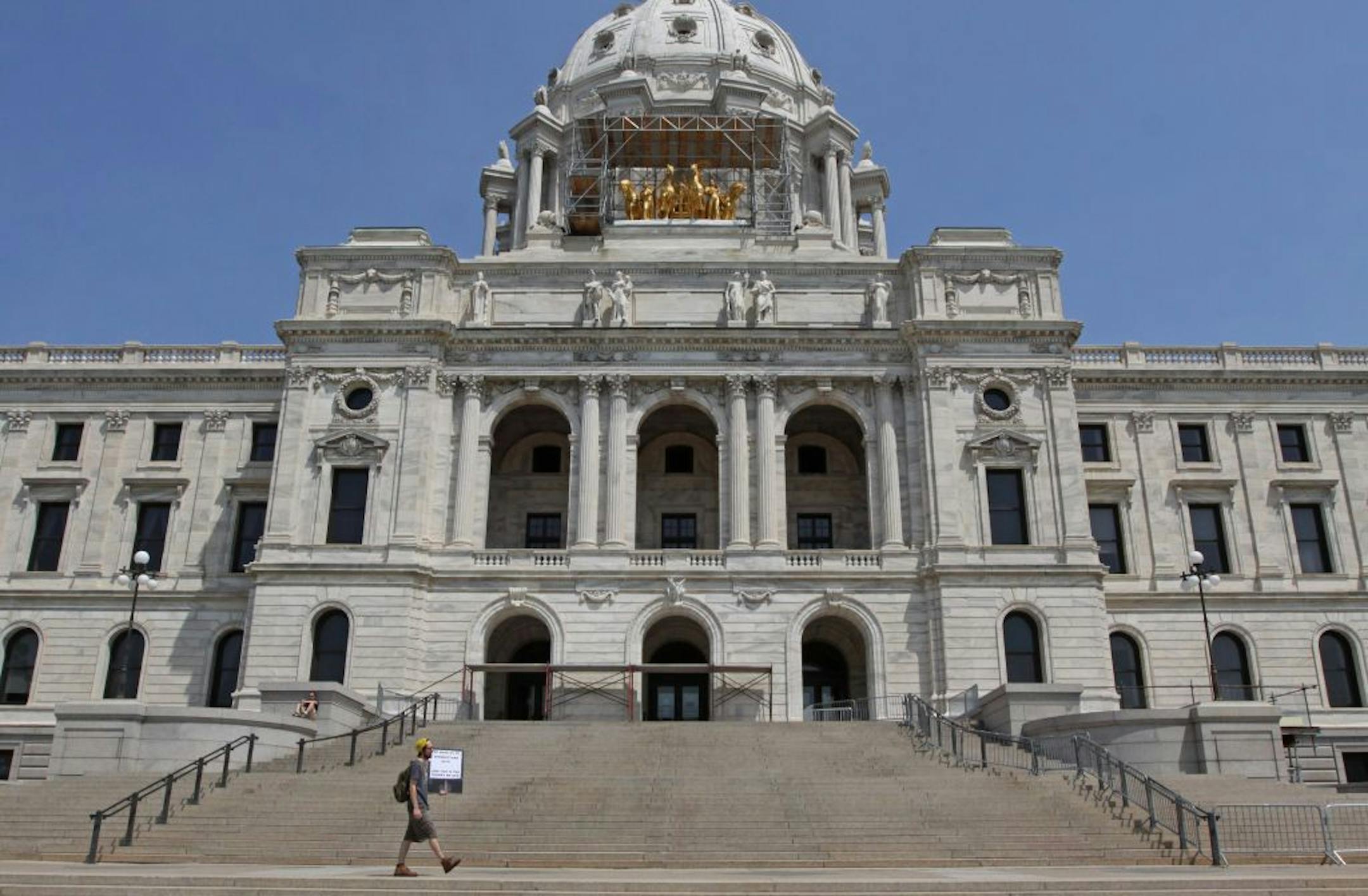
There won't be any holiday weekend resolution to Minnesota's government shutdown.State leaders spent Friday cooling off from the drama and bitter words with which they ended days of negotiations Thursday without an agreement for tackling Minnesota's projected $5 billion budget deficit. And Republican legislative leaders and DFL Gov. Mark Dayton had no plans to talk again until after Independence Day, giving both sides time to regroup and reassess. "It will be good for everyone to hit the refresh button," said state Sen. Julianne Ortman, R-Chanhassen.
The two sides appeared to be inching toward a compromise earlier this week. Dayton had backed off his call for a tax increase on the wealthy and Republicans appeared at least open to considering some increased revenue that didn't raise general taxes. As details of their last offers to each other were made available Friday, it became clear that while about $1.4 billion still separated them, they had agreed on such politically touchy issues as delaying another $700 million due to K-12 schools.
But with an agreement seemingly within reach, the closed-door talks began to unravel midweek. And by Thursday night, they were over -- with both sides feeling that the other had resurrected deal-breaker ideas.
The unwinding began Wednesday night, when Republican negotiators brought back a list of proposed policy changes that Dayton and Democrats had spent months opposing -- including new abortion restrictions, curtailed collective bargaining rights, photo ID voting requirements, a 15 percent reduction in the state workforce, and a ban on embryonic stem cell research.
"It set up some major barriers to reaching an agreement," Dayton said in an interview Friday. The governor added that he was taken by surprise since the two sides had been focusing on financial details. "These policy issues are pushing us farther apart," he said.
The next day, it was the Republicans who found themselves caught off-guard.
Overnight, Dayton had cooled to their proposal to fill the budget gap by borrowing money and paying it back with tobacco settlement revenue. Thursday, he countered by bringing back his idea of raising income taxes on the rich -- specifically, on the state's 7,700 millionaires.
Republicans quickly rejected that idea, saying they could never find the votes for an income tax increase.


