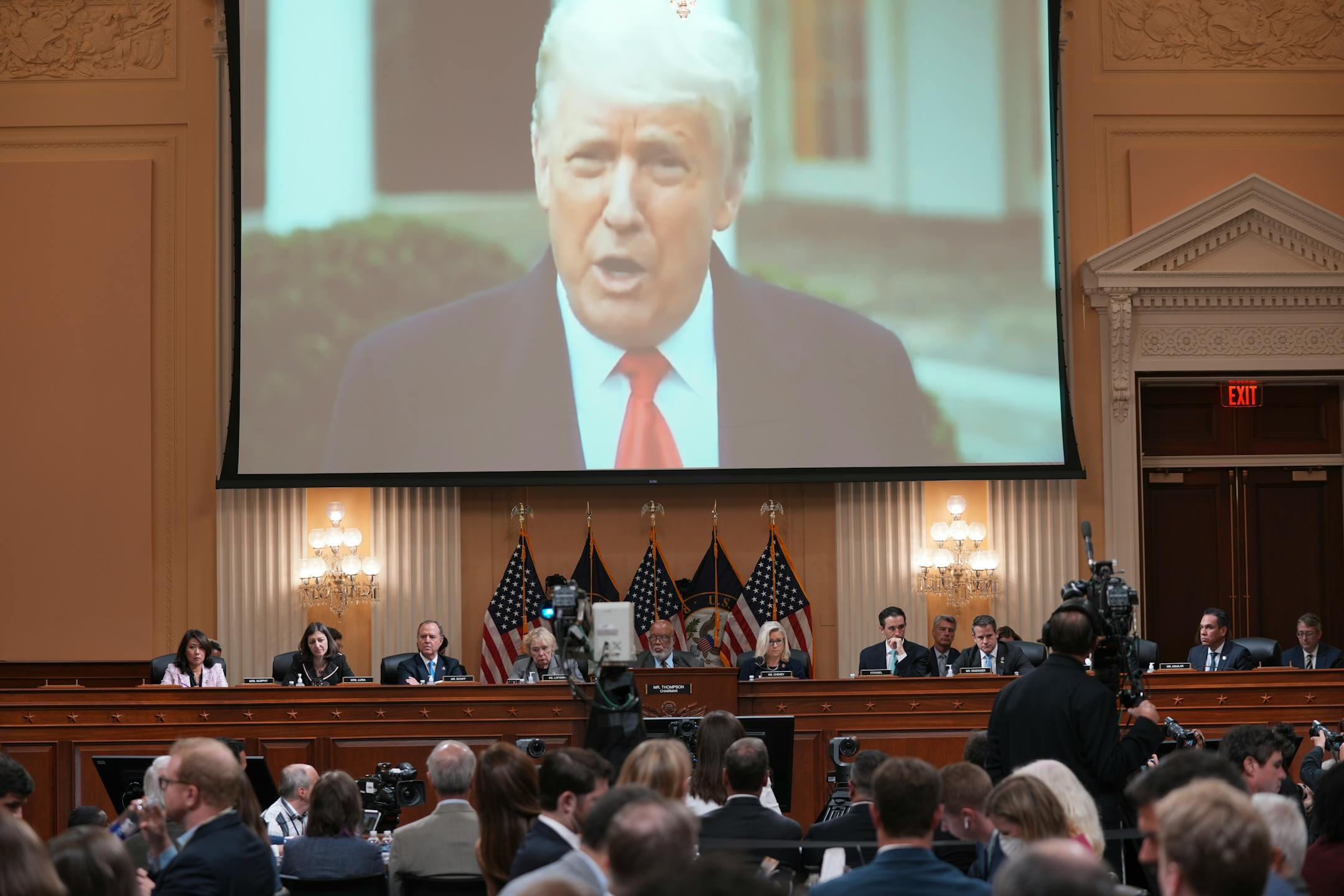
The U.S. House Jan. 6 committee decided Monday that the best way to cap its 18 months of work would be a political gesture. It thus referred former President Donald Trump to the Justice Department for potential criminal prosecution for his efforts to reverse the 2020 election, which culminated in the Capitol riot.
What is this supposed to accomplish? A congressional referral to the Justice Department has all the legal force of an interoffice memo. Attorney General Merrick Garland has appointed special counsel Jack Smith to investigate Trump's schemes to stay in office. The Jan. 6 committee's loud public intervention makes his job more complicated, given the clear partisan context.
The House Jan. 6 inquiry has done useful work gathering documents and putting witnesses under oath. The wiser course was to let the established facts speak for themselves while releasing full transcripts of its interviews to provide a complete public record.
The questions for Smith are whether Trump's reckless conduct was criminal and whether indicting him is prudent and good for the country. The House referral cites laws against insurrection, obstruction of an official proceeding, conspiracy to defraud the United States, and conspiracy to make a false statement to the government. But getting a conviction requires a unanimous jury, and the House theories of the case have serious problems based on the current public evidence.
The "insurrection" on Jan. 6 was a rally that turned into a riot. As far as we know, there isn't any allegation that Trump was secretly urging on instigators, such as the Oath Keepers or Proud Boys. There's been much loose talk about Jan. 6 as an attempted "coup," but Trump lacked support from the military, his own White House lawyers, most if not all of his Cabinet, senior leaders at the Justice Department, senior legislative leaders in contested states, and his own vice president.
When Trump pressured Vice President Mike Pence to reject Electoral College votes, he was following a crackpot legal theory that claimed to represent the true meaning of the Constitution. It was floated by John Eastman, a former law professor whom the committee also referred to the Justice Department.
But giving rotten legal advice isn't illegal. Trump's ultimate goal wasn't to obstruct the congressional session on Jan. 6; he wanted it to go his way. This was nonsense, and it had no chance of success, but was it a crime to lobby Pence to try? Pence, who stood up to the browbeating, said Monday he doesn't think it was.
Also, what about the First Amendment? The 2020 election wasn't stolen, but Trump has a right to argue it was, even if he knows he's misleading his followers. Politicians dissemble all the time. The Justice Department's job isn't to police partisan deceit as criminal conspiracy.