

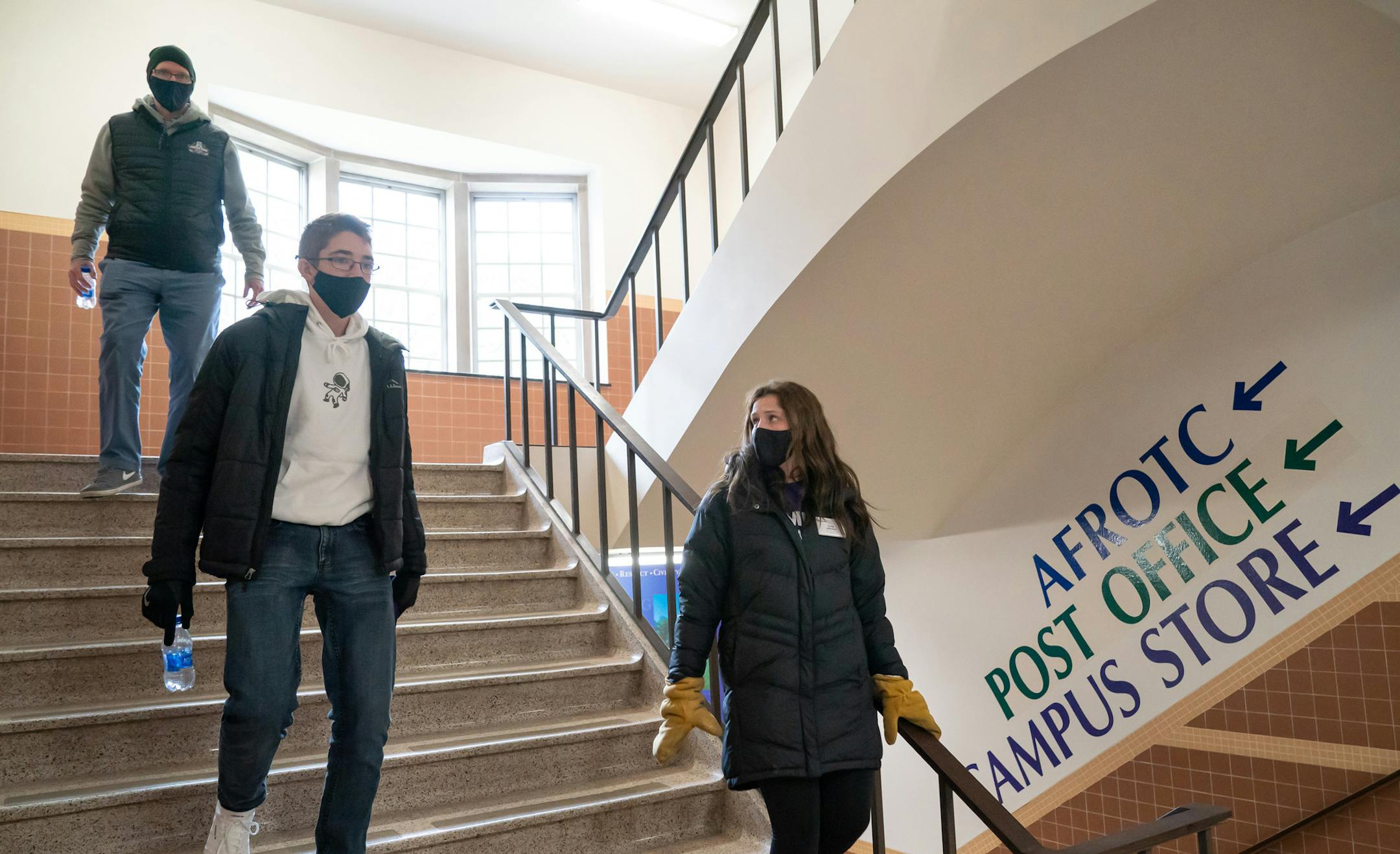
A college application season like no other is in full swing, with the pandemic reshaping admissions requirements and forcing prospective students to choose a school without knowing what the next year holds.
Minnesota high school seniors will not be required to submit standardized test scores with many of their fall 2021 applications, but they might have to select a college without ever stepping foot on its campus. Meanwhile, college admissions staff are deciphering how distance learning and pass/fail grading policies have affected students' transcripts and extracurricular involvement.
The college admissions process has never been stranger.
"They're adapting to the uncertainty. The uncertainty of high school but also knowing that they're not even sure that they know what college is going to look like next year for them," said Lael Storlie, a counselor at Deer River High School.
In some ways, Storlie said, the college application process has become more accessible for seniors. They can now connect with admissions counselors over Zoom and virtually tour out-of-state campuses. After months of distance learning, students have become more digitally literate and comfortable navigating such processes, she added.
But changes to SAT and ACT requirements have confused some students. Many colleges in Minnesota and across the country have temporarily gone test-optional, waiving standardized test score requirements for fall 2021 applicants due to the challenge of scheduling tests during the pandemic. The move has left students wondering if not submitting a test score will put them behind applicants who do in consideration for admission and scholarships.
College admissions counselors say every student will be treated equally, regardless of whether they submit a test score. This year, institutions are paying closer attention to GPA, class rank and course rigor.
Distance learning and new grading policies have made those metrics harder to judge, however, prompting college counselors to look further back in students' transcripts. The loss of most high school extracurriculars has had a similar effect, making it more difficult to gauge students' involvement and leadership.


