

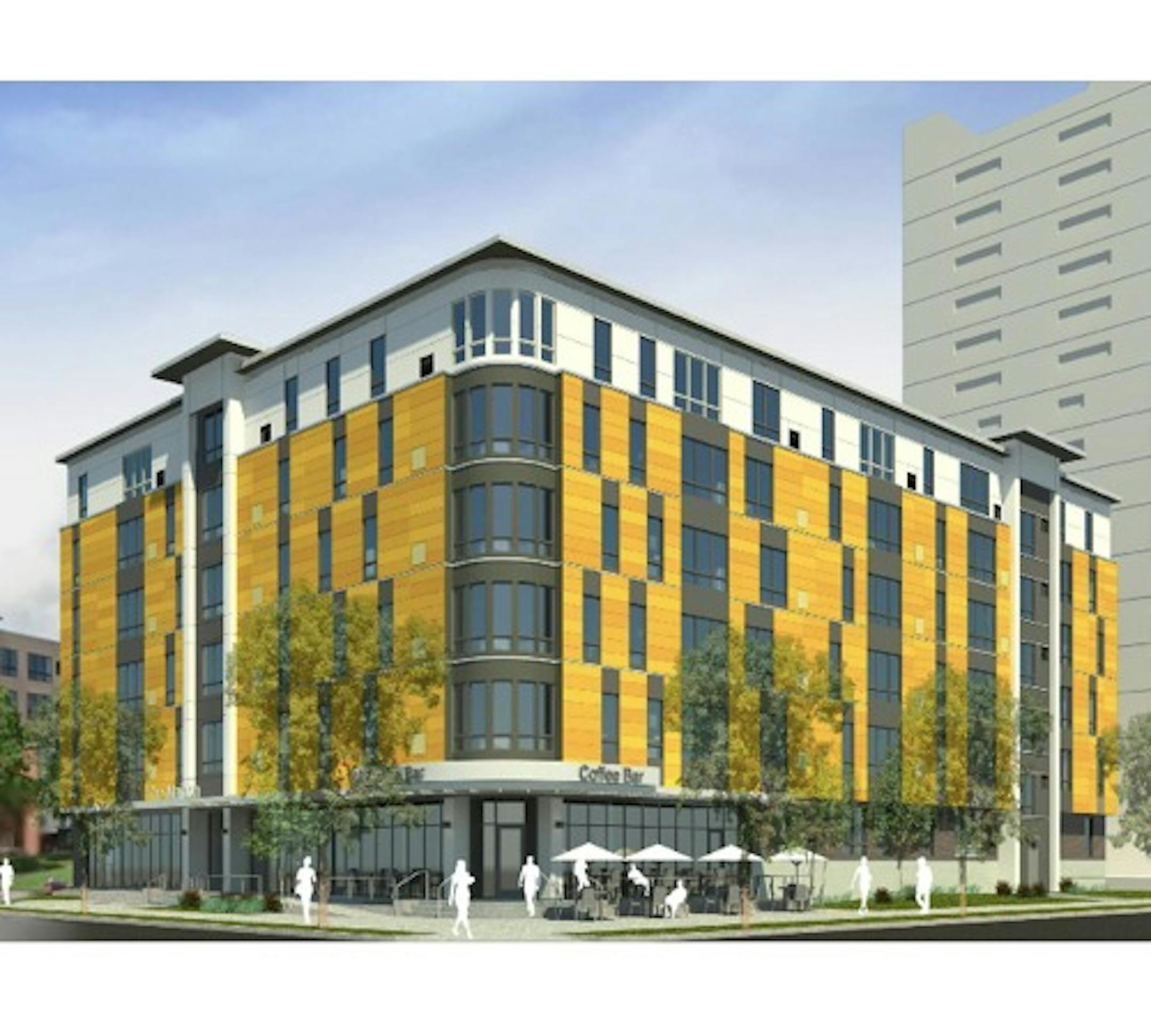
Criticizing new buildings has to come with a disclaimer: it's good to have a boom. Better to see cranes than wrecking balls; better to have ordinary new buildings go up than live some place where the economy is flat on its back and the only thing anyone built in the last ten years is a buck-sucking big-box chain on the edge of town.
But this . . . well.
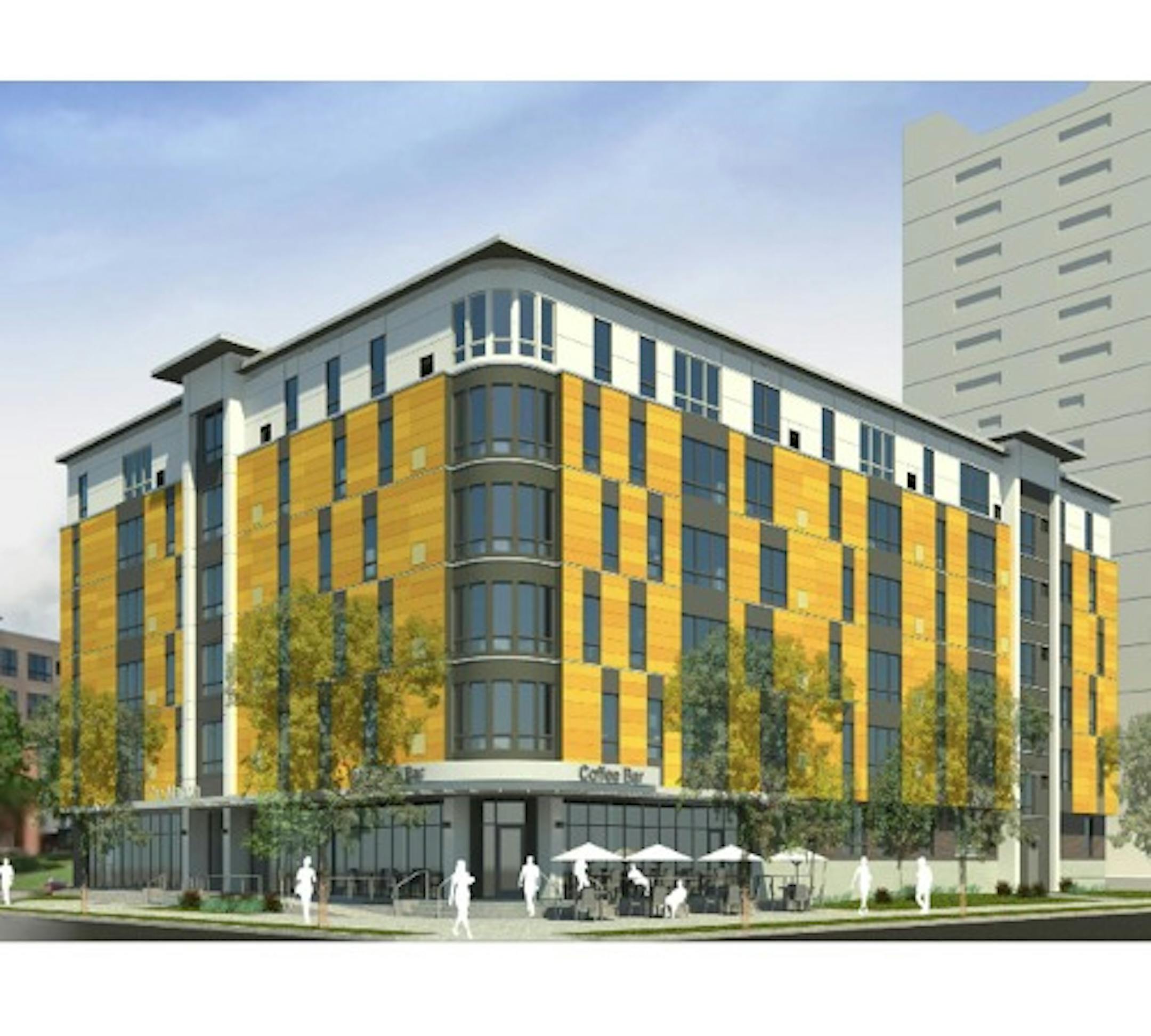
Never mind the hue, which appears to be product placement by French's mustard. The yellow hue works off the tint of the Varsity theater down the block, so that works, and it's laudable that someone tries to bring vivacity to the corner. Residents need never give their address; they can say they live in The Yellow One? in Dinkytown, and that's enough.
There are two problems. One: the windows. Thin windows.The corner windows are nice, even if it looks like a hinge on a door that never opens, but the thin windows have that punchcard / bunker-slit look from the late 60s / early 70s, and staggering them doesn't absolve all the sins.
Second: that . . . protrusion on the roof. The meaningless stylized angled protrusion, or MSAP, is practically required on all buildings these days, a stylistic tic that says "modern apartment building with an urban vibe and a gas fireplace in the lobby and it's not a dorm even though seriously you guys someone barfed in the elevator after the last Gophers game. But otherwise we're totally adults." It's like the brim of a baseball cap.
Then there's this, a planned three-block development on West Broadway: It replaces a string of old tired buildings. Who could complain?
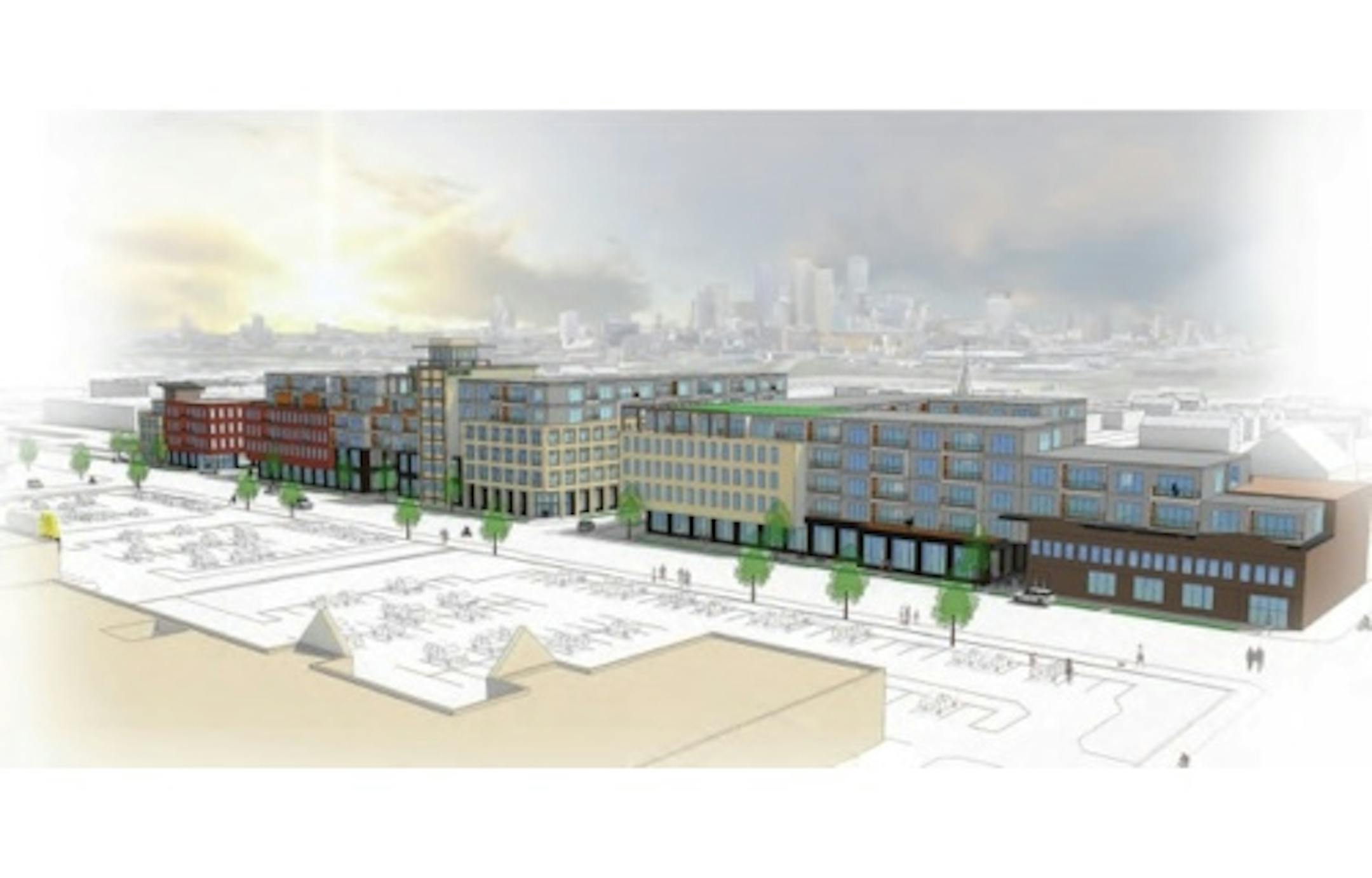
Well, I will. With qualifications. First of all, it should be built. If someone wants to sink money into that neighborhood and bring it up, applause. The design has enough variety to give it cohesion, but at least it pretends to be different buildings, instead of one long faceless glass thing or faux-historical brick mega-development doomed to fail.
Nevertheless, it's a missed opportunity. No one's saying the buildings it would replace have great architectural distinction. They don't. Mostly one-story commercial structures from the Coolidge era. But a few buildings doomed to die for the development have a quality their replacement can never have: style, size, history, presence. This one:


