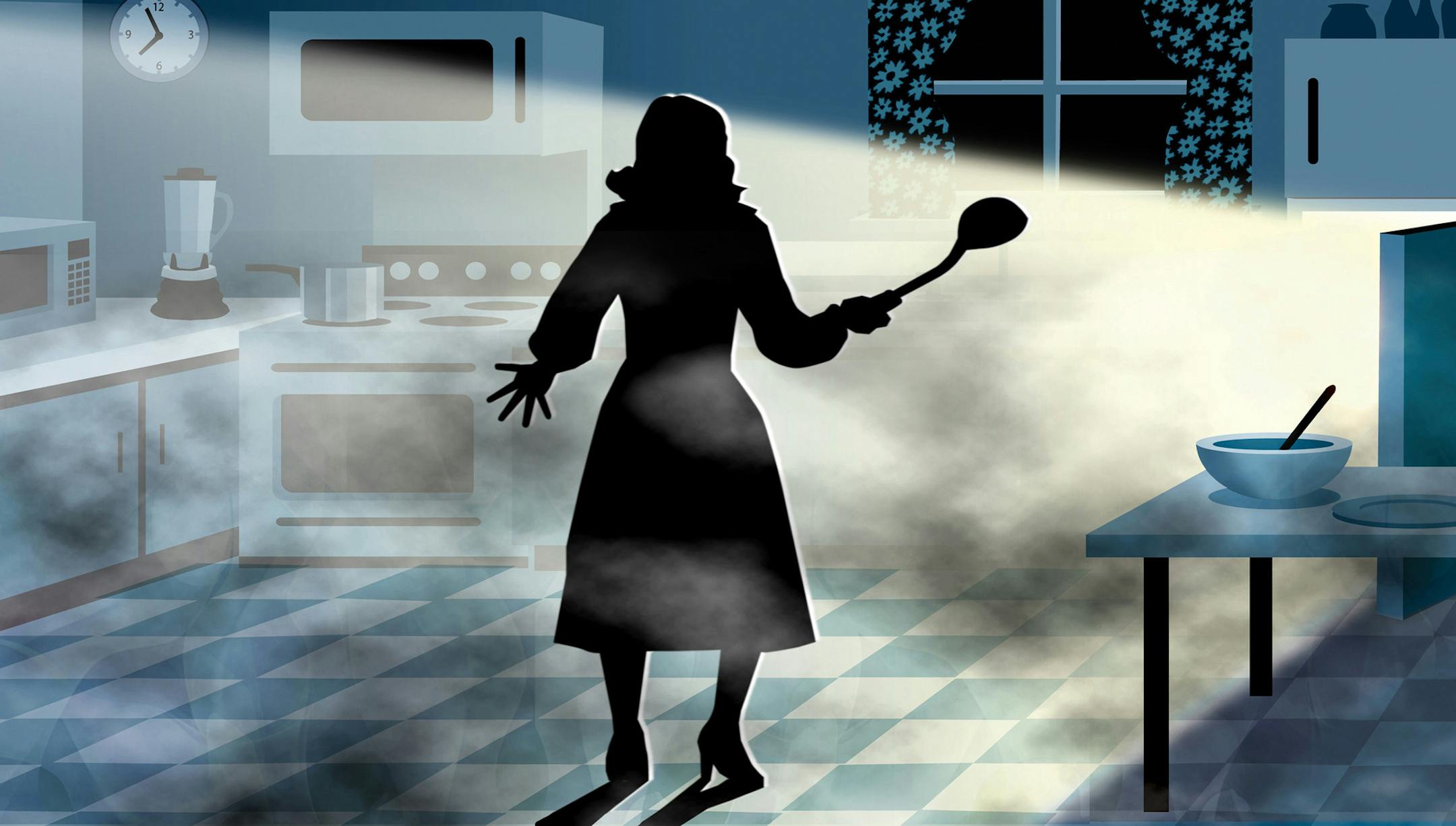
Well, that something terrible could be in your kitchen, if you're not careful. It is, in fact, the most dangerous room in your house and for some, especially those who don't know how to cook, the scariest. We tend to think kids are the ones who need supervision in the kitchen, but some adult cooks do, too.
Consider these nightmares:
• Fires: Whether it's a grease fire or simply an unattended or forgotten pan on the hot stovetop, the result can be devastating. The U.S. Fire Administration reports that cooking equipment (most often a range or stovetop) is the leading cause of home fires and injuries from them. But fires don't stop there: Billowy sleeves or hair can catch fire, too. • Kitchen knives: Ask any chef and you'll hear the same refrain: You can't have too sharp a knife. Dull ones are much more dangerous because of the force needed to operate them. But sharp knives can be dangerous when cooks are not used to them. At a Pillsbury Bake-Off long ago, at least one contestant, using a new, very sharp knife, almost cut off a fingertip. • Other sharp objects: While we're talking digits, be aware that immersion blenders — with their sharp, unshielded blades at their base — have sent many cooks to the emergency room. Blend with caution. And don't use your fingers to get the blades unstuck.
• Bacteria: Raw poultry! Eggs! Meat! Seafood! Beware of cross-contamination with foods. You can't be too careful. Use separate cutting boards for produce and for meat or seafood. Cook food to safe temperatures. Replace or wash your hand towels daily and do the same with sponges (put damp sponges in a microwave for 1 minute to wipe out bacteria). Cook with abandon, but with caution.
• Multi-tasking: Whether it's the unattended pan on the stove, the blender blades that are stuck, the cellphone you're using as you cut up the chicken, if you are not paying attention as you cook, you may find yourself in more trouble than forgetting to add the baking powder to the cake.
And now for the other scary issues in the kitchen — the ick factor — and we're not talking Mad Cow and horsemeat. If you breeze through the Defect Levels Handbook of the U.S. Food and Drug Administration, you'll find out what's acceptable in foods, i.e. what can be wrong with it and still be right. As the handbook points out, the items mentioned "pose no inherent hazard to health" nor should they be construed to necessarily be present in the food. But they could be.