

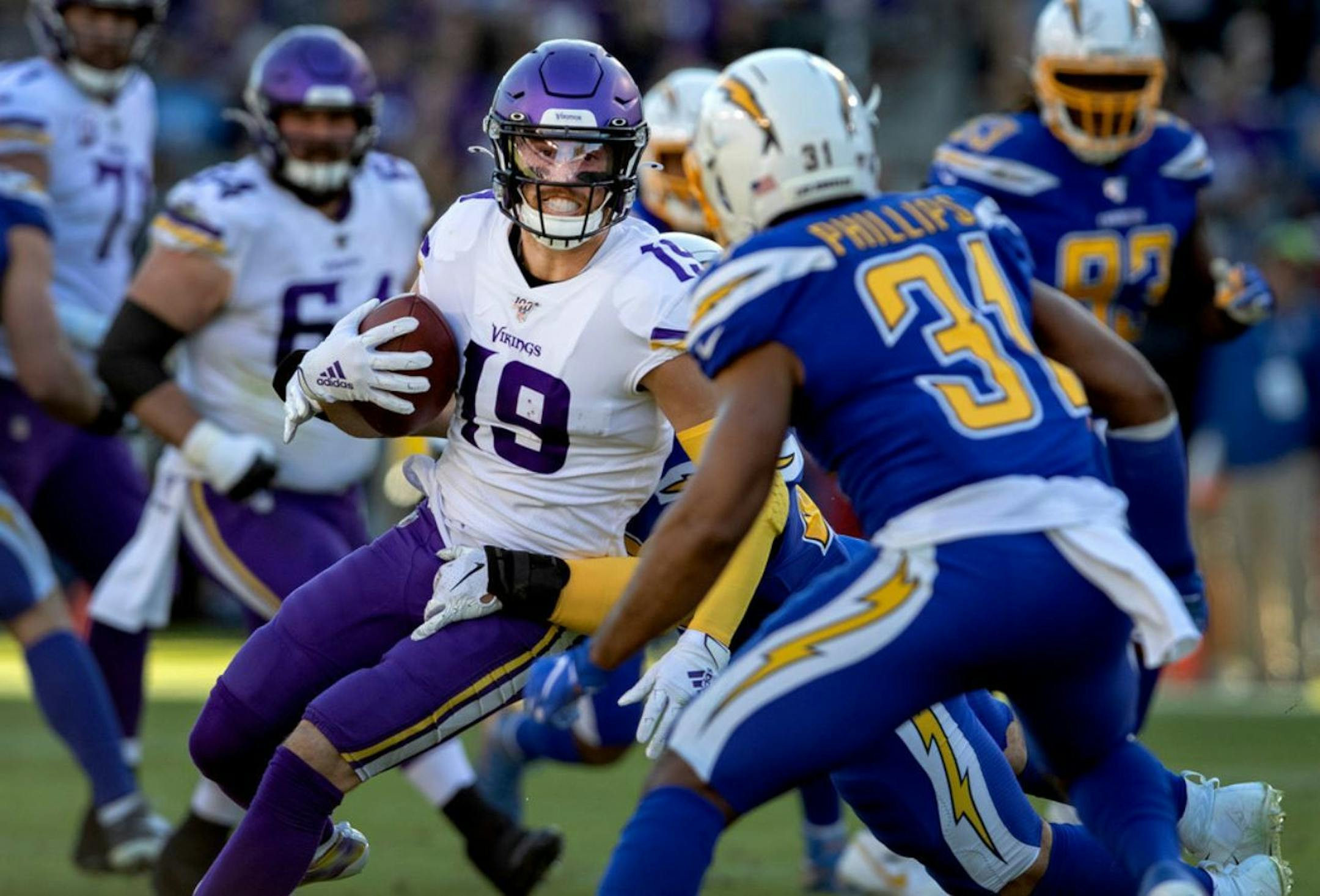
NFL owners decided to expand the regular season to 17 games Tuesday, in a widely expected decision that could have repercussions for both player health and the league's record books.
The Vikings' added game will be against the Chargers in Los Angeles, meaning the Vikings have eight home games and nine road games. It will be their second trip to L.A. to face the Chargers in three years, and their first trip to SoFi Stadium (the site of Super Bowl LVI).
Commissioner Roger Goodell, when asked on a conference call about player safety, said cutting to three preseason games means teams still play 20 games; he added there are more injuries in preseason games than in regular-season games.
The addition of one game — they will all be NFC vs. AFC — is the first since the NFL went from 14 games to 16 for the 1977 season. The regular season starts Sept. 9 and ends Jan. 9, and the Super Bowl will be played Feb. 13 in Los Angeles.
After a season in which teams played to less than 10% capacity because of COVID-19 concerns, Goodell said, "We want to see every one of our fans back. We expect to have full stadiums in the coming season."
The league expanded from 12 to 14 playoff teams last season.
The NFL Players Association agreed to a 17-game season as soon as 2021 as part of the 2020 collective bargaining agreement. Teams will still have a bye week; the league schedule comes out in late April. The CBA expires in 2031, and there is a stipulation that the schedule cannot be expanded to 18 games.
Conferences will alternate the lopsided schedule by year; AFC teams will have nine home games in 2021 and NFC teams will have nine home games in 2022, and so on.


