

The spare, two-paragraph news release from the MIAC announcing the departure of St. Thomas from the conference on Wednesday didn't provide a lot of details or elaboration.
But the 94-word release, advertised on the conference website under the unassuming headline "MIAC announces conference membership change," provides three key points that allow for the mind to wander and expand a bit.
1) The words "involuntarily removed" in regard to St. Thomas' membership in the MIAC are key. It's a reiteration that St. Thomas didn't want this, and that the key drivers were other schools.
2) "The MIAC Presidents' Council cites athletic competitive parity in the conference as a primary concern" is telling.
Well, at least we don't have to guess about motivation any more. Maybe St. Thomas' undergraduate enrollment — which is about twice the size of the next biggest conference school — was also a factor. More students means more athletes, which can contribute to that competitive parity.
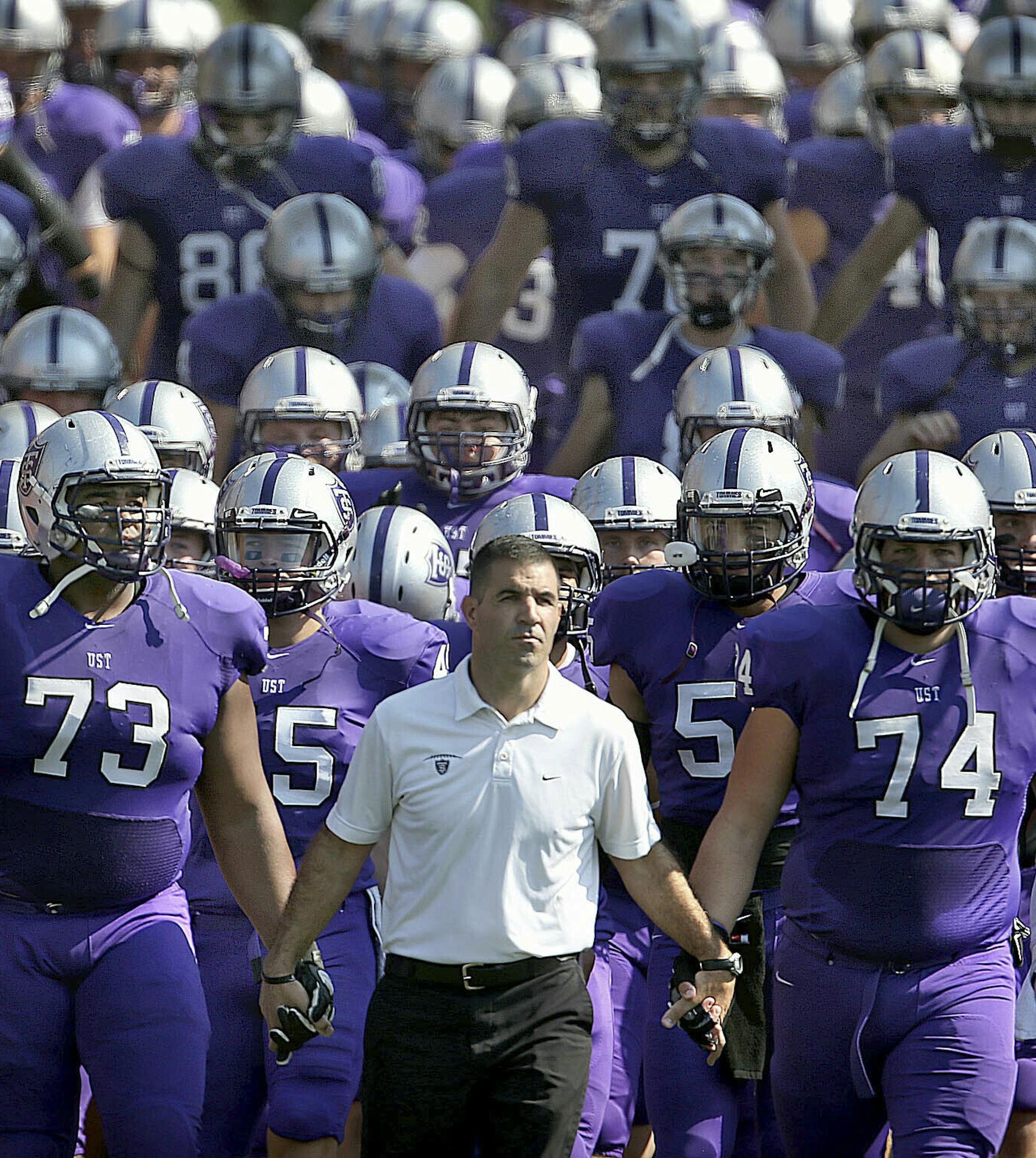
But a bunch of schools in the conference were tired of losing to the Tommies at just about everything — especially football, and especially by lopsided scores such as 97-0, which was the final when St. Thomas played St. Olaf in 2017. Like it or not, at least we know.
Competitively, St. Thomas and most of the MIAC are bad matches. The argument of detractors is that St. Thomas is winning a game that is rigged in its favor.
The argument of St. Thomas supporters is that other schools should try to rise up to compete — and that the mission at St. Thomas is to "prioritize the welfare and overall experience of our student-athletes," as stated in a letter to the school community Wednesday from St. Thomas President Julie H. Sullivan


