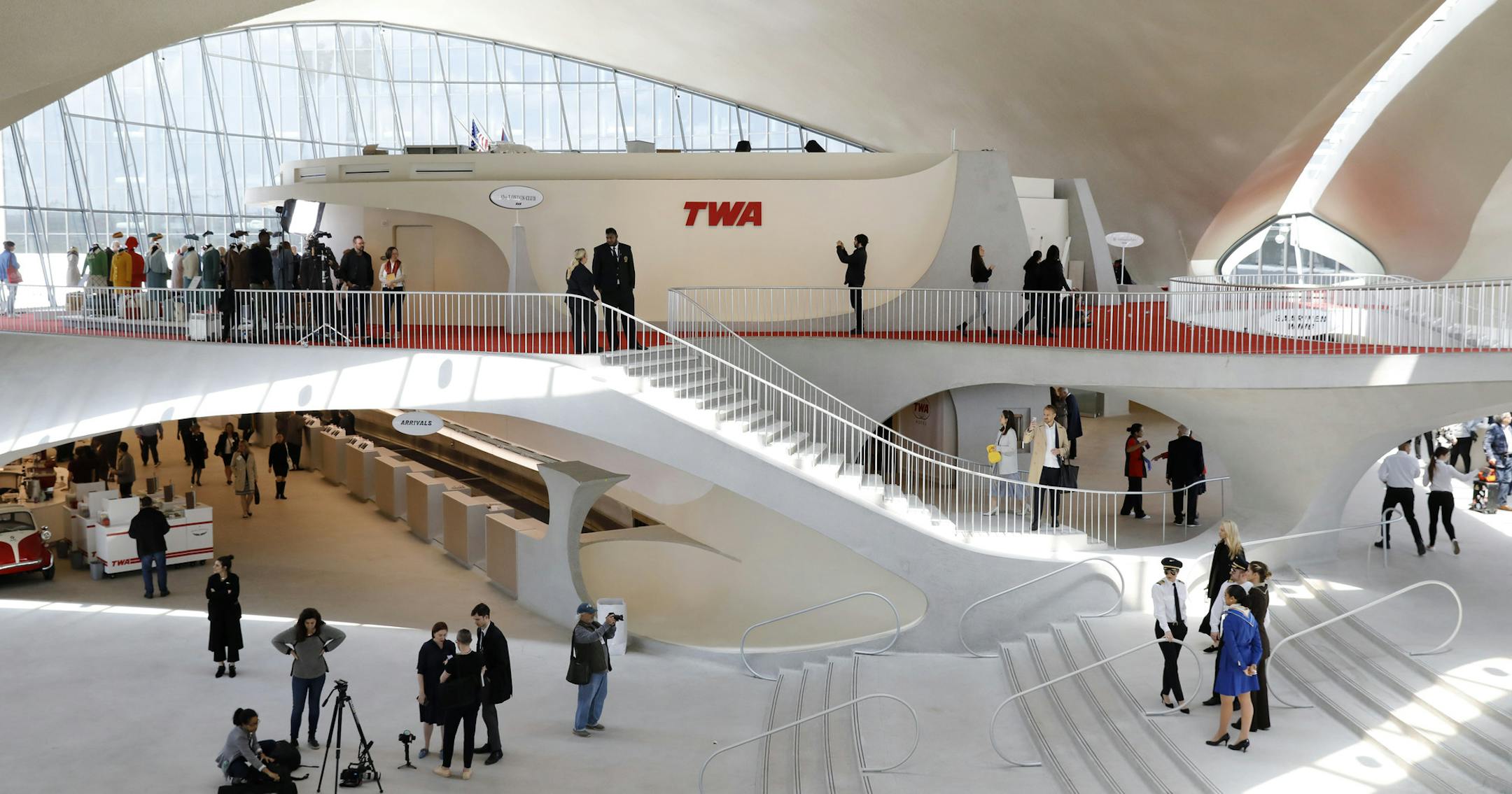
The retro-chic TWA Hotel at John F. Kennedy International Airport wants you to think of the Brat Pack, the Beatles and the soaring grace of Eero Saarinen's futuristic terminal, dedicated to the then-new jet age.
What the hotel doesn't want is for guests to hear even a murmur of jet-engine noise from adjacent taxiways. To achieve this solitude, the hotel sheathed both wings of the new 512-room hotel with a 4.5-inch glass curtain wall, second-thickest in the world, to hush JFK's madding bustle.
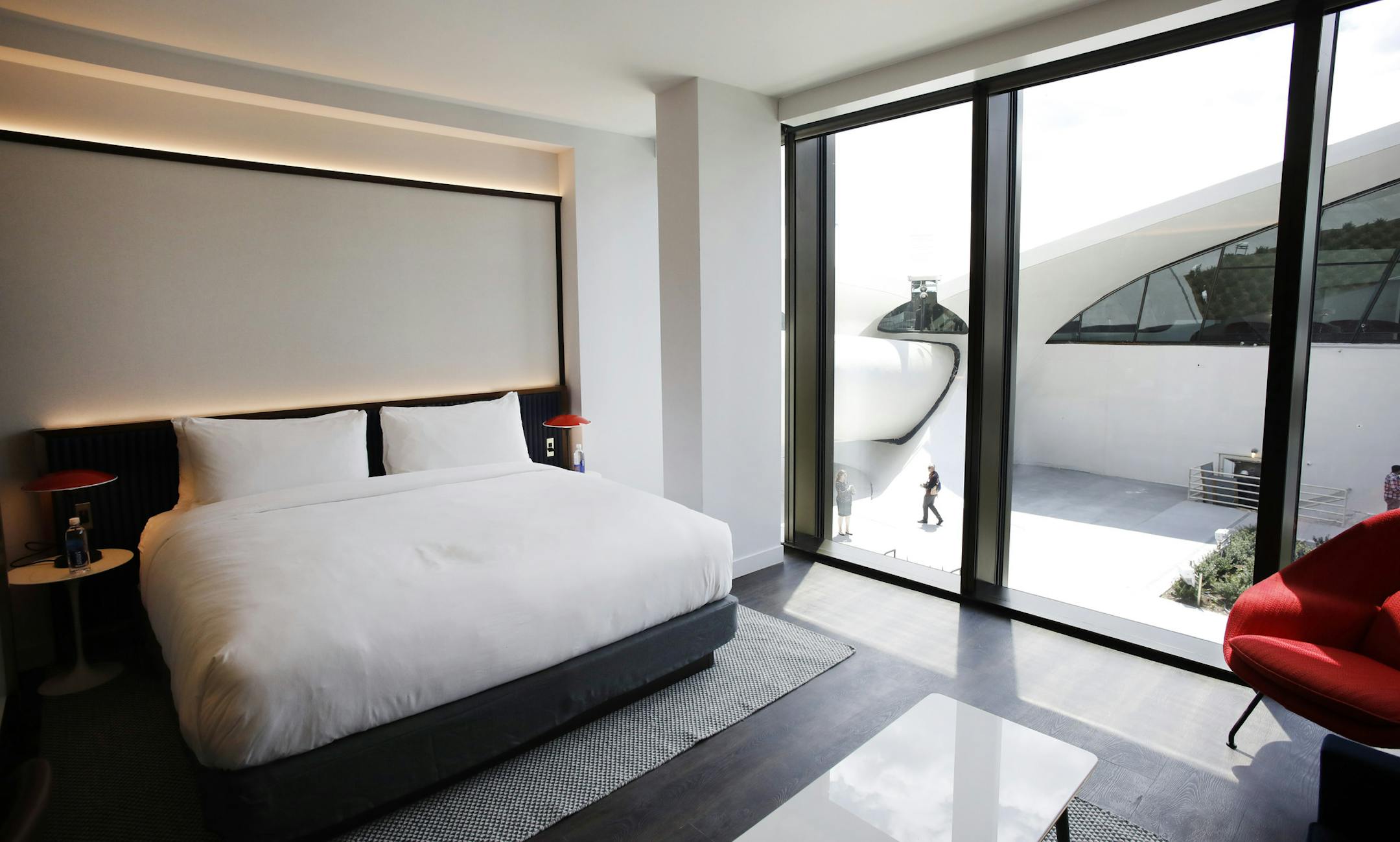
Draw shut the blackout shades in every room, and you're in a virtually silent chamber save for the low whoosh of air conditioning. Jet noise and auto traffic at the adjacent Terminal 5 aren't issues. "We want to give you the experience of aviation without making you hear it," says Erik Palmer, the hotel's managing director.
What that glass curtain couldn't silence: a chorus of complaints on the first night. The TWA Hotel opened its doors to customers May 15 with abundant kinks to exterminate and a deep sense that things could have been much, much smoother had the hotel waited a week or two to complete its finishing touches, 57 years nearly to the date Saarinen's original Trans World Flight Center was dedicated.
Many of the elevators went on strike around 4 p.m. just as the first guests checked in; the cashless hotel suffered glitches as servers tried to ring up drink orders, and the rooftop infinity pool deck was off limits because construction isn't finished.
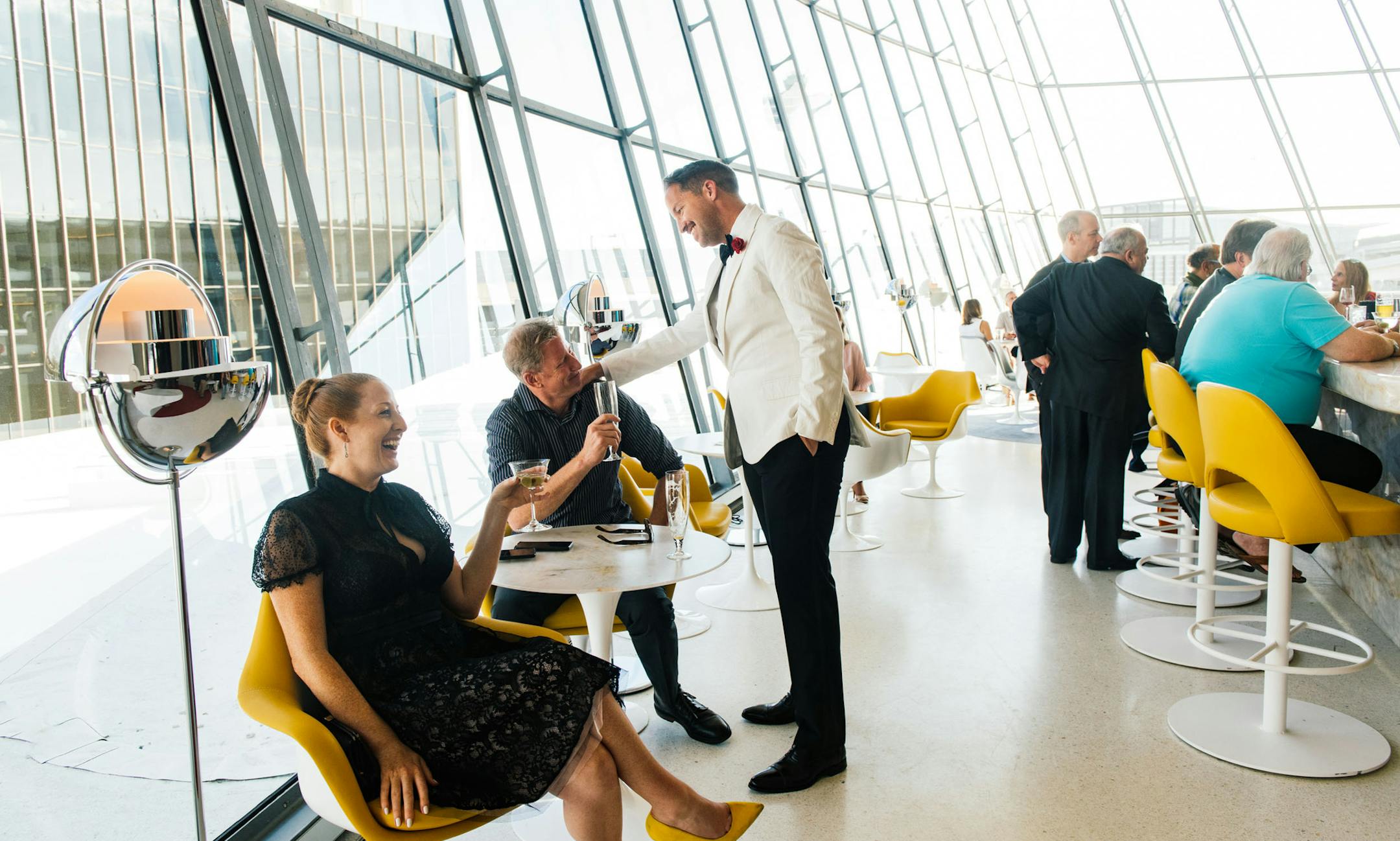
The hotel has returned the TWA Flight Center's original Lisbon Lounge for cocktails and Paris Café, the latter run by celebrity chef Jean-Georges Vongerichten. A restored Lockheed Constellation painted in TWA's livery sits outside the glass-walled lobby as a year-round cocktail lounge. In total there's a restaurant, three bars and a food hall, in varying states of readiness on the first day.
The 1960s design motifs extend to the guest rooms, which are geared to inspiring visions of 1962, the year of the first Jetsons episode, a time when Boeing's 707 was rapidly supplanting propellers for a speedier, more glamorous form of air travel.
Each room has dark wood, red chairs or a red seating platform, and a terrazzo tile entrance foyer. The tile is a recreation of the design pattern used at St. Louis's Gateway Arch, another Saarinen 1960s icon. Each room has a black rotary-dial telephone, a well-stocked cocktail minibar — including Tab soda — a jar of sharpened red No. 2 pencils and lamps of '60s-era design. Bathrooms have Frette towels and wash cloths.