

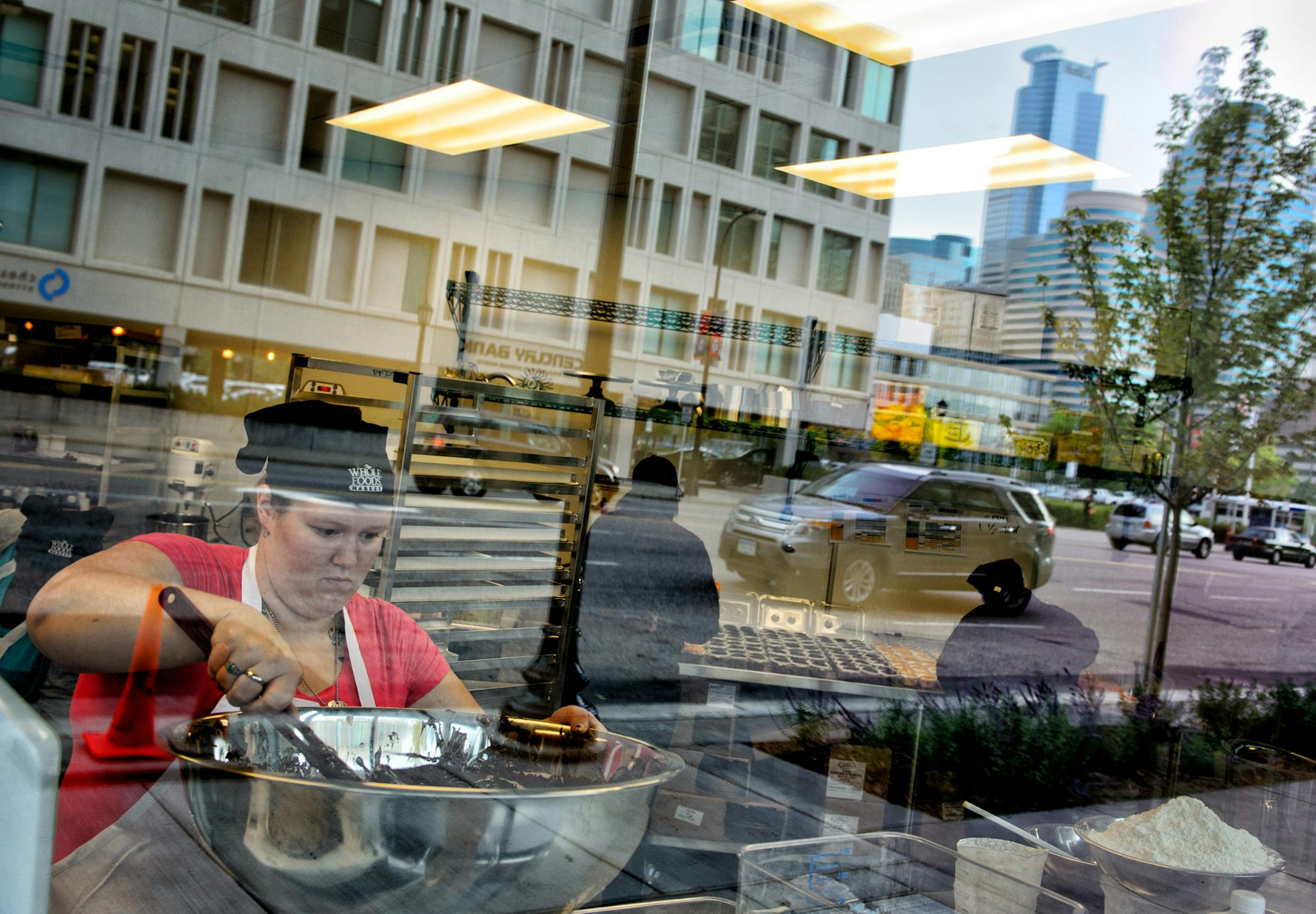
Though the artist studios of the North Loop have long been replaced by high-end boutiques and hundreds of Soho-style lofts, nothing will trumpet the transformation of the once-grungy Warehouse District like the upcoming opening of a new Whole Foods store.
"It's really becoming a more complete community — people live there, work there and shop there," said Tom Borrup, a Minneapolis-based community development expert. "This is another piece of the perfect storm there; it's also a harbinger of what's more to come."
While the new store — on the site of a former Jaguar dealership — isn't downtown's first grocer, its arrival is a turning point for what has become the city's fastest-growing neighborhood. Since 2008, more than $150 million has been spent on new housing in the North Loop, including the conversion of old brick warehouses and now-idle factories into apartments and condos. Thousands of new living spaces have helped the population grow nearly 200 percent in just a decade, attracting more than 4,000 residents to a neighborhood that until only a decade ago was a flyover zone for Twin Cities housing developers.
"You could count the number of people who lived in the area on one hand," said Peter Kirihara, who opened a coffee shop in a brick warehouse building in 1991. At the time, the neighborhood's primary draw was its affordable studio space, but there were few options for people who wanted to live, shop and eat there.
Now the area is home to boutiques that sell $30 bars of soap and bespoke clothing for men. The loading dock in front of Kirihara's coffee shop has become a popular patio where locals mingle. Kirihara and his business partners also own a wine bar and nightclub in the neighborhood.
Kirihara said the growth of his businesses has followed a housing boom. Since 1997, more than 2,500 new apartments and condominiums have been built in the North Loop, not including the 900-plus units that are under construction, according to Maxfield Research. This includes a sleek glass-and-metal boutique apartment building developed by a Malaysian company.
The only thing missing, Kirihara said, has been a major grocery store.
"It's filling a necessary void in this neighborhood. It'll be nothing but good," he said.
![Whole Foods will open in the North Loop neighborhood of Minneapolis on September 25. Here workers readied the store for its grand opening. Thursday, September 19, 2013 ] GLEN STUBBE * gstubbe@startribune.com](https://arc.stimg.co/startribunemedia/V2DHXHJETQ76K7LNQUKJ7YJRJE.jpg?&w=1080)


