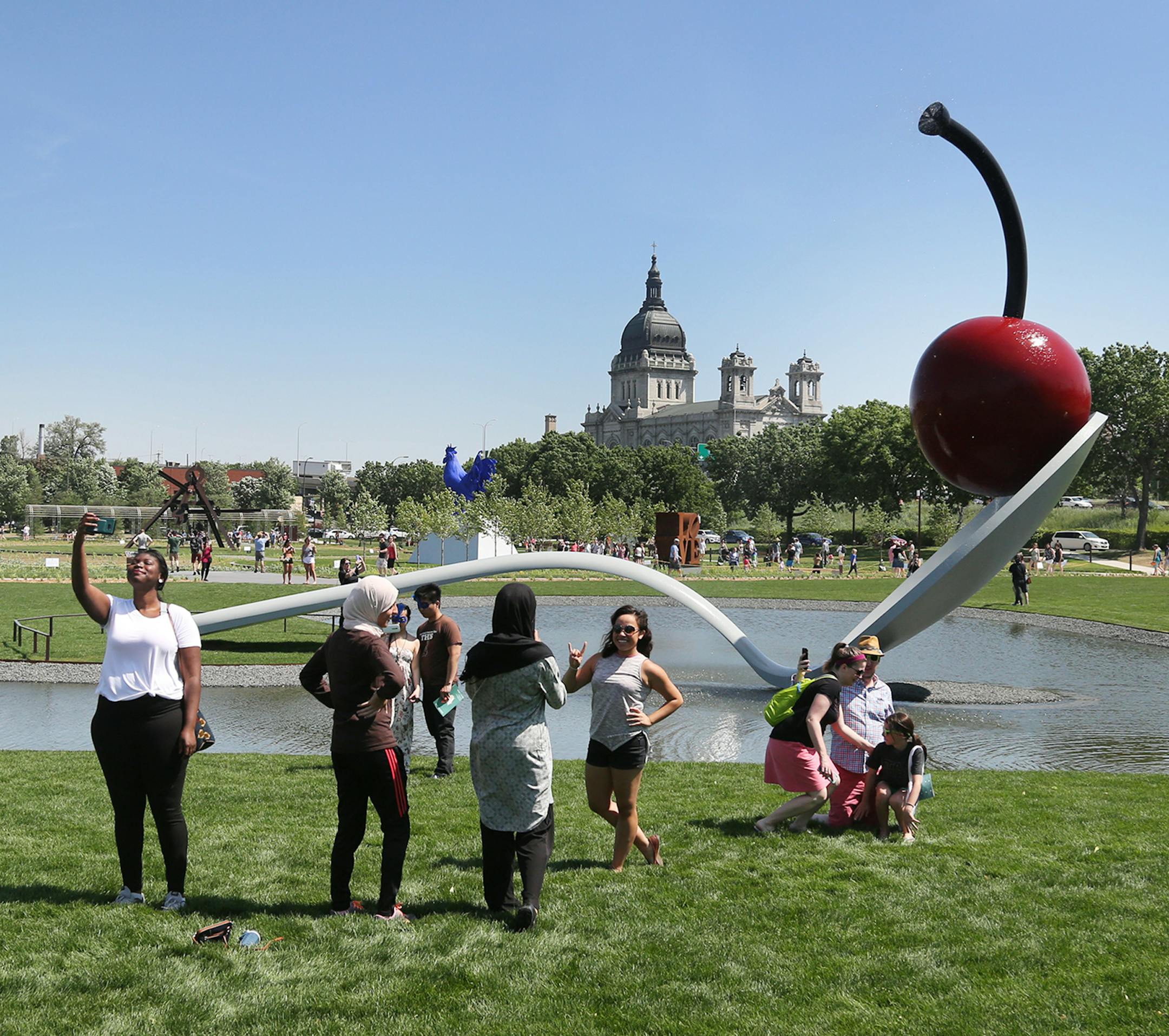
One of the first things you notice when visiting the Minneapolis Sculpture Garden is the other visitors — walking in pairs and groups, walking with a bike, pushing strollers. Sometimes, they pause to take photos of one another with "Spoonbridge and Cherry," then rejoin the flow on the open garden grounds, which stretch from the Walker Art Center to Dunwoody Boulevard.
Another thing you might notice is the flow of city traffic with a rhythm of its own, slowing to a halt for stoplights and then starting up again.
That sense of openness, movement and connection to the city wasn't part of the garden's original 1988 design by Edward Larrabee Barnes. Nor was is a priority when the garden was expanded in 1992 by Michael van Valkenburgh. Back then, the garden was enclosed by walls of spruce trees on three sides, closed off from the distractions nearby.
But the new, improved Sculpture Garden is part of a brilliant reweaving of the Walker's setting that includes the transformative entry on Vineland Place, the Wurtele Upper Garden on the old Guthrie site, and much needed plantings along the Walker's Hennepin Avenue facade.
Rethinking the garden — with help from Tom Oslund and Tadd Kreun of Oslund and Associates along with the Walker and the Minneapolis Park and Recreation Board — created what feels like a public park on public land, rather than an enclave.
In a daring design move, the Oslund firm proposed removing the stand of trees to the north of "Spoonbridge and Cherry." Since they were planted in the early 1990s, the trees have grown until they blocked the visual connection between the garden's north and south ends. In fact, Dana Murdoch, the Park Board's project manager for the renovation, said that "many people never ventured north of the trees" to explore the rest of the garden.
I was one of many who questioned cutting down trees just as they were maturing. But the stunning new sense of wide open space proves that the designers were right.
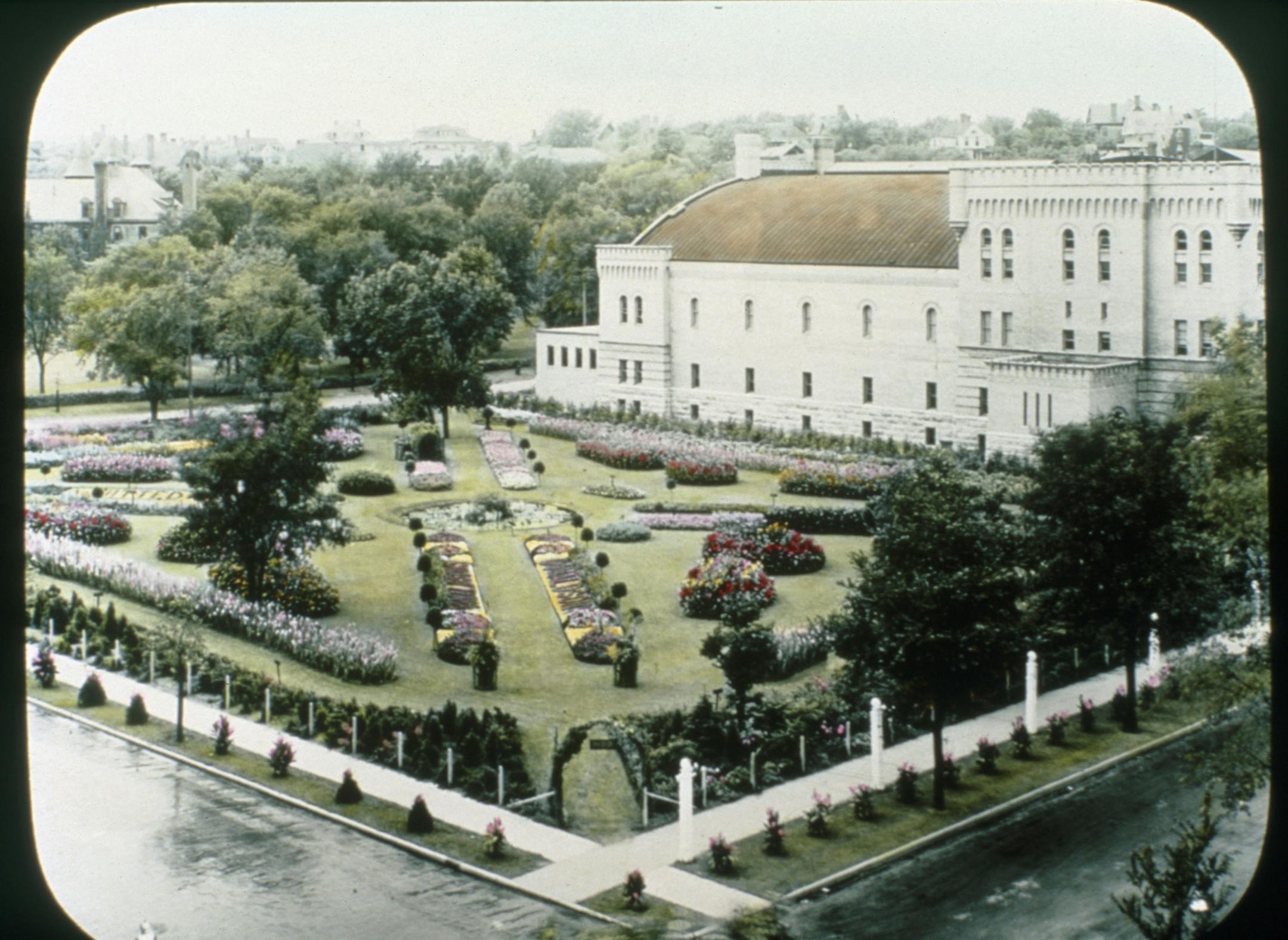
The $41 million remake of the Walker campus also links the garden to its historic roots as the former parade grounds for the Minneapolis Armory. Built in the late 19th century, the armory was a solid brick structure that eventually fell into disuse and quietly sank into its wetland site.