
New technology reveals deepest secrets of Picasso's 'Blue Period'

Using tools originally developed for medicine, manufacturing and geology, researchers peered through the canvas.

The New York Times
March 9, 2018 at 4:56AM
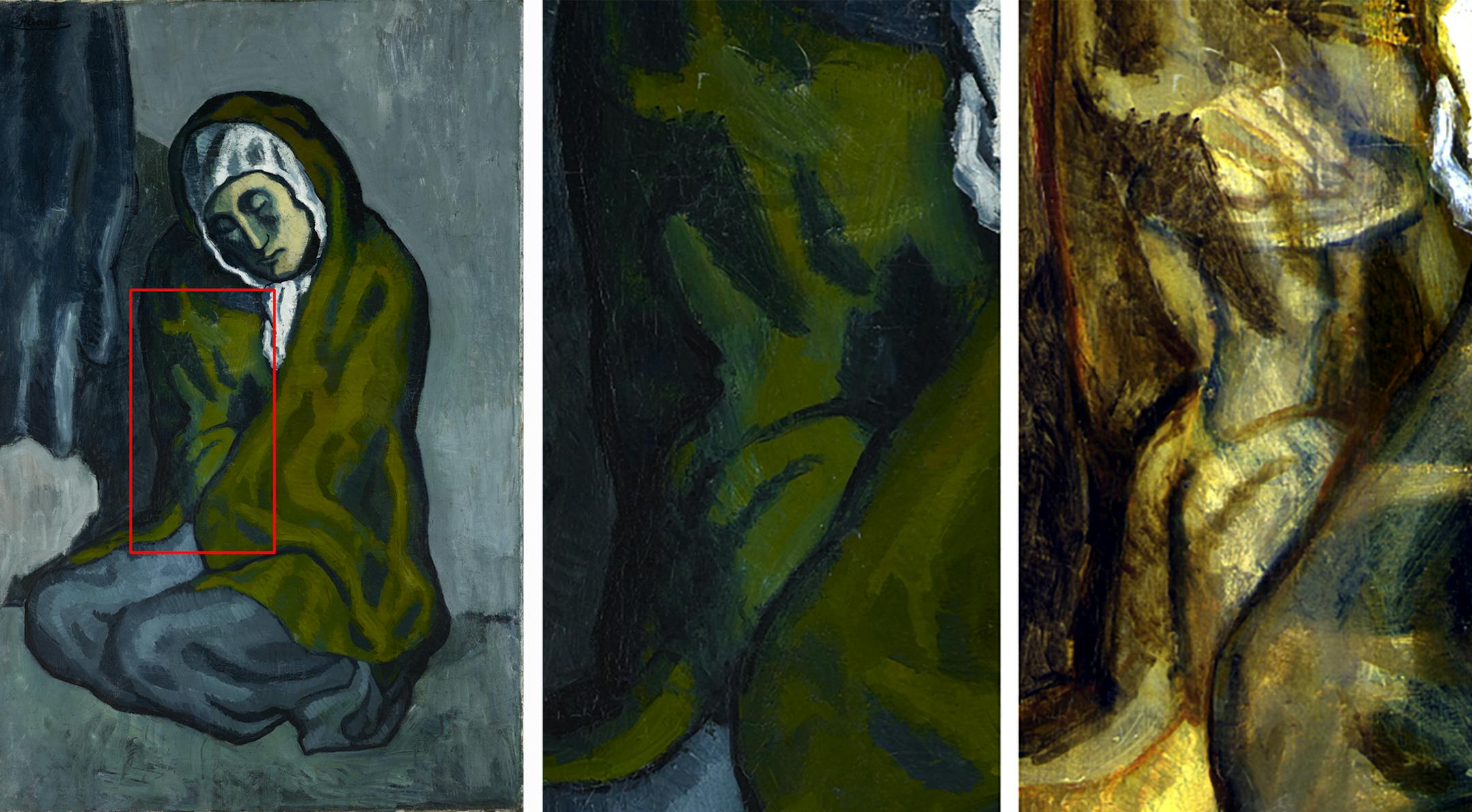
In a photo provided by John K. Delaney, an attempt to paint the right arm is revealed in Pablo Picassoís ìLa MisÈreuse accroupie,î captured using a technique called reflectance hyperspectral imaging. Scientists used a variety of tools originally developed for medicine, manufacturing and geology to discover hidden details in the artistís paintings and sculptures. (John K. Delaney/National Portrait Gallery, via Art Gallery of Ontario via The New York Times) -- NO SALES; FO
Researchers examined Picasso’s The Crouching Woman and found he had changed the subject of the previous painting and also repeatedly tried to paint the woman’s arm before covering it. (The Minnesota Star Tribune)

Bits of color peek out through cracks in the dark shades of "La Miséreuse accroupie," a 1902 painting by a young Pablo Picasso during his "Blue Period."

That was not surprising. X-ray images taken a quarter-century ago had shown that Picasso had painted this work, known in English as "The Crouching Woman," over another artist's landscape.

Sandra Webster-Cook, a conservator of paintings at the Art Gallery of Ontario in Toronto, also observed brush strokes that seemed neither to reflect Picasso's composition nor the underlying landscape.

"It was clear there was something else going on underneath," she said.

Using tools originally developed for medicine, manufacturing and geology, researchers peered through the canvas without damaging it. They saw how Picasso had incorporated the contours of hills from the painter's landscape into the curves of the woman's back.

"Kind of a jazz riff back and forth," said Marc Walton, a professor at Northwestern.

The analysis also uncovered Picasso's repeated efforts to paint the woman's right arm. He ultimately abandoned that part of the composition, covering it with a cloak.

"So this again is getting into the mind of the artist and understanding his creative process," Walton said.
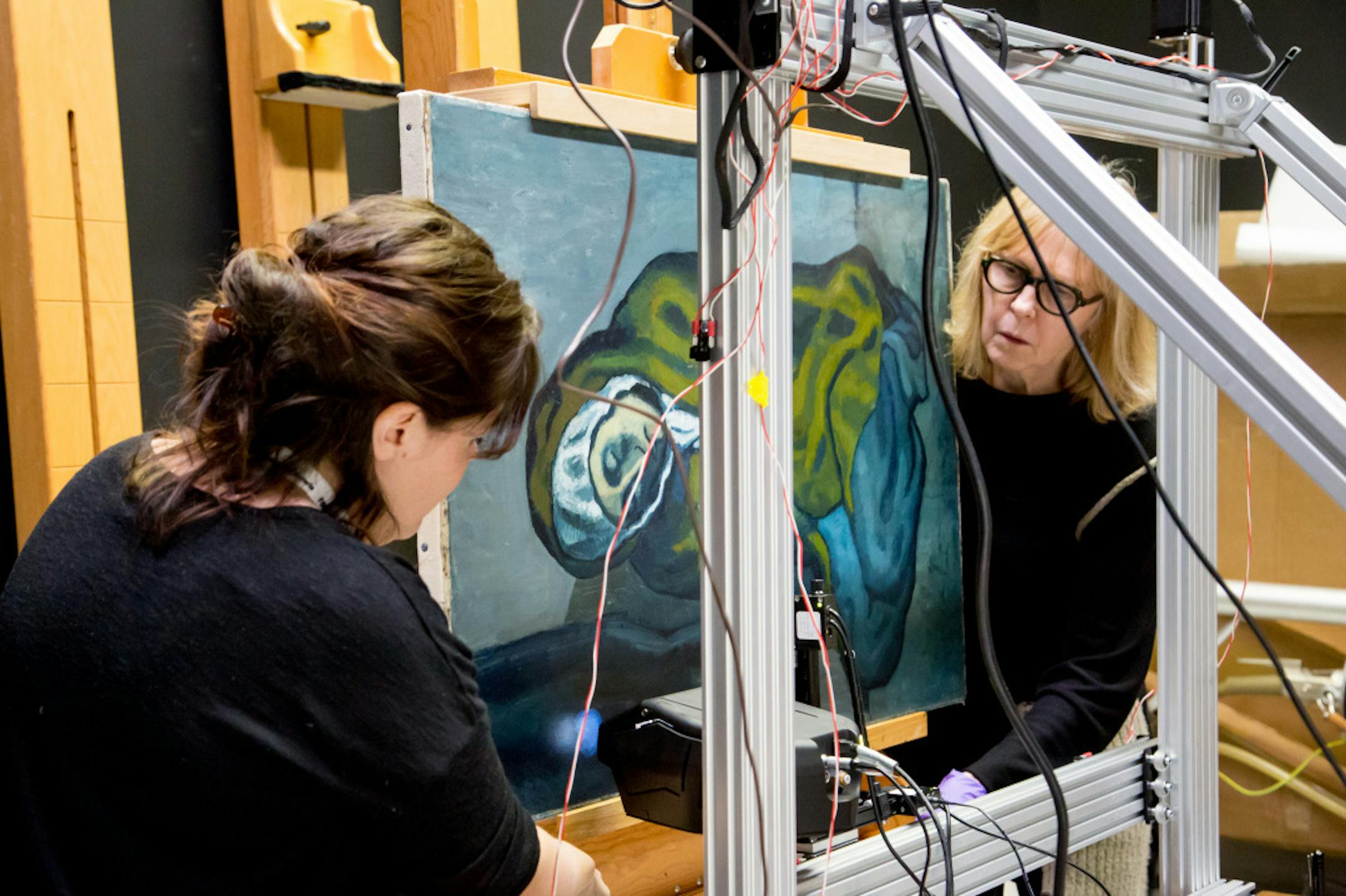
In a photo provided by the Art Gallery of Ontario, Emeline Pouyet, left, of Northwestern University, and Sandra Webster-Cook of the Art Gallery of Ontario using an X-ray fluorescence instrument to scan Picasso’s “La Miséreuse accroupie,” a 1902 painting from Picasso's "Blue Period." Scientists used a variety of tools originally developed for medicine, manufacturing and geology to discover hidden details in the artist’s paintings and sculptures. (Art Gallery of On
Researchers examined Picasso’s The Crouching Woman and found he had changed the subject of the previous painting and then (The Minnesota Star Tribune)
about the writer

about the writer

More from No Section

See More
FILE -- A rent deposit slot at an apartment complex in Tucker, Ga., on July 21, 2020. As an eviction crisis has seemed increasingly likely this summer, everyone in the housing market has made the same plea to Washington: Send money — lots of it — that would keep renters in their homes and landlords afloat. (Melissa Golden/The New York Times) ORG XMIT: XNYT58
Melissa Golden/The New York Times

It’s too soon to tell how much the immigration crackdown is to blame.