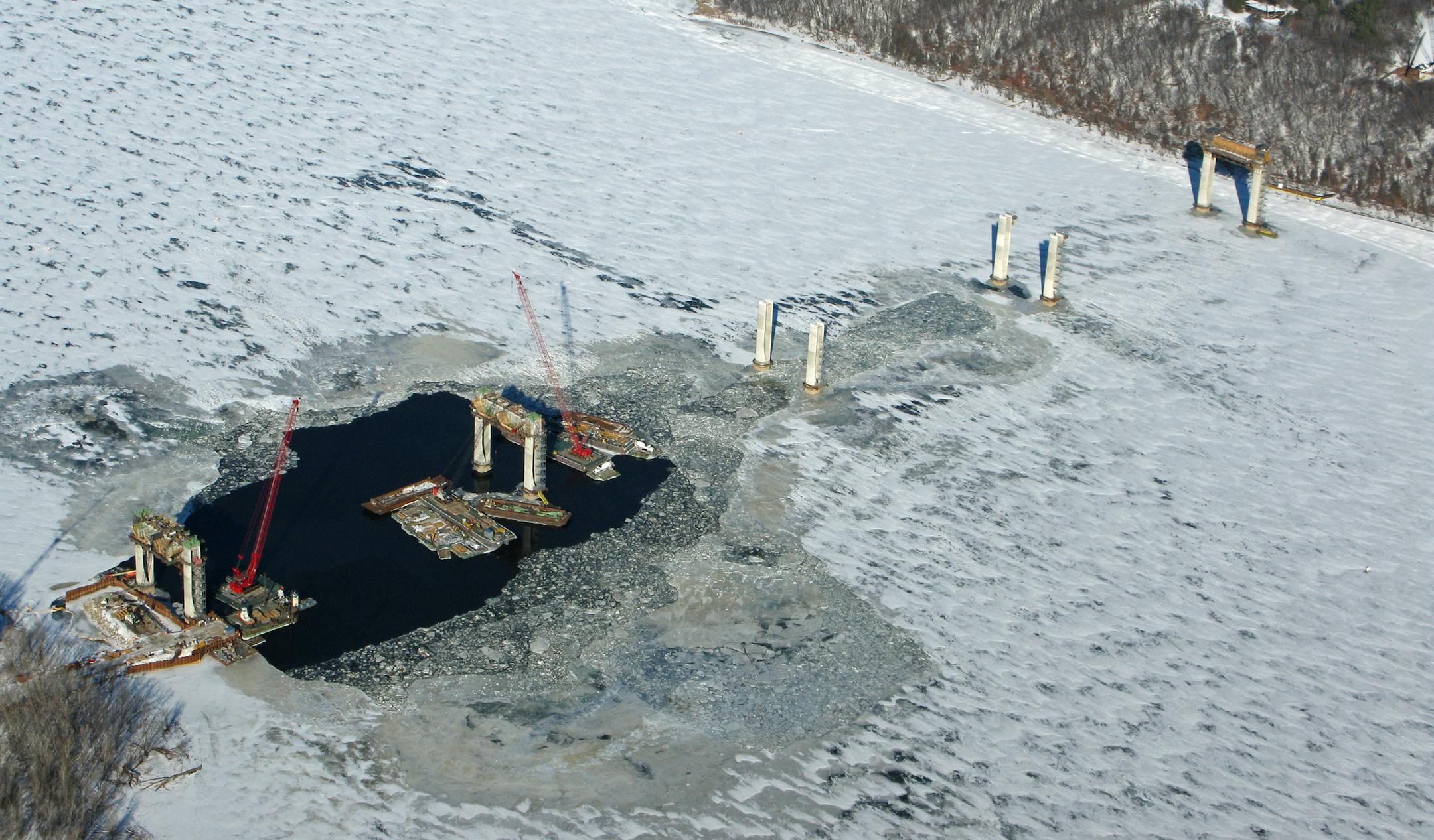
![Will the new St. Croix River Bridge have an effect on fishing? This is a view from Stillwater looking downstream to the supports going in for the new span. ] BRIAN PETERSON ï brianp@startribune.com Stillwater, MN - 2/23/2015](https://arc.stimg.co/startribunemedia/37WE6KIIGPMCB5BORXRJO5JEQM.jpg?&w=1080)
Imagine seeing an eagle aloft on the spring's warming thermals, with Stillwater below.
Downstream, near Hudson, Wis., the eagle sees the railroad swing bridge, and farther downstream still, the Interstate 94 bridge. Meanwhile, upstream, the big bird casts a sharp eye toward the railroad "High Bridge" a few miles above Stillwater, and to a series of torpedo-shaped islands that braid the river into channels of varying sizes, some navigable by powerboats, some not.
For generations, eagles, Canada geese, sandhill cranes, ducks and loons, among other birds, have returned to the St. Croix River Valley in spring.
Until last spring, never before had they seen such massive concrete and steel rise from the river. A new bridge.
Now imagine seeing a crappie, walleye, sauger, sturgeon or smallmouth bass swim beneath the frozen St. Croix.
These fish see the new bridge, too, from beneath the winter's ice, where huge concrete blocks, or footings, rest on the river bottom, encasing the structure's five double-columned support piers that rise to the river's surface through more than 135 feet of bedrock, sandstone, gravel, mud and water.
These new footings will alter the St. Croix for fish and wildlife in ways unknown. Just as floods, droughts and other natural phenomenon have altered the river and the life it supports since time immemorial.
Now, as the St. Croix changes again, these most recent alterations, however great or slight, will beget more changes and more changes still. And because most things in nature are linked, fish and birds that call the St. Croix home, whether permanently or while in transit, will be connected by the new bridge in ways visible and invisible.