

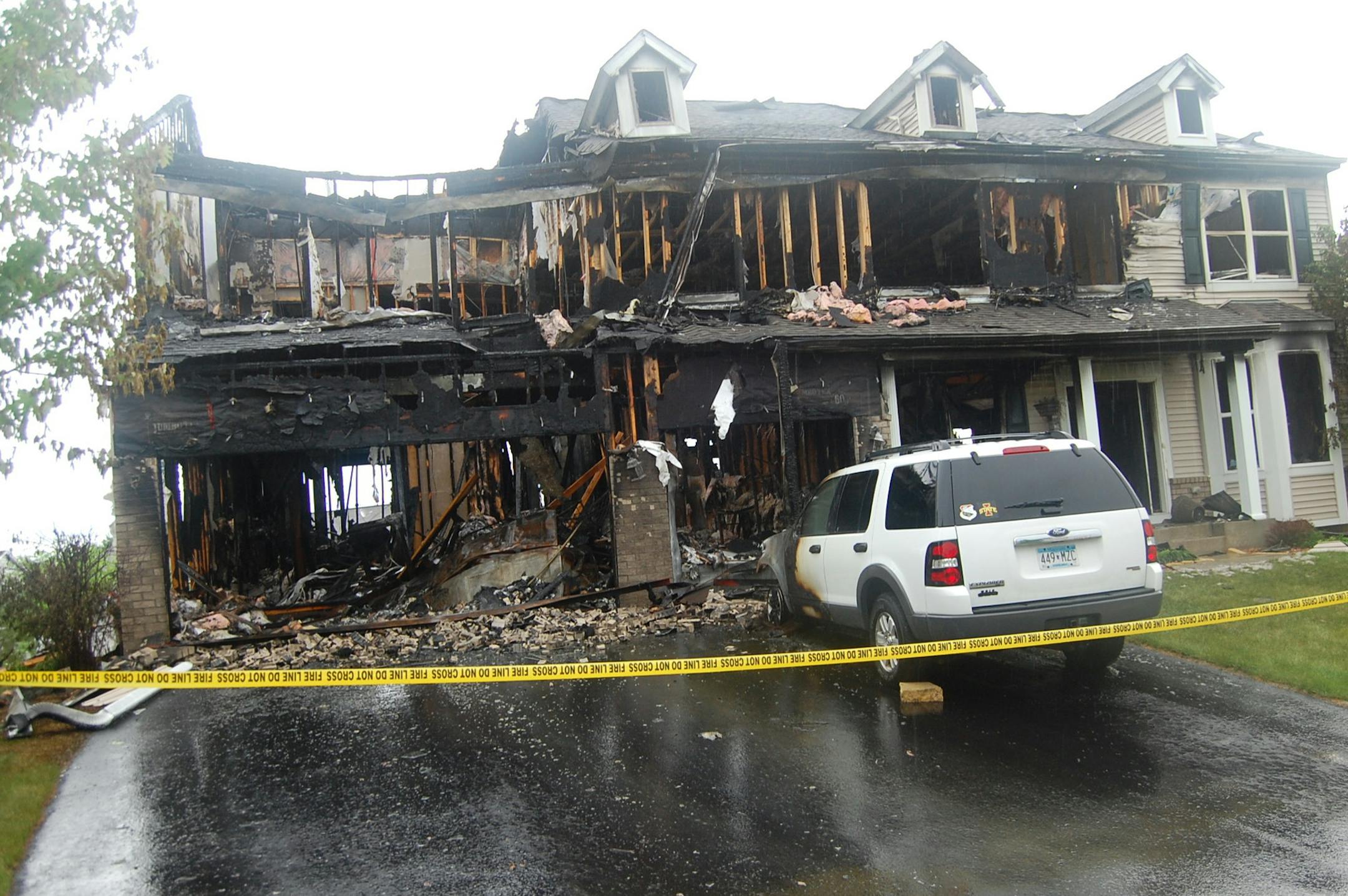
Large, newly built homes throughout Minnesota will come with an added feature next year — whether their owners want it or not.
A state mandate requiring indoor sprinklers in new homes 4,500 square feet and larger goes into effect in January. Homebuilders are grumbling about the new rule, calling it costly and unnecessary. But fire officials welcome it as a measure of relief at a time when they are struggling to recruit and retain volunteers.
The 4,500-square-foot measurement includes a basement, even it's unfinished, so the rule will apply to many new homes sprouting in outer-ring suburbs or replacing teardowns in Edina, southwest Minneapolis and St. Paul's Highland Park. About 30 percent of the new houses in the metro area meet or exceed that size threshold, according to the Builders Association of the Twin Cities.
Mark McNeill, Shakopee's city administrator, sees the new rule as "a mixed bag." He said he understands sprinklers' safety value but worries that their added expense could make it harder for families with starter homes to move up to bigger new ones whose values can bolster a community's tax base.
The job of making sure new homes meet the requirement will fall to city fire marshals or building inspectors. "We'll obviously have to keep track of which houses require this when building plans are submitted for a permit," said Dwight Picha, Woodbury community development director. But Picha said that the new requirement merely extends what city employees already do for large townhouses, where indoor sprinklers have been required for several years.
Homebuilders are dismayed. "That additional square footage is going to be really expensive for home buyers," said Shawn Nelson, president of the builders' group and owner of a Burnsville building and remodeling firm. Sprinklers could add at least $9,000 to the price of a four-bedroom, three-bath home and as much as $20,000 in houses with private wells instead of city water systems, the organization says.
Builders also believe sprinklers are unnecessary, since new houses already must have hard-wired smoke alarms. Nelson said builders are concerned that the added expense could snuff out demand for large new homes, which has fueled much of the postrecession rebound in the homebuilding market.
"Let's not force it," said Mike Devoe, president of Ryland Homes. Devoe said he has no problem offering sprinklers as an option but doesn't believe they should be mandatory.


