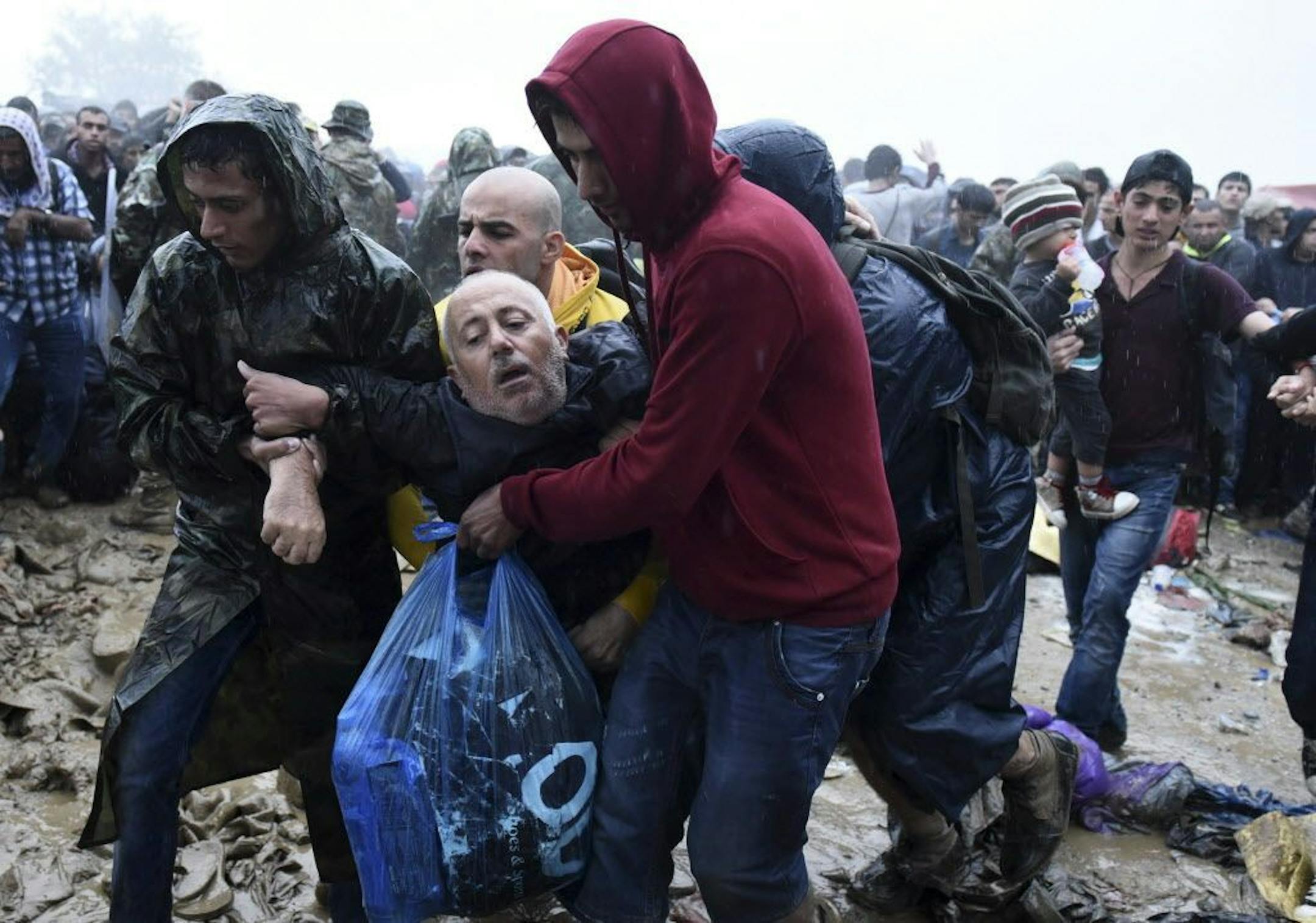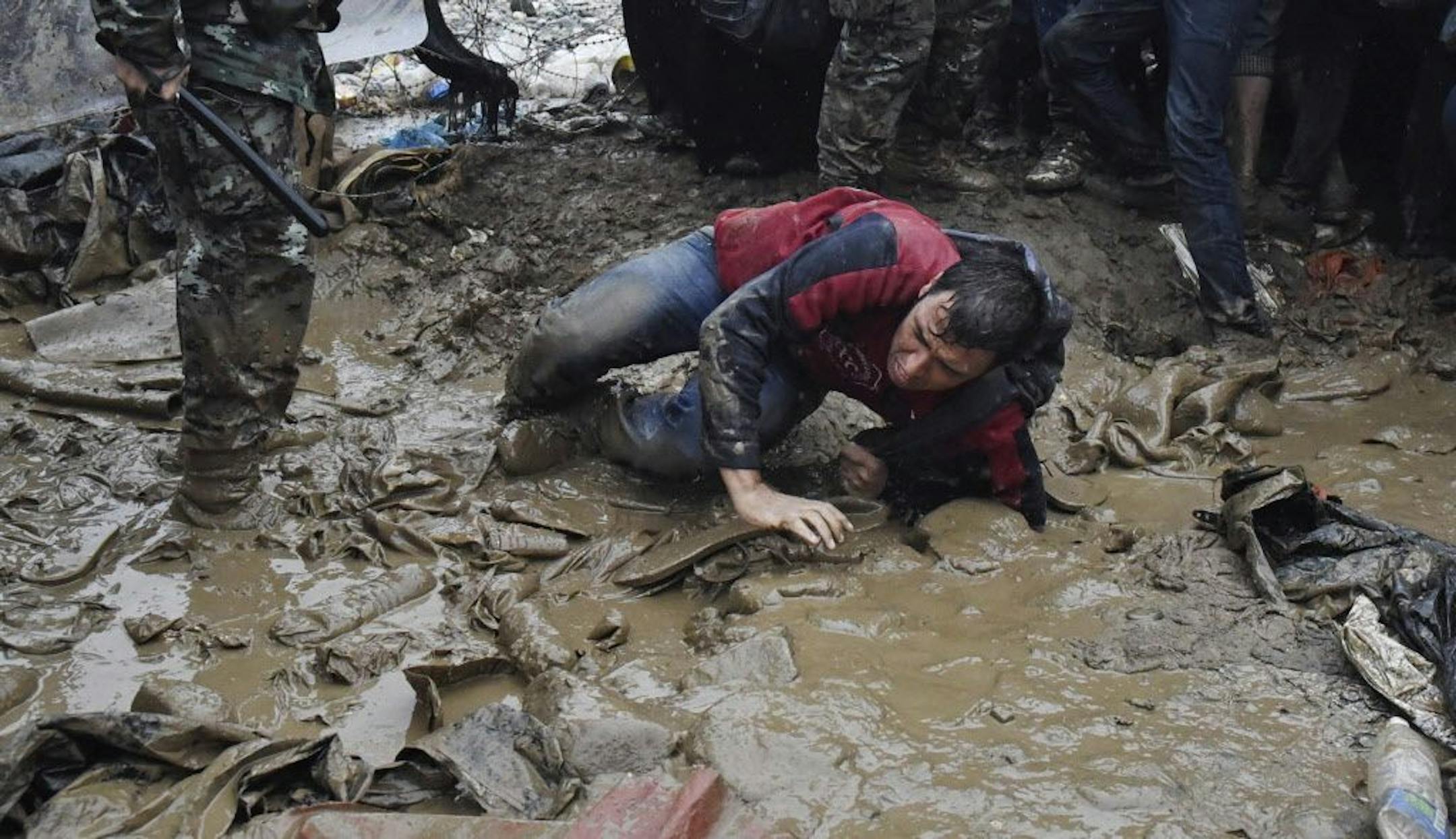
BUDAPEST, Hungary — Soaked to the bone and ankle deep in mud, thousands of people seeking refuge in Europe are finding that their path to a new life is growing harder by the hour.
Torrential rains poured as an unprecedented 7,000 trekkers crossed the Greek border into Macedonia on Thursday past rows of camouflage-jacketed police. Children stumbled into mud-filled potholes and had to be pulled back out, bawling, into their mothers' arms. People struggled to find anything — plastic sheets, garbage bags, even a beach umbrella — to shield themselves from an unrelenting deluge.
And yet nothing could dampen their hopes of reaching the heart of Europe, where asylum and border security systems are already in danger of being overwhelmed in the migration crisis.
"I'm not going to be afraid of anything," said Waseem Absi, a 30-year-old from Ariha in northern Syria, as he held a disassembled pup tent over his head and trudged up a muddy slope alongside four friends. He said he hopes to reunite with relatives in the Netherlands.
The sudden onset of autumn has taken tens of thousands by surprise all along the Balkans route from Greece to Hungary, the main gateway to Western Europe for more than 160,000 asylum seekers already this year.
As recently as last week, those making the epic journey, much of it on foot, were baking in a region-wide heat wave and free to sleep under the stars. Now they're without shelter and struggling to keep campfires burning, highlighting the inadequate support provided by several European governments at each border crossing.
Conditions also rapidly deteriorated on Hungary's southern border with Serbia, where an estimated 3,000 crossed at an approved rail site or illegally by ducking under the razor-wire marking that frontier. Garbage-strewn fields turned to mud, trapping relief agency trucks whose wheels spun and flecked passing migrants with sodden earth.
With Hungary and other nations providing few facilities on their borders, travelers have poured into the few tents erected recently by relief workers trying to compensate for the lack of government support.