

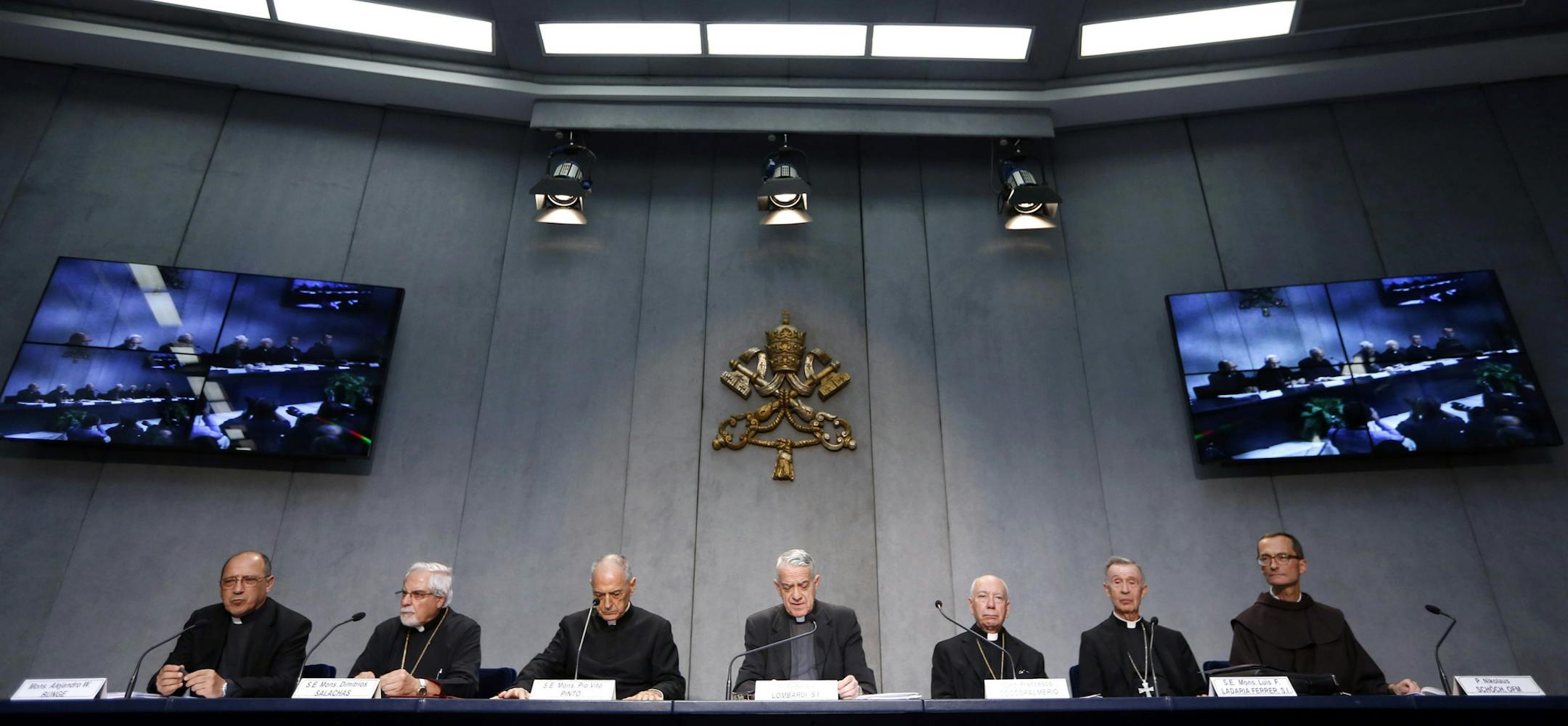
Pope Francis announced Tuesday that the church will make it faster and less complicated for Catholics to obtain marriage annulments, an often-painful process that now can take years and alienate the otherwise faithful.
The sweeping new rules call for fast-tracking certain annulment applications, canceling the requirement for two church tribunals to decide petitions, allowing local bishops to speed up certain cases, and making the process free.
The reforms are of particular interest to the estimated 800,000 Catholics in the Archdiocese of St. Paul and Minneapolis, which has one of the nation's highest rates of denying annulments, according to the Canon Law Society of America's 2012 annual report.
"I think it will prevent a lot of other people from facing the problems that I did, so fewer people will end up leaving the church in frustration," said Ray Miller, of New Brighton, whose annulment was granted this year after a four-year wait.
"Under the old system, you had to wait for the first court to get through their backlog," Miller said. "Then once you had a judgment from them, you had to wait for the second diocese to get through their backlog."
The reforms go into effect Dec. 8. They do not address staffing levels, backlogs or the composition of the Catholic tribunals that make decisions on annulments. But they significantly streamline bureaucracy, and they arrive a month before Pope Francis convenes a special meeting in Rome of global Catholic bishops to focus on family issues.
Divorce is a thorny issue for the Catholic Church. Because it does not recognize divorce, Catholics who remarry without annulments are barred from taking communion and other sacraments.
Their first marriages are still considered valid, so they are in effect committing adultery with a new spouse.


