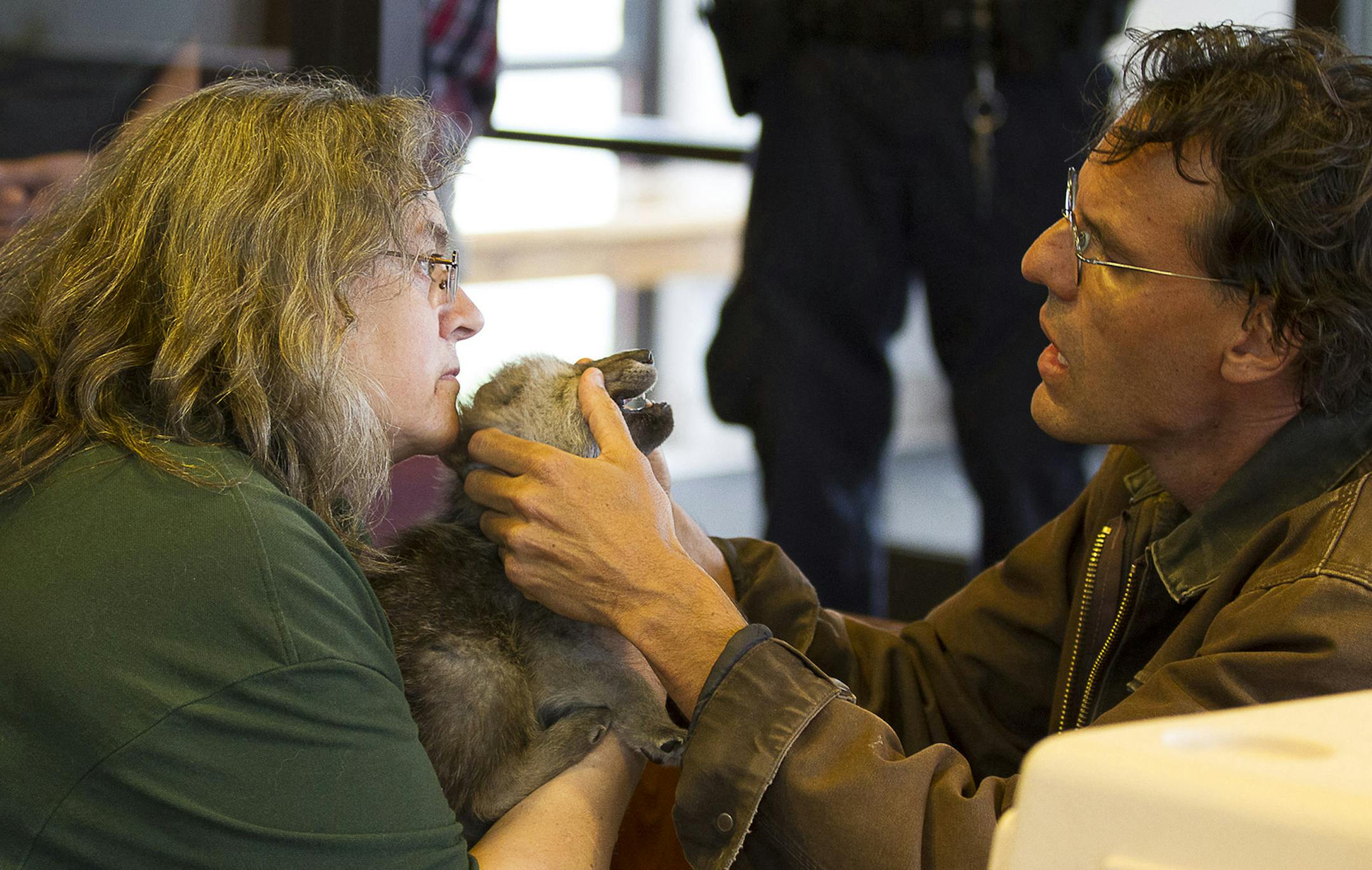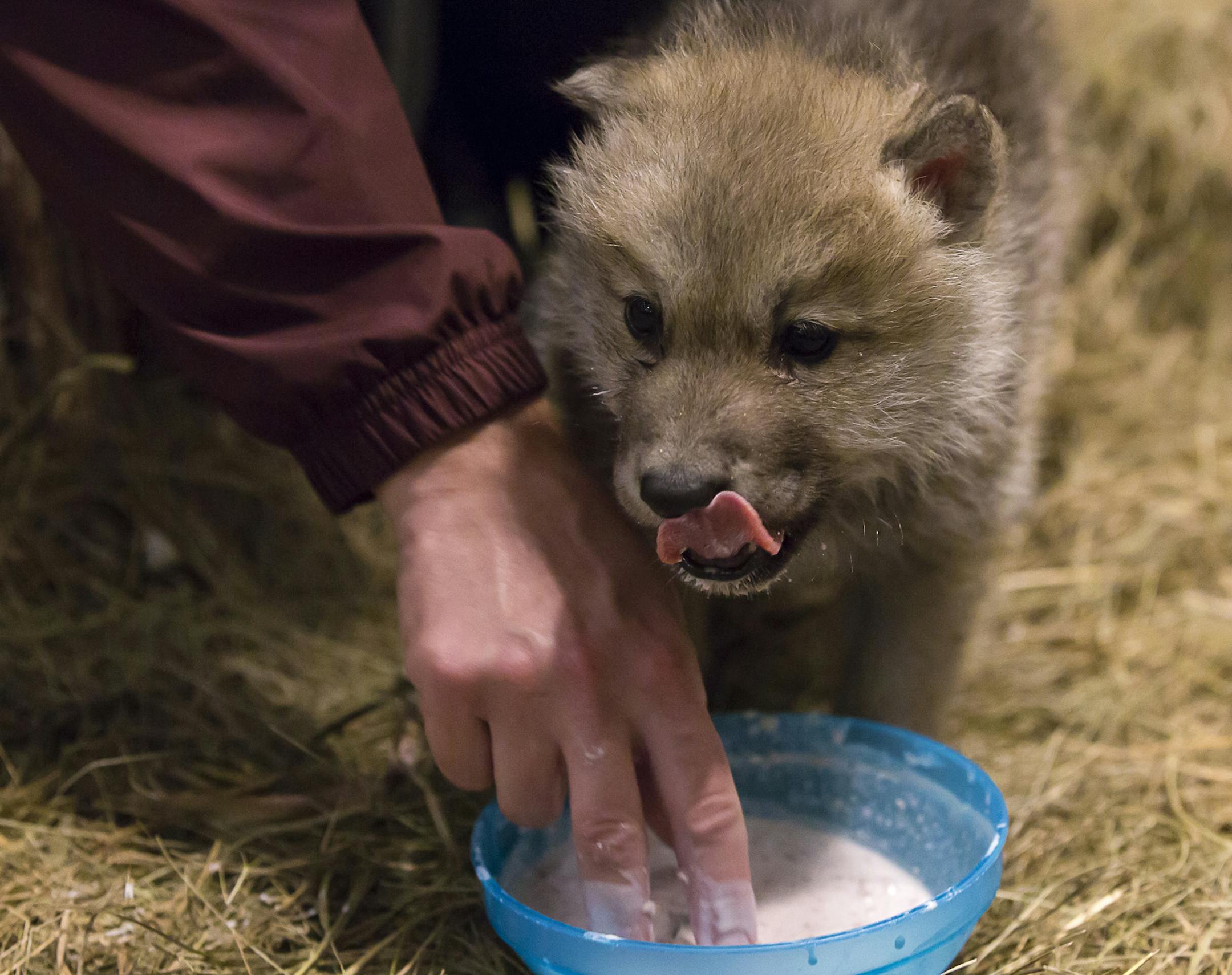
To the casual observer, they're four-legged bundles of fun with cuteness so colossal it forgives any hijinks they might manufacture. But coos and awws aside, the two Arctic wolf pups that arrived May 25 at the International Wolf Center (IWC) in Ely, Minn., are even more important as teachers.
The two male pups, nicknamed Axel and Grayback, were born May 2 in Canada. IWC wolf curator Lori Schmidt said acquiring pups can be an intricate series of decisions and paperwork that sometimes lasts well over a year. The center tries to get pups in four-year cycles. This allows the pups to integrate into the pack and reach maturity at two years, while providing a retirement cycle for the older wolves, typically at 10 years.
The organization's choice of pup gender and subspecies is based on the dynamics of the existing pack. Currently, the center manages just one female. That management choice was determined by recommendations on female aggression of wolves in captivity. The center wants to be certain another female won't test or pick up on weaknesses of an existing female.
For this cycle, the IWC was interested in two Arctic wolves, which are rare in captivity. At best estimate, Schmidt said there are approximately 100 captive Arctics. She added that although science is changing, five gray wolf subspecies are currently recognized in North America: Arctic, Great Plains, northwestern, Mexican and eastern timber wolf. The center has wolf representatives from three of those five: northwestern (2008 litter), Great Plains (2012 litter), and now the Arctic in 2016.
The pups must also come from a licensed facility that meets veterinary record and inspection standards through the U.S. Department of Agriculture or the American Zoological Association, or, in this case, the Canadian equivalent.
Rearing these rascals requires teams of pup care staff members that will nurture them 24/7 until they enter the exhibit pack in August. Schmidt said the process of socializing pups to humans starts almost immediately. Pups typically begin bottle-feeding at the center when they're 12 days old. Also, circumstances continually arise throughout the wolves' lives when they need to be handled by humans. Without that socialization, the pups could become too skittish. The pup care teams help them adapt to the array of sensory experiences and people they will encounter at the wolf center.
Being part of the pup care staff requires training. Schmidt said members are chosen based on skills, past experience and ability to work as a team. Trainees are expected to observe how experienced staff members interact with the adult wolves because that's how the pups are to be treated.
Beyond providing nutritional and medical care for the wolves, the staff must also be mindful of precautions. Anyone entering or exiting the pup pen is required to step in bleach to help prevent the spread of viruses or parasites. Handlers are always on the lookout for ingestion issues. When the pups are outdoors, the staff monitors them for anything hazardous they might want to chew, like rocks or a birch bark log.