

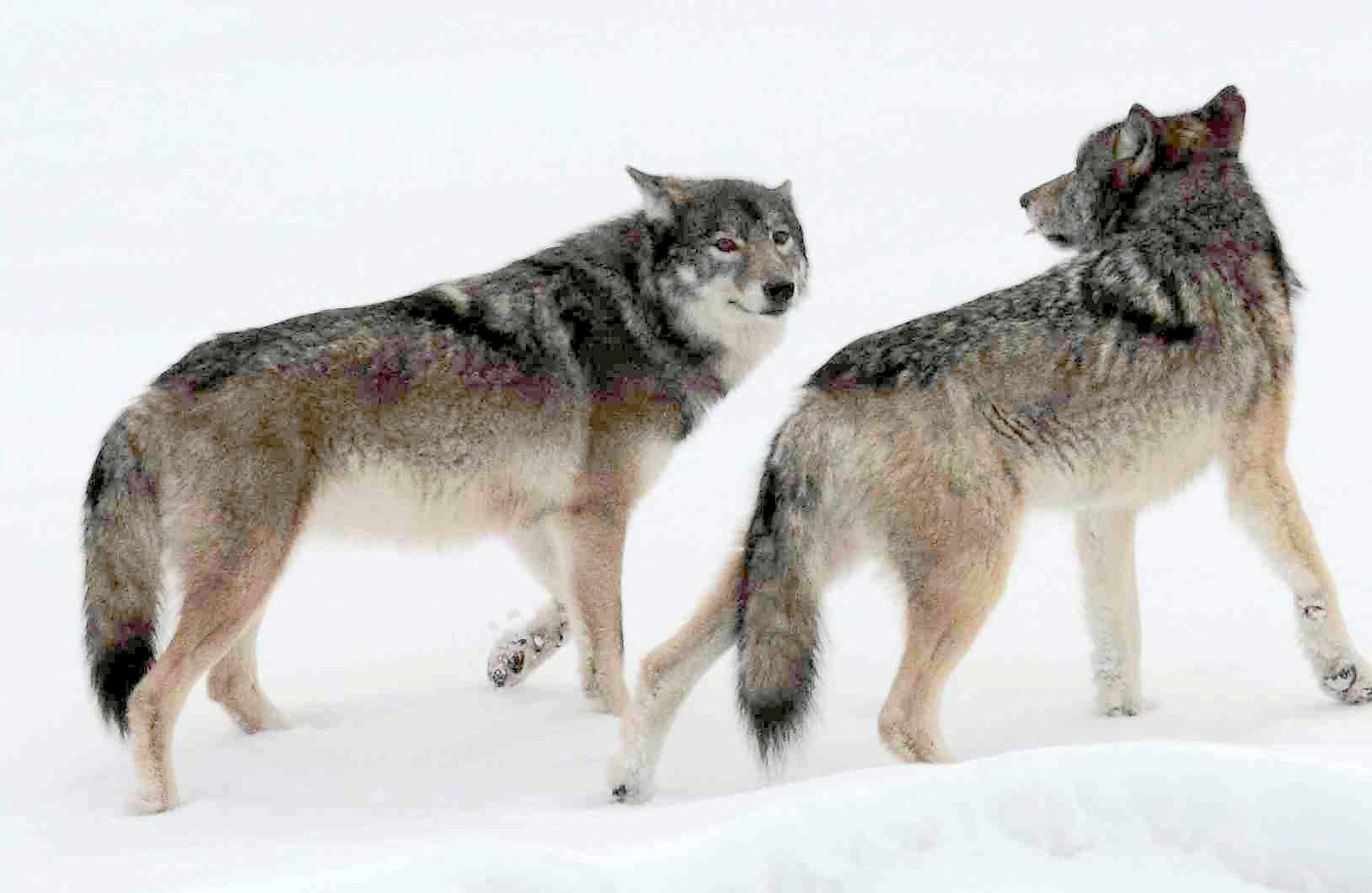
The howls of two, maybe three, pups have joined those of the other eight wolves on Isle Royale — proof of new life for the famous but dwindling packs of predators.
Rolf Peterson, a researcher who's been tracking the wolves for several decades, said he heard the new voices on July 3 while at a campground on the west end of the island. The next morning, he saw small tracks alongside those of the three adults that occupy that end of the national park.
"I was surprised," he said Friday. "It was nice to hear them."
The births signal a remarkable resilience for the wolves, whose numbers have fallen to their lowest point since they were first counted, in 1959. Peterson and other wolf experts fear that, because the animals are the descendants primarily of two wolves, they may all be too closely related.
The event also provides some breathing room for what could be a precedent-setting decision by the National Park Service on whether to introduce new wolves to the island in order to preserve the critical balance between the predator and their primary prey, moose.
"It is always exciting when we learn about successful reproduction of wildlife in the park, and the birth of two wolf pups is especially good news," said park superintendent Phyllis Green. But, she added, "We are still concerned about the population."
The number of wolves on the island in Lake Superior has dropped from 24 in 2009 to eight last spring, which are split into two packs — one at each end of the island — and two loners.
The population took a particularly severe hit in the winter of 2011-12, when three wolves fell to their deaths in one of the many abandoned mine pits on the island, including a young female and an alpha male. Peterson and his co-researcher John Vucetich, both from Michigan Technological University, described those deaths as catastrophic. Then, for the third time in the history of the study, there were no pups born that spring.
![BRIAN PETERSON • brian.peterson@startribune.com Isle Royale National Park, 9/16/2009 ] BRIAN PETERSON • brian.peterson@startribune.com Isle Royale National Park, 9/16/2009 ] Isle Royale is also home to the world’s longest continuous study of a predator-prey relationship. Isle Royale is an ideal outdoor laboratory to study the wolves and moose. Because there are no roads and vehicles, or cabin-building, or human hunting, researchers can observe how nature functions](https://arc.stimg.co/startribunemedia/FAR2JO6KBLSIYGMFEJAOSREVWE.jpg?&w=1080)


