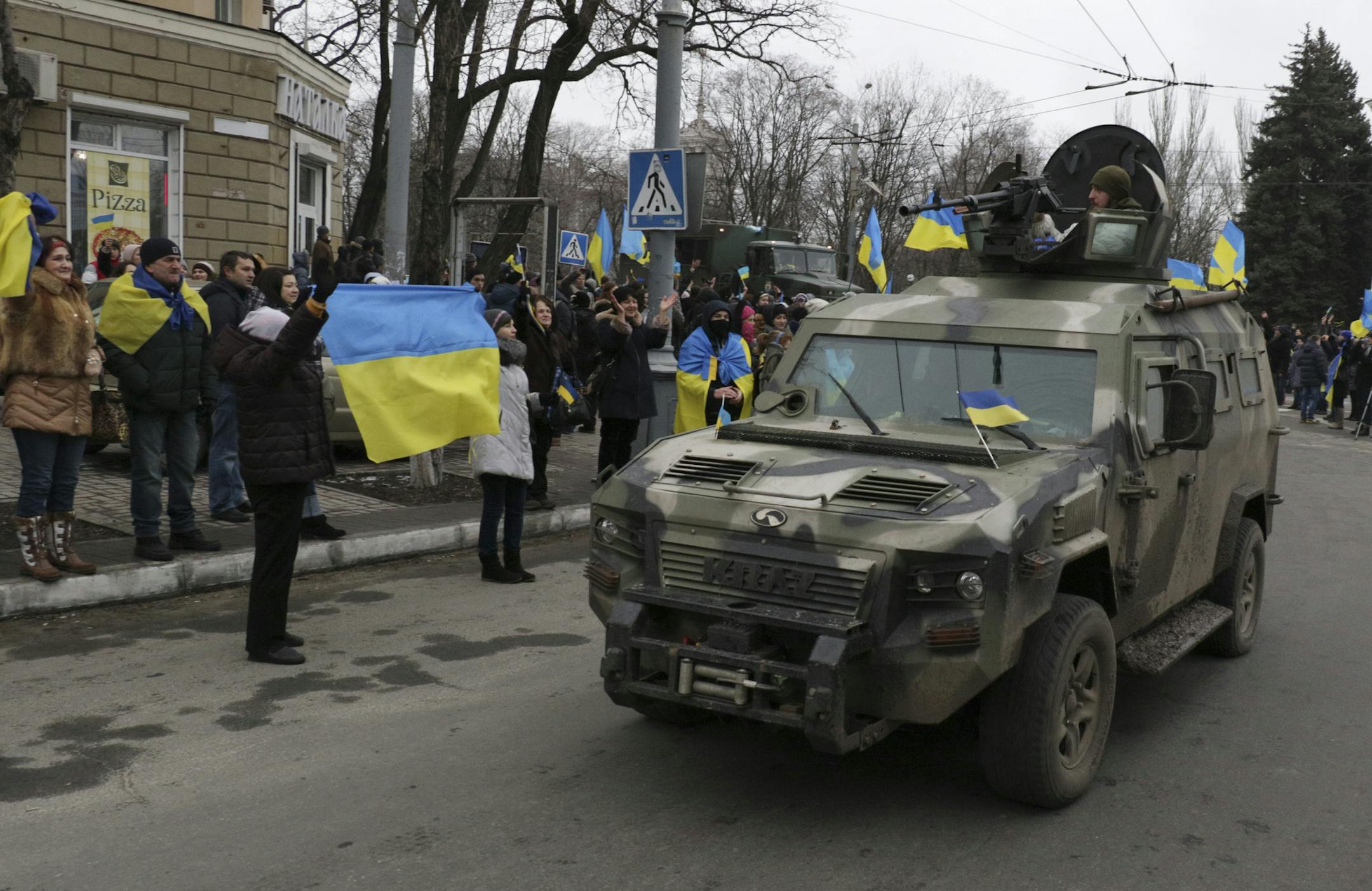
MINSK, Belarus — The peace deal reached Thursday for Ukraine, if it holds, would be a partial win for both Moscow and Kiev: Ukraine retains the separatist eastern regions and regains control of its border with Russia, while Russia holds strong leverage to keep Ukraine from ever becoming part of NATO.
But neither side came away from the marathon talks unscathed.
There's no sign Russia will soon escape the Western sanctions that have driven its economy down sharply, and Kiev's price for regaining control of the border with Russia is to grant significant new power to the east.
But the complicated calculus of whether any side came out truly ahead can't be determined unless a single, straightforward term is fulfilled: halting the shooting and artillery salvos that have killed more than 5,300 people since April. That is supposed to happen on Sunday, at one minute after midnight.
A cease-fire called in September never fully took hold and fighting escalated sharply in the past month. Questions remain about whether either side possesses the will or discipline to ensure a truce this time.
The cease-fire is to be monitored by the Organization for Security and Cooperation in Europe's observer mission in Ukraine.
But that "will probably go nowhere if there isn't a huge political will to beef up the OSCE, pull in many more monitors, give them clear support," said analyst Judy Dempsey, an associate of the Carnegie Europe think-tank.
The OSCE mission head, Ertugrul Apakan, said Thursday that he expected it would expand by the end of the month to about 500 observers, up from about 310 currently, the Interfax news agency reported.