

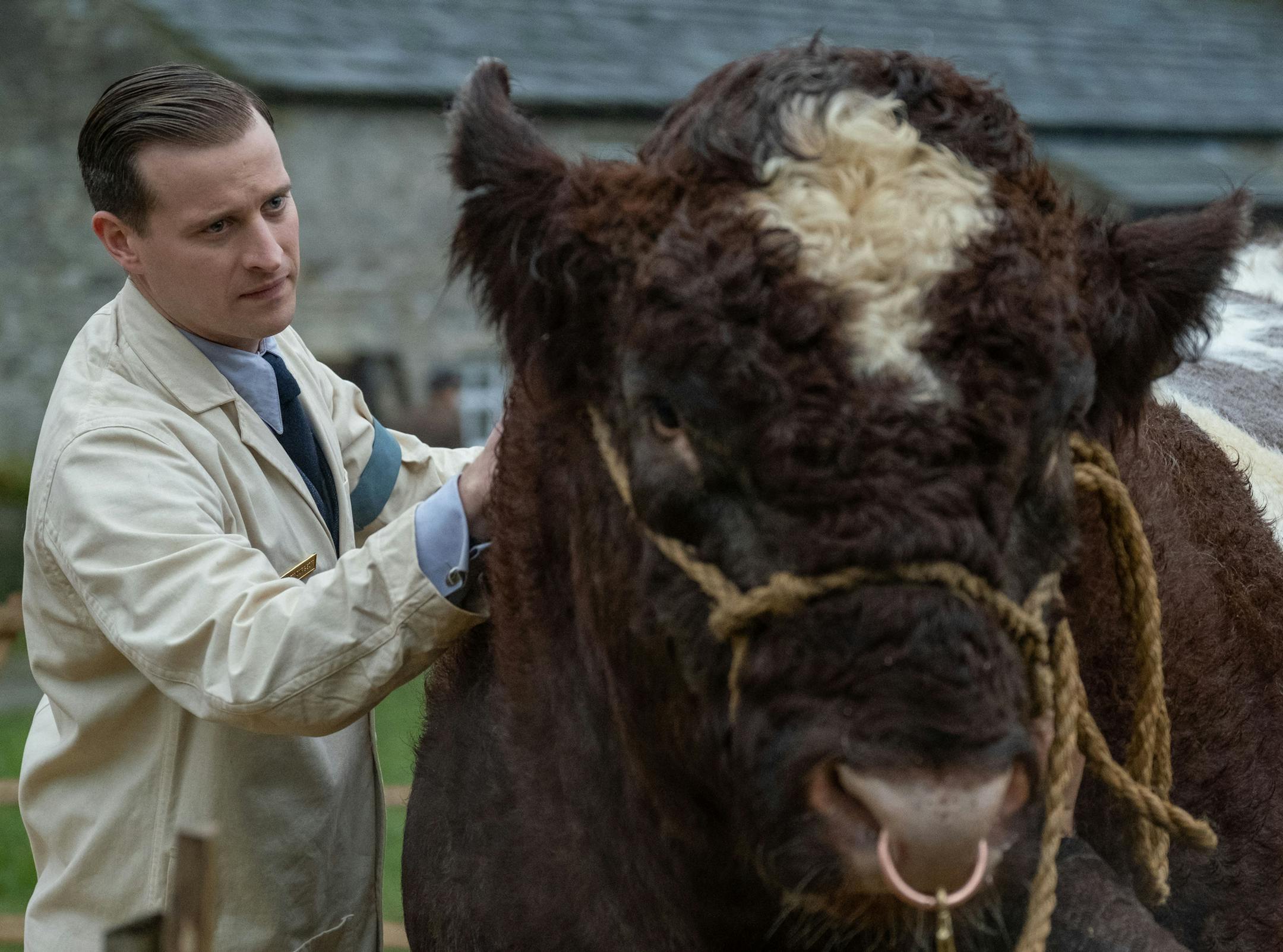
W.C. Fields warned against working with kids and animals. Thankfully, "Masterpiece" ignored at least half of that advice.
As part of its 50th year on the air, the PBS staple is offering a new adaptation of "All Creatures Great and Small," the misadventures of an adorkable veterinarian making house calls in Yorkshire, England, during the 1930s.
Compared with past "Masterpiece" series, this is a mundane affair. No one's trying to unravel a murder or steal the throne. Its idea of a nefarious character is a spoiled doggy who steals from a picnic basket.
That gentle tone is exactly why "Small" feels like scrumptious comfort food when we crave it most. It's bound to be popular viewing for the next few months, starting with Sunday's premiere on TPT, Ch. 2.
"I remember with great affection the days as a family when we would sit down and watch television together when we were growing up," said executive producer Colin Callender, who has previously worked on high dramas like "Wolf Hall" and "King Lear." "My feeling was that audiences want that, and that's clearly what's happened during the lockdown. I think the timing of this coming out is clearly apropos.
"What's particularly poignant about the show is what these animals meant to these owners," Callender added during a news conference last summer. "In most of the cases they were their livelihood. I think that relationship between the animals and their owners and the vet and that dynamic is right to the core of all the stories."
The series is also a departure from "Masterpiece's" habit of focusing on the wealthy and powerful.
"Something that touched me the other day is we are talking about people who aren't very rich. We have made a lot of excellent British television stories about people who are rich," said Samuel West, who plays the hot-tempered senior doctor, Siegfried Farnon. "But here, you lose one cow and that's a bad year. It is ground-level stuff. I really like that."


