

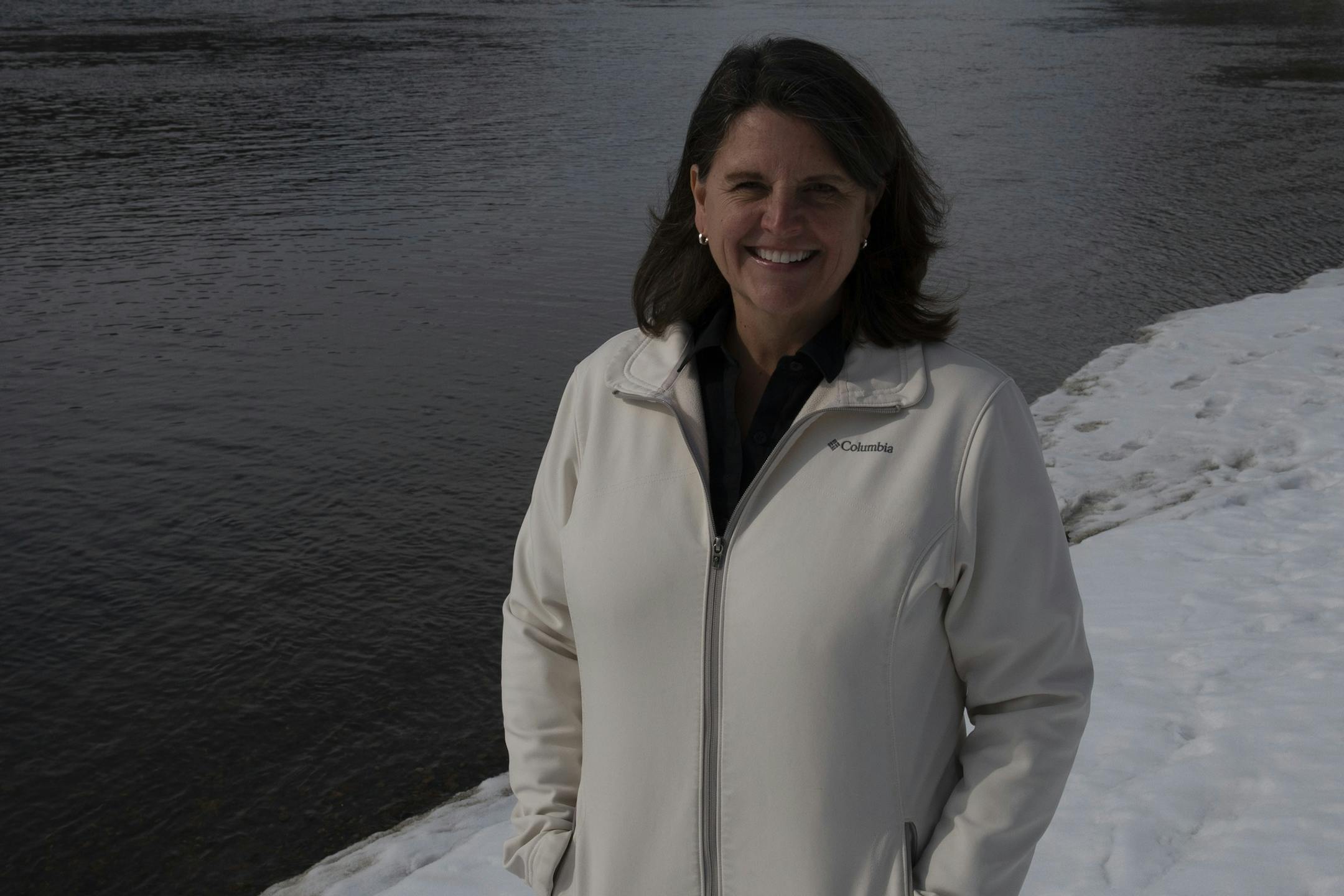
Ann Mulholland, executive vice president of the St. Paul & Minnesota Foundation, steps into a fresh new role March 23 as director of the Nature Conservancy in Minnesota, North Dakota and South Dakota. But the job change is much like a homecoming for Mulholland, a bird enthusiast whose love of nature deepened after she moved to Minnesota in 1991 and learned to fish, camp and harvest wild rice. Mulholland will work out of the Minneapolis office of the global nonprofit, which is considered one of the country's most venerable environmental groups focused on protecting land and waters, promoting sustainable food and water, and climate action. Mulholland, who lives in St. Paul's Selby-Dale neighborhood, is the mother of four daughters and dog mom to Heddi.
Q: I understand you were born in Ohio. What brought you here?
A: My husband [Steve Cerkvenik]. I was working in the political world, running around the country doing political campaigns, and he was running Collin Peterson's first victorious campaign for U.S. Congress in 1990. I was coming in as a regional person for the Democratic National Campaign Committee. I fell in love on Collin Peterson's dock. It was summer. It was gorgeous. I moved to Minnesota to be closer to [Steve]. He was living up on the Iron Range still.
Q: What do you see as the particular conservation challenges facing Minnesota and the Dakotas?
A: I think that these three states have a real opportunity to contribute to capturing carbon. So when you think about all the ways you can do that, we always think about things like power generation and transportation. More and more, though, there are natural climate solutions that can happen on the ground. We forget how resilient and strong nature can be. The roots underneath the ground are extraordinary masses. They're like trees upside down that capture carbon and hold carbon. Trees play an extraordinary role in capturing carbon. There are parts of Minnesota where we are still converting forest land. There are some real threats to the Upper Mississippi River. There's a lot of land along the headwaters that is being converted from forest to farming. It's a huge issue. We're working with local communities to preserve natural systems.
Q: The Nature Conservancy owns and manages about 60,000 acres in Minnesota, including more than 50 public preserves. What are some of your personal favorites?
A: Blue Stem Prairie Scientific and Natural Area, not too far from Fargo. It's an area of the state that was covered in prairie for a long, long time. It's where I was first introduced to what prairie chickens are all about. I am absolutely mesmerized by Blue Stem Prairie. In North Dakota, there's a bird, the piping plover, an endangered bird species, and we have a preserve in North Dakota called John E. Williams Preserve. This preserve plays an incredibly outsized role in protecting this incredible species.
Q: Is there a new acquisition in Minnesota you can tell us about?


