

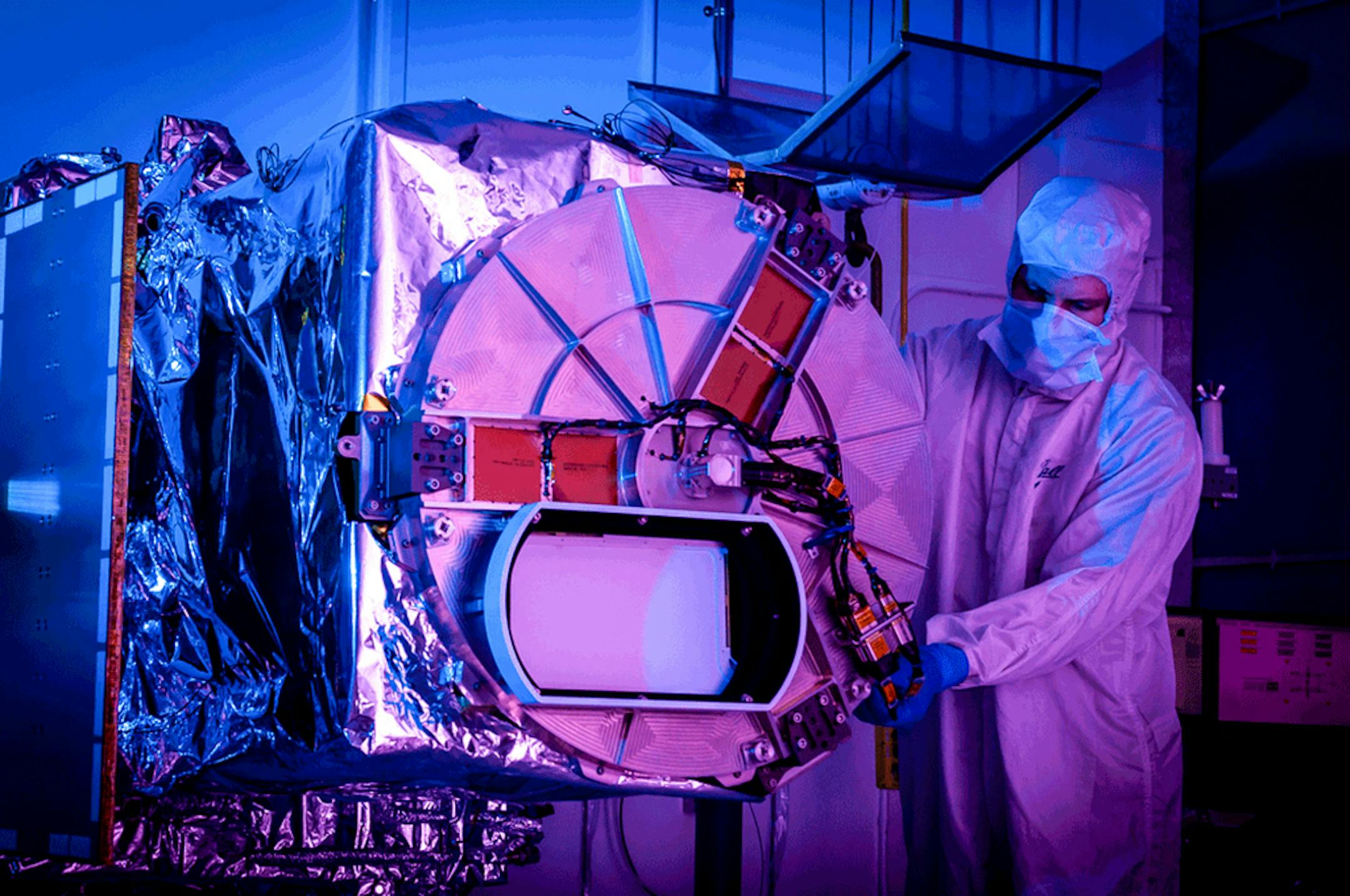
When scientists switched on the instrument aboard a new satellite this summer, they got a preview of what will soon be the nation's first continuous record of air pollution.
The satellite will stay parked above North America and provide scientists with hourly daytime updates on air pollution nationwide. On Thursday, researchers released their first images, which show changes in nitrogen dioxide pollution over the United States over the course of a day.
"It's really exciting to see the instrument just working as expected," said Xiong Liu, the deputy mission director and a physicist at the Center for Astrophysics run by Harvard University and the Smithsonian Institution. The satellite instrument, called TEMPO, will be able to measure several other pollutants as well.
The images come during a summer of exceptionally bad air quality for the United States, with smoke from wildfires blanketing multiple cities and regions. But even before this summer, over the past decade or so, the gains in air quality that Americans have enjoyed since the passage of the Clean Air Act in 1970 had started to plateau.
Although air pollution has improved over the years, "one-third of Americans are still living in unhealthy levels of air pollution," Liu said.
Nitrogen dioxide comes from burning fuel and creates other types of pollution through chemical reactions in the air. The images show clear hot spots of the gas around major cities, with higher levels during the morning and evening when there's more traffic.
In addition to peering down on Earth via the new satellite, scientists fanned out across the country on foot and in research planes this July and August, in a tightly choreographed production to try to understand why air quality was no longer improving.
Because pollutants can quickly travel thousands of miles on the wind, it has been hard for scientists to pinpoint the biggest sources of pollution on a national scale. TEMPO's hourly updates are expected to be a "real game changer" in giving researchers the ability to track air pollution from its source, said Brian McDonald, an environmental engineer with the National Oceanic and Atmospheric Administration who is coordinating this summer's field research with the satellite.


