

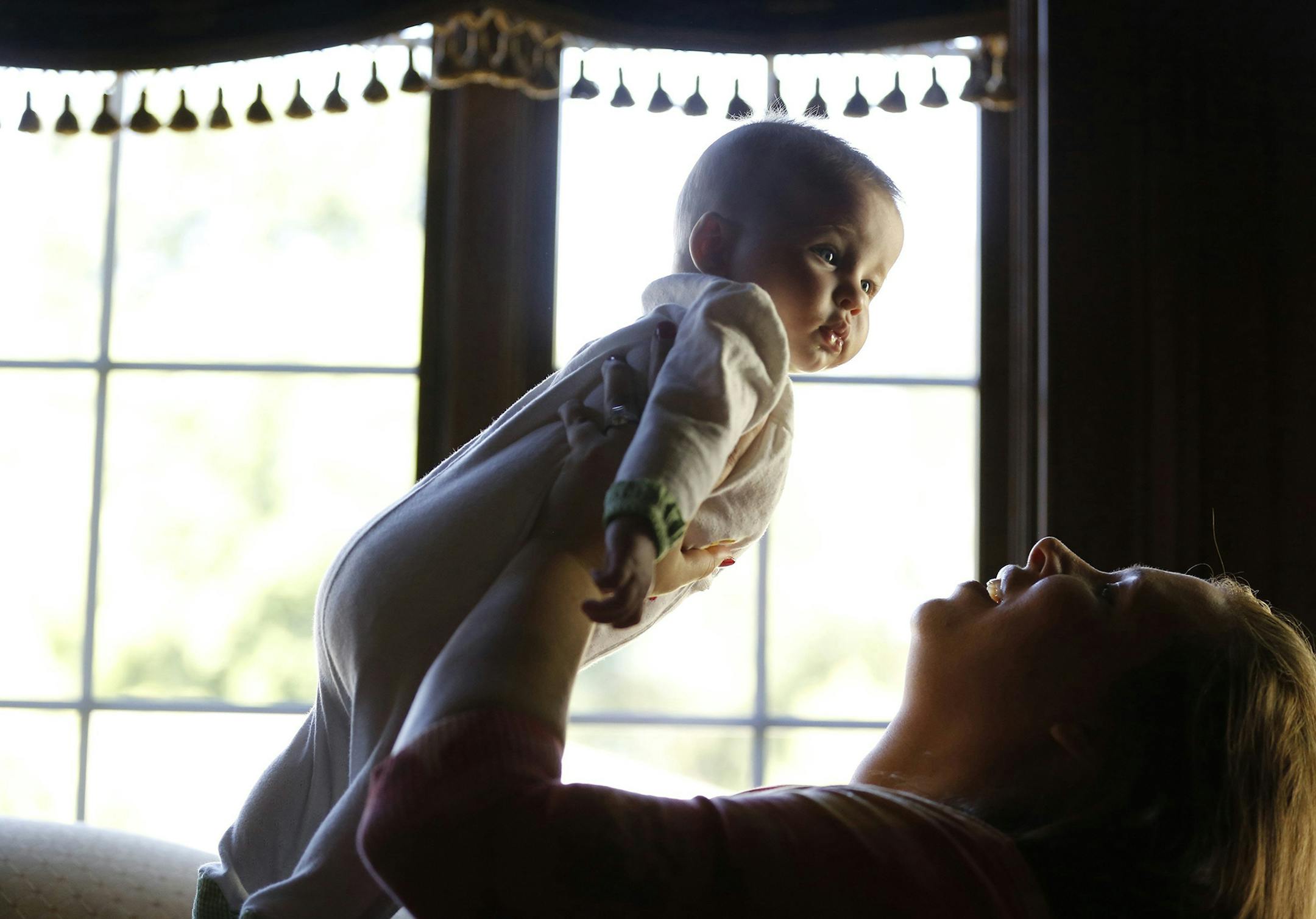
Molly Halper never dreamed she'd consume her baby's placenta, an organ that serves as a link between mother and fetus and is usually discarded after birth.
"My husband and I used to make jokes" about people who did that, said Halper, of Arlington Heights, Ill. "We're not vegetarians or tree-hugging, granola-eating people. We're suburban Republicans. We thought it was some hippie thing."
But after struggling twice with the baby blues and needing to supplement her breast milk supply with formula, she became intrigued by the idea that the hormones in a placenta could help. To reduce the ick factor, Halper paid someone to process the tissue into capsules when her third child was born.
Medical experts say there is no scientific evidence that consuming placenta benefits women, as no controlled studies have tested it vs. a placebo. Nor have placenta pills been analyzed to see what substances they contain.
"Until all the science is in, the cautions outweigh the expected benefits," said Mark Kristal, a New York neuroscientist who has studied placentophagy — the scientific name for placenta consumption — in laboratory animals.
Yet the idea is popular enough that Halper's doula, Deb Pocica, said she has encapsulated more than 250 placentas for about $250 apiece. Pocica said she also has trained 30 people to make capsules.
The practice was even debated by reality-TV star Kim Kardashian and her family on a recent episode of "Keeping Up With the Kardashians."
Women who have consumed their baby's placenta claim benefits including reduction of fatigue, a more balanced mood and increased breast milk production.


