
New Minnesota budget forecast offers some relief

The forecast, which shows a little more money coming in than expected through June, still shows trouble ahead.

February 28, 2013 at 6:34PM
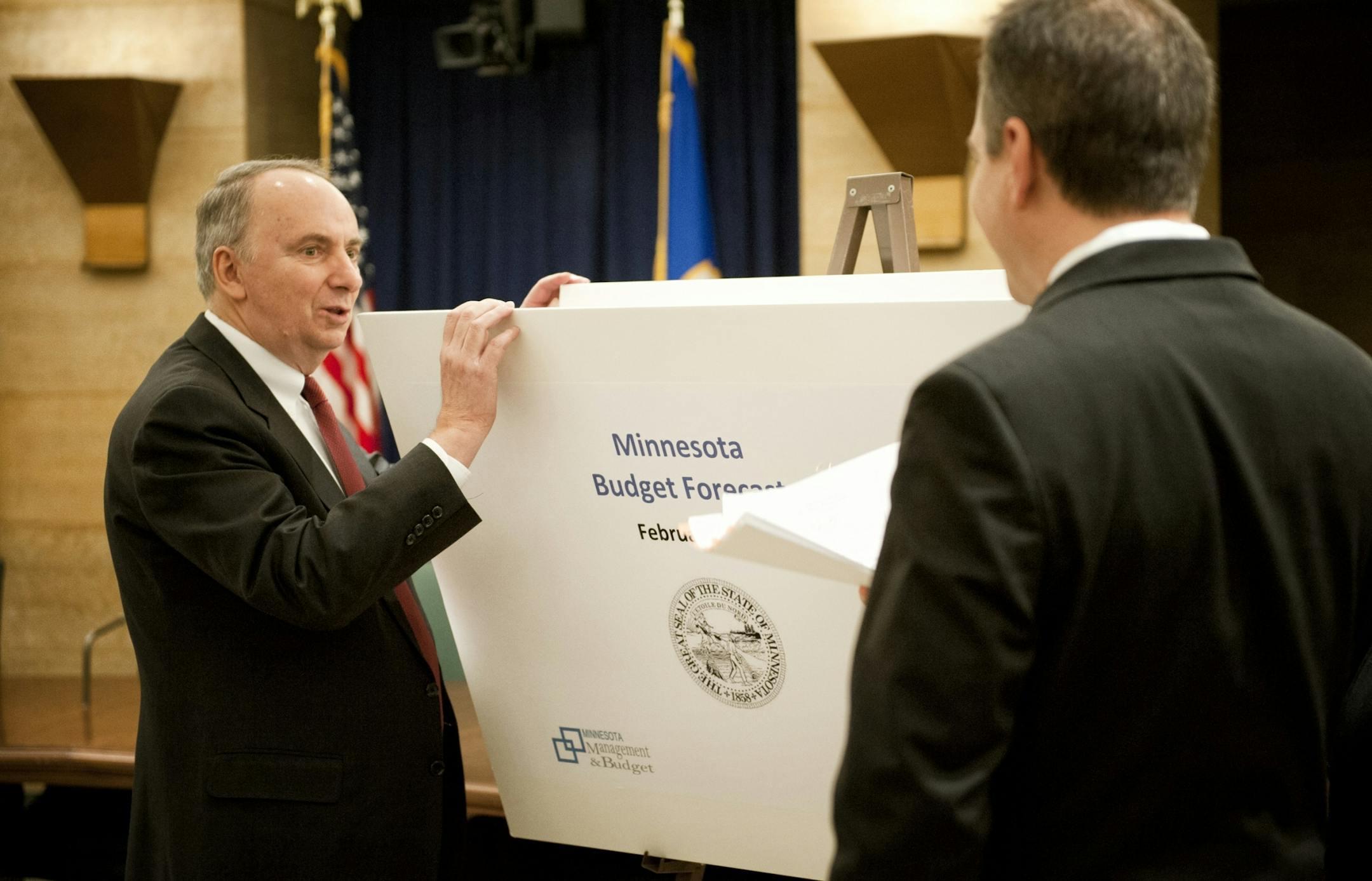
Minnesota Management & Budget Commissioner Jim Schowalter, State Economist Dr. Tom Stinson, and State Budget Director Margaret Kelly released the State of Minnesota February Budget Forecast on Thursday.
Minnesota Management & Budget Commissioner Jim Schowalter, State Economist Dr. Tom Stinson, and State Budget Director Margaret Kelly released the State of Minnesota February Budget Forecast on Thursday, February 28, 2013. (Star Tribune/The Minnesota Star Tribune)

updated

A new forecast of Minnesota's budget projects the state is in better shape than it has been for a while.

The estimate released Thursday shows that through June, the state will have $295 million more than it will spend. For the coming fiscal cycle-- which begins in July and lasts through 2015 -- the state's deficit will be $627 million.

Both are improvements over estimates from late last year. In November, economists predicted the state would have to grapple with a $1.1 billion deficit over the next two years.

The extra money in the current budget will allow Minnesota to continue to pay back its debt to schools, which it took on as an accounting move to get it through lean times. With no legislative actions, the surplus will reduce the school debt to $801 million, from a high of more than $2 billion in 2011.

The forecast will shape the state budget discussion at the Capitol. DFL Gov. Mark Dayton has proposed upending the state's tax system and increasing taxes in many areas. Skeptical lawmakers are just starting to dig into the details and develop proposals of their own. Already, some lawmakers and businesses have complained that any tax increases will shake the state's fragile economy.

The estimate of growth in the state's tax collection and spending shows Minnesota's economy has improved more quickly than that of the nation. In December, 5.5 percent of people were unemployed, compared to 7.8 percent in the nation.

As with economists' estimates for the state's budget a few months ago, the most recent forecast is expected to show that political stalemate in Washington could have a spillover effect locally.

"The federal fiscal cliff agreement in early January removed a major threat to economic grown in 2013. Now there are concerns about the possible impact of sequestration and a partial federal government shutdown," the forecast says.

But the good news?

"Minnesota's direct exposure to federal cuts under sequestration is among the lowest of all states. Minnesota Management and Budget economists estimate that the federal sequester cuts would reduce Minnesota employment growth by no more than 5,000 jobs by the end of 2013. Forecasters note that while these cuts are unlikely to produce a recession by themselves, the economy would be left with little cushion against further shocks," the forecast says.

The forecast shows that the state is now projected to take in $128 million more in individual income tax revenue than previously forecast through June and is projected to take in $297 million more in individual income tax in the next two years.

it also shows slight dips in projected spending, with the biggest savings coming from health and human services spending.

"Savings from negotiated reductions in managed care rates for elderly and disabled basic care, adults without children, and families with children, as well as an increase in pharmacy rebates in (fiscal year) 2014-15 contributed to the reductions," it says.

about the writer

about the writer

rachelsb

More from No Section

See More
FILE -- A rent deposit slot at an apartment complex in Tucker, Ga., on July 21, 2020. As an eviction crisis has seemed increasingly likely this summer, everyone in the housing market has made the same plea to Washington: Send money — lots of it — that would keep renters in their homes and landlords afloat. (Melissa Golden/The New York Times) ORG XMIT: XNYT58
Melissa Golden/The New York Times

It’s too soon to tell how much the immigration crackdown is to blame.