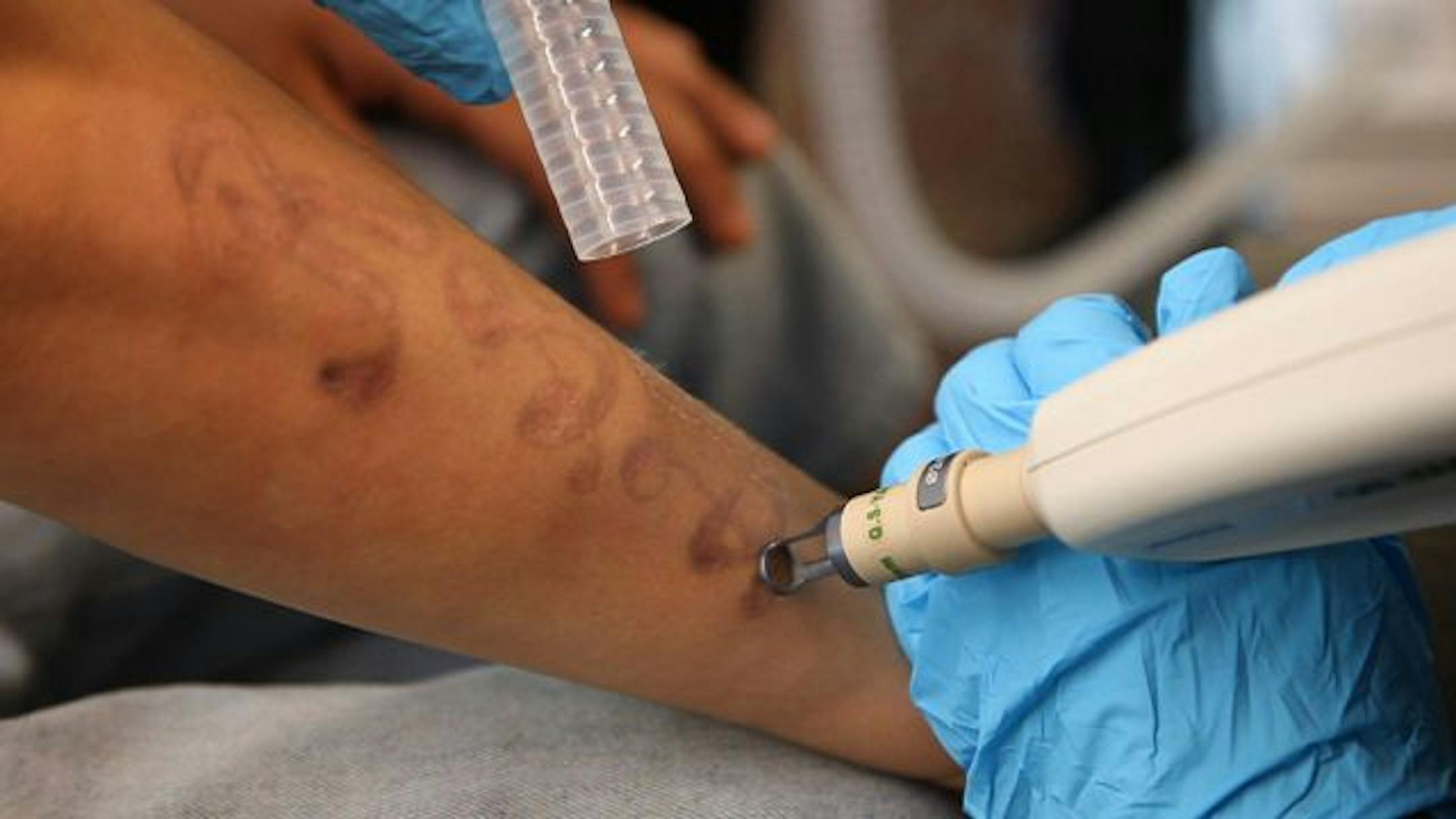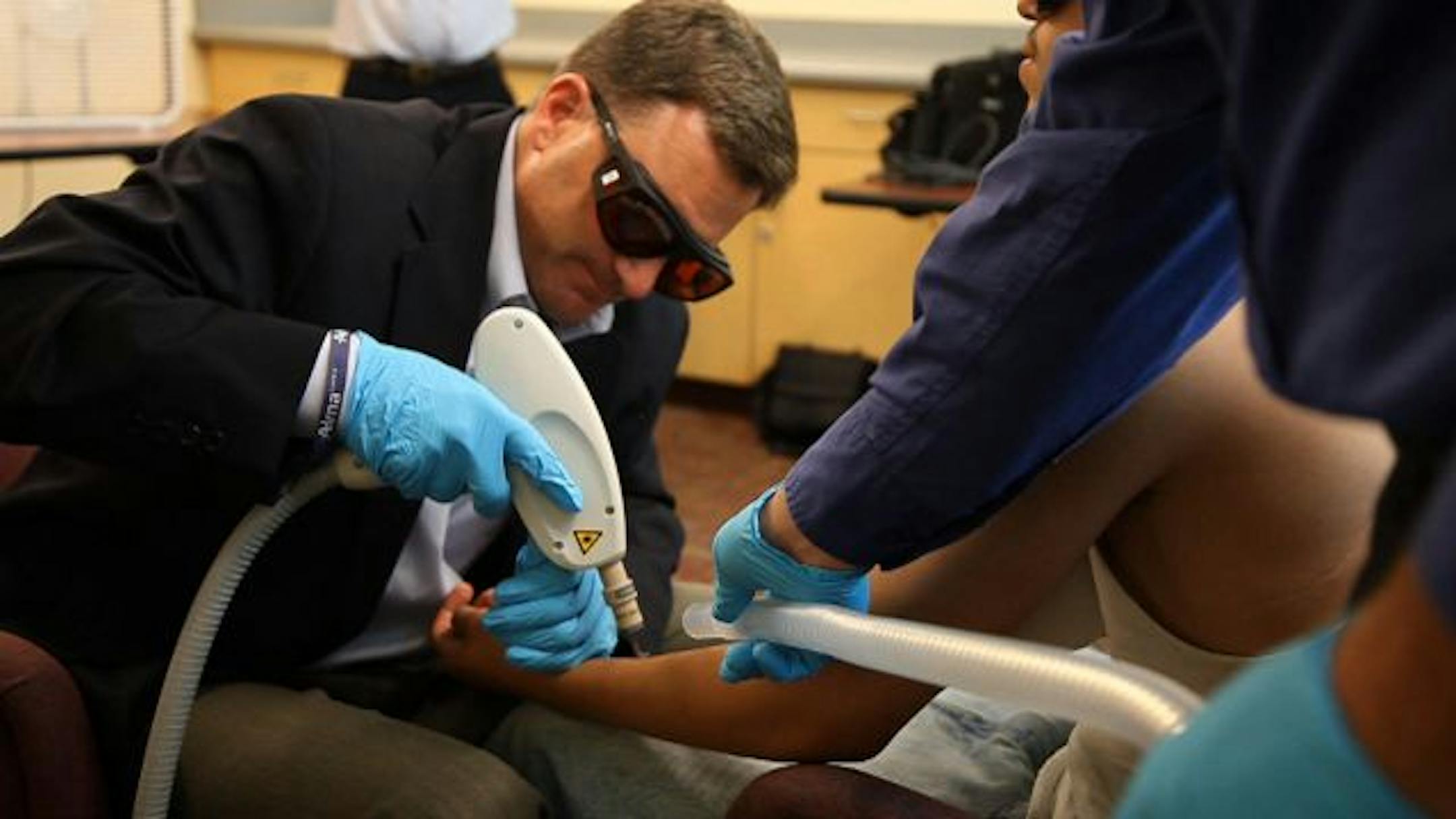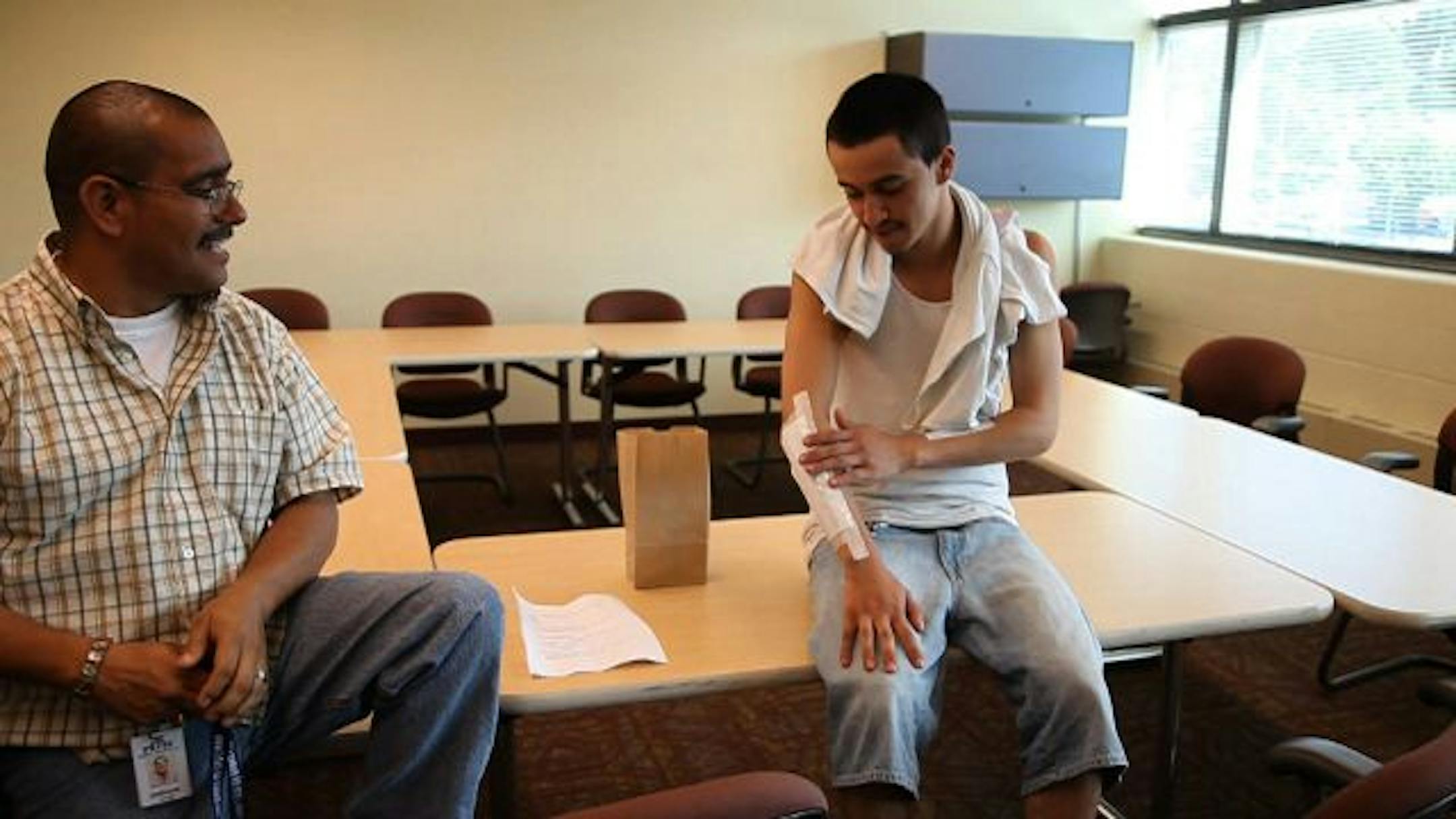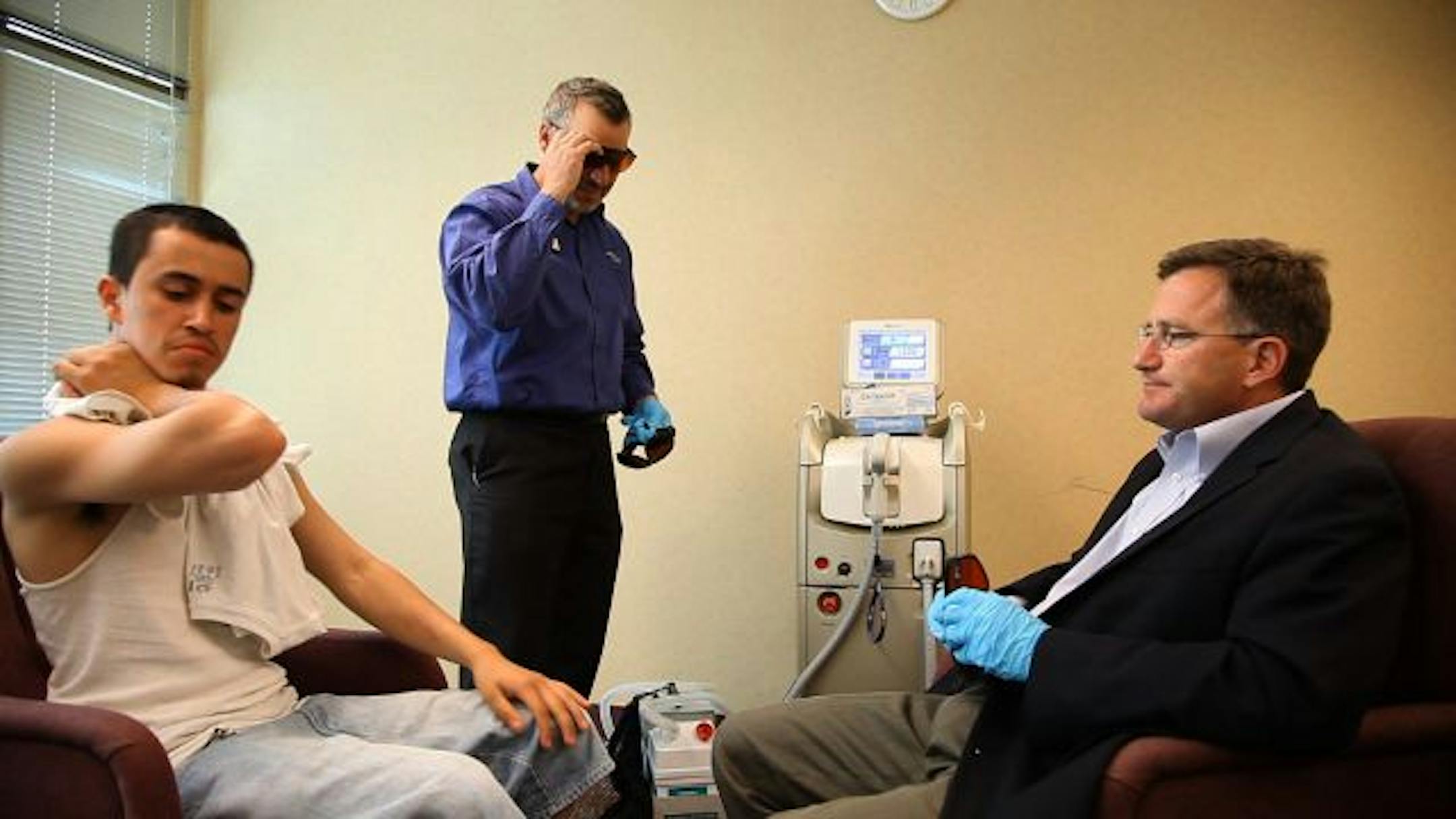
Albert Gomez steeled his jaw as the laser traced the tattoo on his right forearm. Click! Click! Click! The staccato sound filled the room as the laser flickered and the black ink faded away.
Gomez, 18, held back a wince. The reason he got the tattoo in the first place was to show how tough he was, to show pride in the gang he joined when he was 13.
Now, he wants a chance at an education, a job in the medical field and the peace of mind knowing that he truly has left the gang life.
Neighborhood House, a longtime St. Paul nonprofit, is helping him and other former gang members make that transition through a year-old program that provides free tattoo removal. It's part of a larger gang reduction and intervention initiative that's funded through government and private grants.
So far 24 former gang members from age 14 to 25 have gotten tattoos taken off at Neighborhood House and a location in Minneapolis. Some entered the program after leaving juvenile detention, others showed up because they just wanted to make a change.
Getting out of a gang and on the right track is one thing, but doing it without the physical reminders of that life is another, said Enrique (Cha-Cho) Estrada, who runs the anti-gang program.
"Go out and try to get a job when you've got tats on your face, a spiderweb on your forehead, and no one's gonna want to hire you," Estrada said. "Besides removing that label, that physical label, a lot of times it's kind of a personal thing for the young kids."
Having tattoos removed professionally is expensive, running from $800 to more than $5,000 depending on size, color and quality.