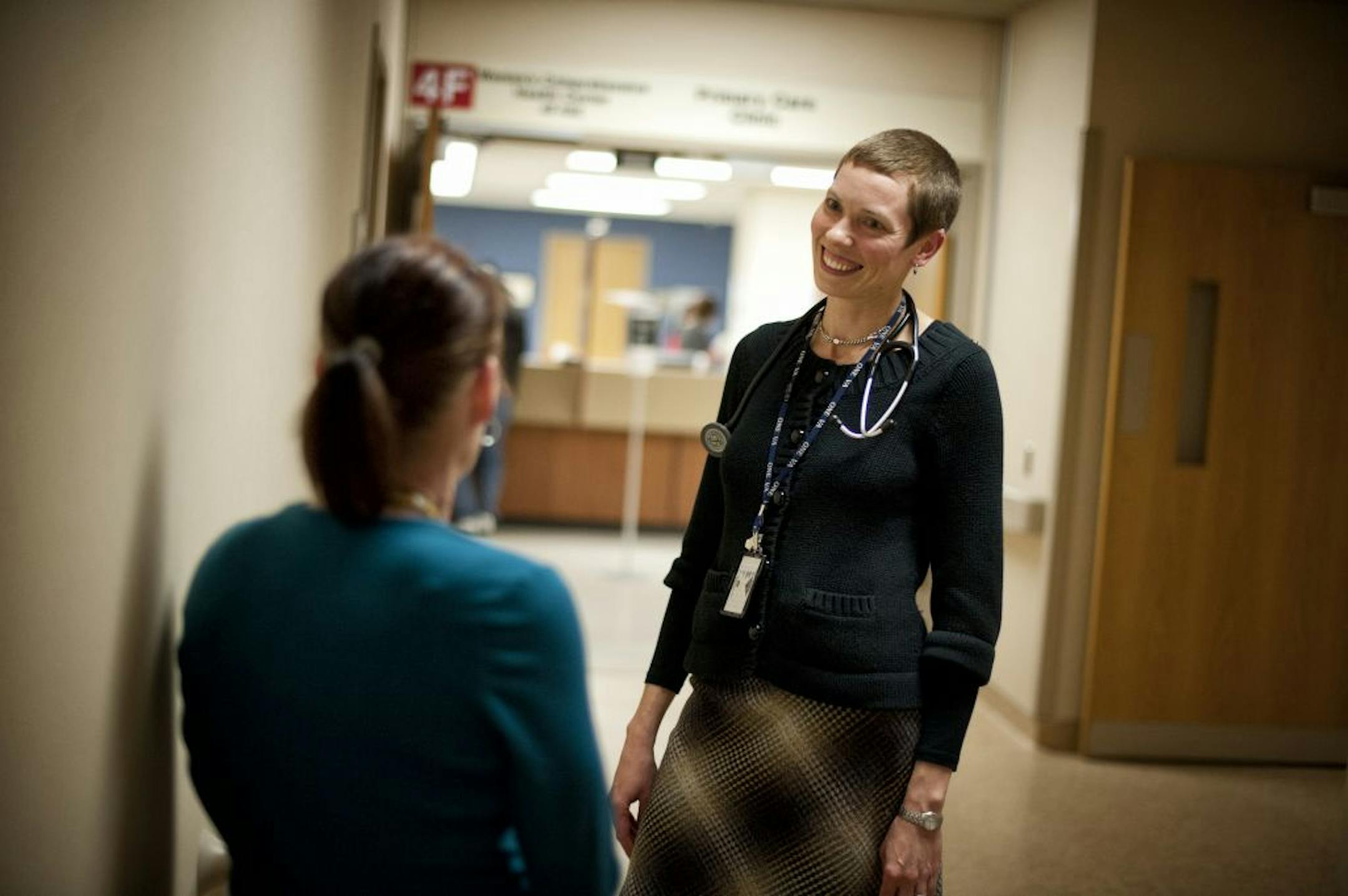
With new grants for video conferencing on issues like contraceptives and menopause, a mini-residency for nurses to improve how they care for women and a pilot tele-project for maternity care, the Minneapolis Veterans Affairs Medical Center has come a long way.
Even a few years ago, exam tables at the women's health care center faced out into the halls and patients had to navigate a labyrinth of corridors full of men to get to the fourth-floor center.
Female vets seeking treatment has become more common and the way the VA addresses women's health care is getting more sophisticated. Nationwide, the VA now outperforms the private sector in screening female patients for breast and cervical cancers, for example.
The issue has become increasingly important as a new generation of female vets emerges -- the 78 percent who are younger than 40. Women are the fastest-growing subgroup of veterans.
"We've been struggling to keep up and get ahead," said Dr. Erin Krebs, women's health medical director at the Minneapolis VA. "It's the VA's job to care for all veterans, including women -- to be more aware that women veterans are here, they belong here and we provide services to them. It is a culture change over time."
As part of the new effort, the Minneapolis VA was recently awarded $217,000 in grants designed to improve the quality and access of women's health care, part of a nationwide announcement of awards to 33 VA facilities. The grants represent the largest ever one-year total for enhancing health services for female veterans.
The Minneapolis grants include $173,000 to support a women's health tele-pharmacy, which will use video conferencing to provide women-specific services such as contraceptive counseling and menopause management as well as chronic disease management services in an effort to reduce health disparities among women veterans. The Minneapolis VA also received $20,000 for a mini-residency program to be held this year for women's health and primary care nursing staff as a way to update basic skills, and a $24,000 grant to expand a pilot project for a tele-health program for maternity care.
"We are really working to take advantage of the national initiative to increase our resources locally," Krebs said of the new grants.