

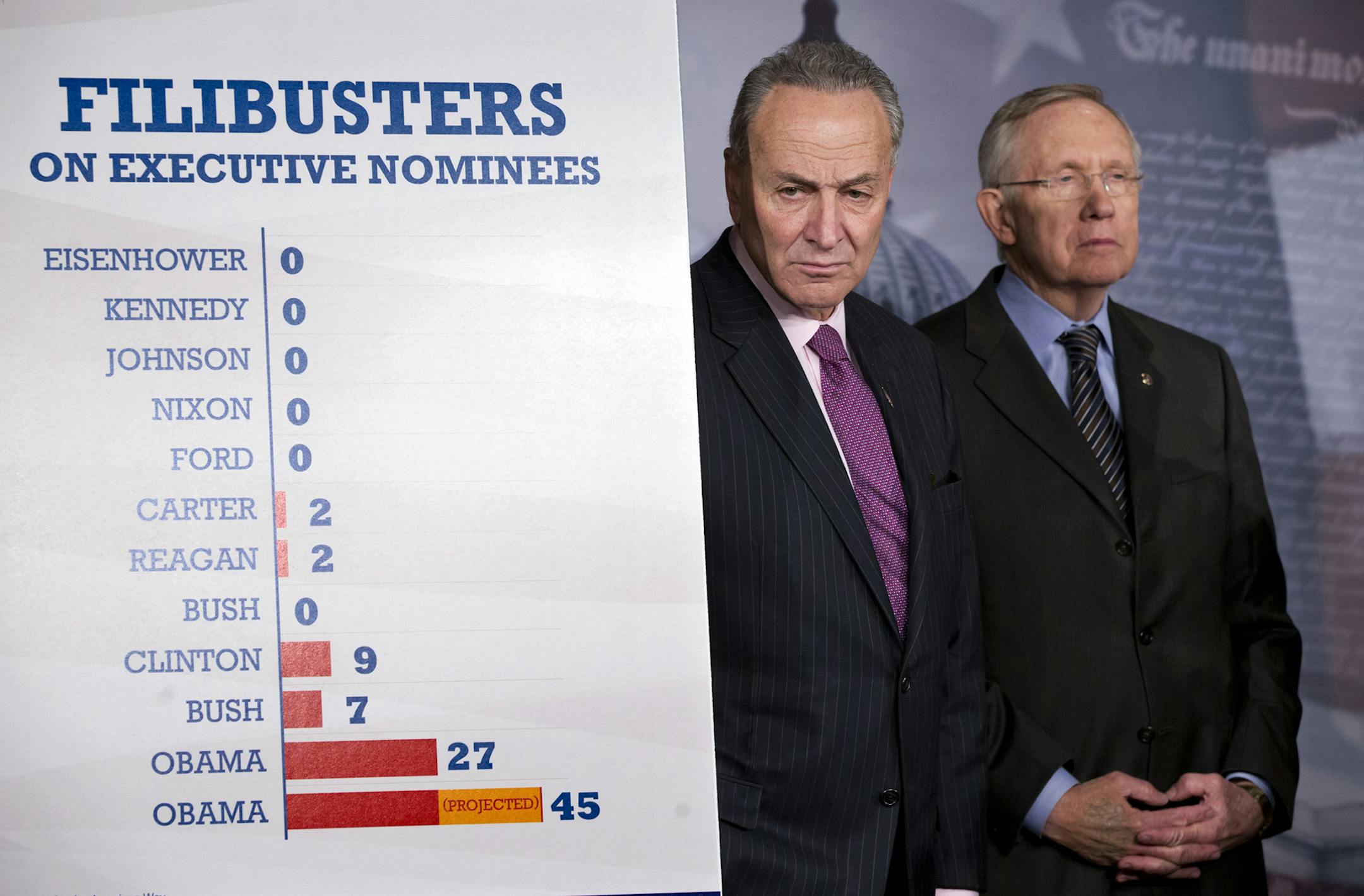
The so-called "nuclear" change in filibuster rules in the U.S. Senate last week was overdue. We wish it were otherwise. For several decades after the civil-rights era, the filibuster served as a sparingly applied brake on federal decisionmaking. It allowed for prolonged consideration when hasty action might have led to folly.
But since the dawn of the 21st century, and especially since the inauguration of the current president, the filibuster has been pushed pedal-to-the-metal. Twenty of the 23 filibusters of federal district court nominees in all of Senate history have occurred in the past four years, at the hands of the Senate GOP minority.
Wishing for more restraint in Republican use of the filibuster to block the confirmation of executive and judicial branch appointments wasn't making it so. The rest of government was paying an increasing price for the Senate's partisan warfare. Majority senators would have been derelict in their sworn obligation to uphold the U.S. Constitution's tripartite governing structure if they had not acted to get the Senate's confirmation calendar moving again.
The rules change means that no longer will 60 votes be required to bring confirmations to the floor of the Senate for an up-or-down vote. A simple majority, 51 votes — or 50 plus the vice president — will do the job. (The filibuster option will remain intact for U.S. Supreme Court confirmations and for legislation.) Some analysts believe that option's days are also numbered, though it's worth noting that the last change in filibuster rules was engineered by then-U.S. Sen. Walter Mondale in 1975. The Senate seldom does anything in haste.
In practical terms, President Obama and his successors can expect an easier time filling federal agency positions and vacancies on the federal bench. That ease could inspire the appointment of more extreme partisans to those posts. But the absence of the intraparty discipline required to overcome a filibuster could also free dissenters within the majority to speak up when they find appointees objectionable. Those voices are muzzled when even minor-post confirmations are treated as partisan contests.
The change also means, practically speaking, that the outlook has dimmed for bipartisan dealmaking by the Democratic Senate and the GOP-controlled House on other issues, including immigration reform and a jobs bill. But those prospects were already bleak. Some analysts say that the filibuster change happened because Senate Democrats believe their policy agenda was already lost. Depriving the GOP of the opportunity to filibuster confirmations at least allows Democrats to fill key government positions while they control the Senate.
Democrats understand that the political table could turn on them. When they were in the minority in 2005, they resisted the change they just imposed. Since then, says Minnesota senior Sen. Amy Klobuchar, more Democratic senators have come around to her view that any president ought to be allowed wide latitude to fill his administration's leadership positions as he or she sees fit. That at a minimum is what winning a U.S. presidential election should assure, she says.
A former prosecutor, Klobuchar also argues forcefully that leaving judicial positions vacant for purely partisan reasons is unacceptable. "Everything from criminal cases to consumer cases get delayed," she said this week. "The most complicated cases end up in federal court. We need every judicial position filled to handle that load."


