

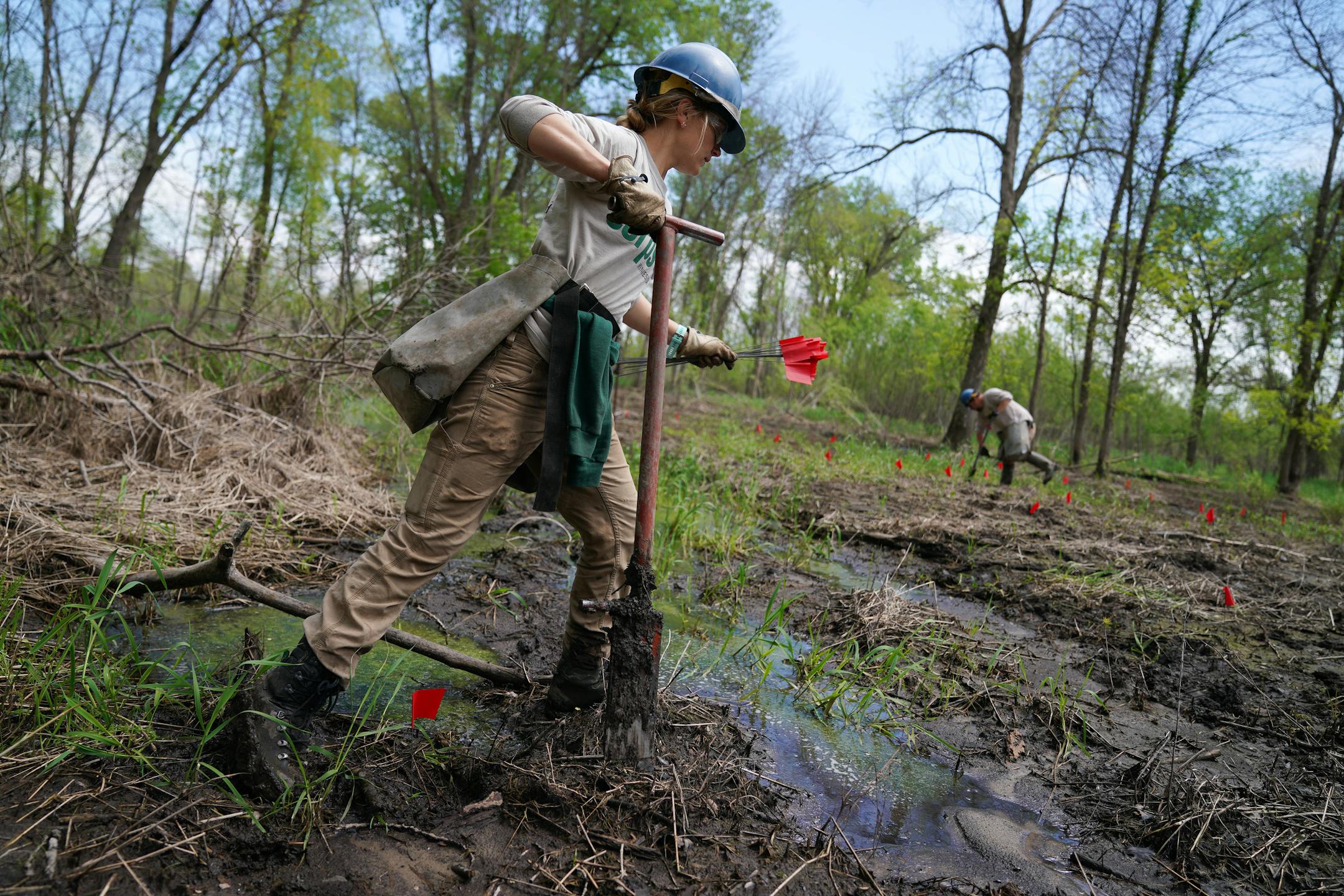
Opinion editor's note: Editorials represent the opinions of the Star Tribune Editorial Board, which operates independently from the newsroom. This editorial was written on behalf of the board by Star Tribune Opinion intern Noor Adwan, a 2023 graduate of the University of Minnesota.
•••
Last month, President Joe Biden unveiled the American Climate Corps, a New-Deal-inspired service program the White House says will employ 20,000 in conservation, clean energy and climate resilience in its first year.
Concurrent with that announcement, Minnesota and five other states issued a joint statement detailing their intent to create parallel state-level climate corps programs. Participants in state-level programs, which will be funded through both AmeriCorps and philanthropy, will earn $30,000 if they work full-time during their term.
American Climate Corps members will be paid — though it is not clear how much — to deploy clean energy technology, aid in restoration efforts, build communities' resilience to climate change and otherwise advance environmental protection goals. The corps was also designed to create pathways for members to secure good-paying jobs in clean energy and climate following their completion of the program.
"We're excited about this program," Aaron Klemz, chief strategy officer at the Minnesota Center for Environmental Advocacy, told an editorial writer. "It's really pointing toward a critically important component of this clean energy transition that we're in the middle of, which is workforce development."
The experience and skills members will gain by participating in the corps will be crucial in filling the fast-growing number of green jobs in Minnesota, Klemz said — a boom that is partly attributable to the Inflation Reduction Act passed last year. At the end of 2022, nearly 60,000 Minnesotans were employed by clean energy businesses, according to a Clean Energy Economy MN (CEEM) report. Clean energy jobs grew 50% faster than the state's overall job growth that year, and CEEM expects that growth to continue as a result of state and federal policies incentivizing energy efficiency improvement.
"We're expecting to add another 30,000 to 40,000 clean energy and energy efficiency jobs [in Minnesota] in just the next five or six years," Klemz said. "And it's going to be really important to have a training pathway for young people who want to go into those careers."


