

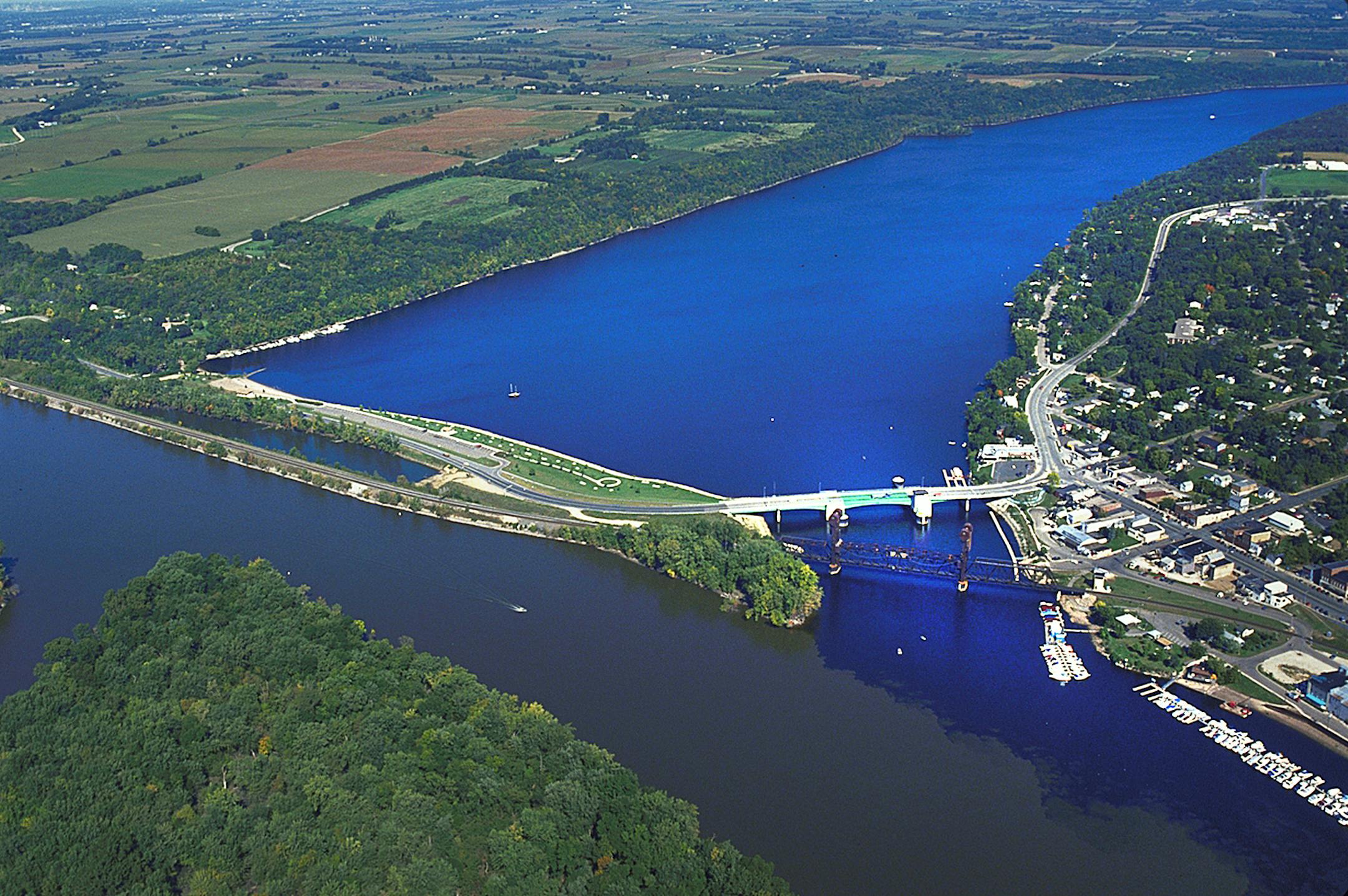
The two great rivers are hardly twins — that's obvious where they come together near Hastings, where the clear waters of the St. Croix merge with the mocha-tinted murk of the Mississippi. Despite the contrast, though, both have helped define the geography, economy and the history of the Twin Cities.
Now their respective futures, coincidentally, have also arrived at a pivot point.
For the first time since the 1970s, the two different sets of rules guiding development and protecting these two important waterways are facing major changes.
In the case of the Mississippi, the Minnesota Department of Natural Resources (DNR) is in the early stages of updating and rewriting regulations over development dating from 1979 along the 72 miles of river that wind through the Twin Cities, from Hastings in the southeast, through both downtown St. Paul and Minneapolis, to Dayton in the northwest.
On the St. Croix, meanwhile, a large shadow has been cast over future development decisions along the river. The city of Lakeland last month dealt the DNR its first setback since the state Supreme Court ruled three years ago that the agency did not have the authority it had presumed it had to overrule local zoning decisions in cases where they did not comply with the landmark Wild and Scenic Rivers Act of 1972.
The rules governing the rivers reflect their different characters, said Molly Shodeen, area hydrologist with the DNR. The Mississippi is an important transitway, for example. "A working river is not the same as a Wild and Scenic river, but it still has very high value," she said, and the rules are designed to balance the interests of both economic development and the environment.
"It's never been the DNR's goal to return the rivers to how they were 3,000 years ago," she said.
The stretch of the Mississippi through the Twin Cities was designated by then-Gov. Al Quie as a "Corridor Critical Area" under an executive order, a type of state regulation that is both problematic and outdated, said Dan Petrik, land-use specialist with the DNR. "The executive order looked at the river as it was 35 years ago," he said. The new rules are being developed to reflect how the river has evolved, and give the state agency stronger and clearer legal authority.


