Consider yourself forewarned. Do not try this experiment in the winter. Well, at least not in your kitchen. And, actually, never inside your home, regardless of the season. This is strictly an outdoors kind of thing.
Liz Lee Heinecke would offer this advice to would-be scientists of any age. But in the event that the younger set doesn't pay attention — and they likely won't — parents should.
It's the soda geyser experiment that has thrilled kids for years. Empty a paper tube filled with Mentos mints into a liter bottle of Diet Coke and see what happens. (The name alone depicts the carbonated chemical reaction: soda geyser.)
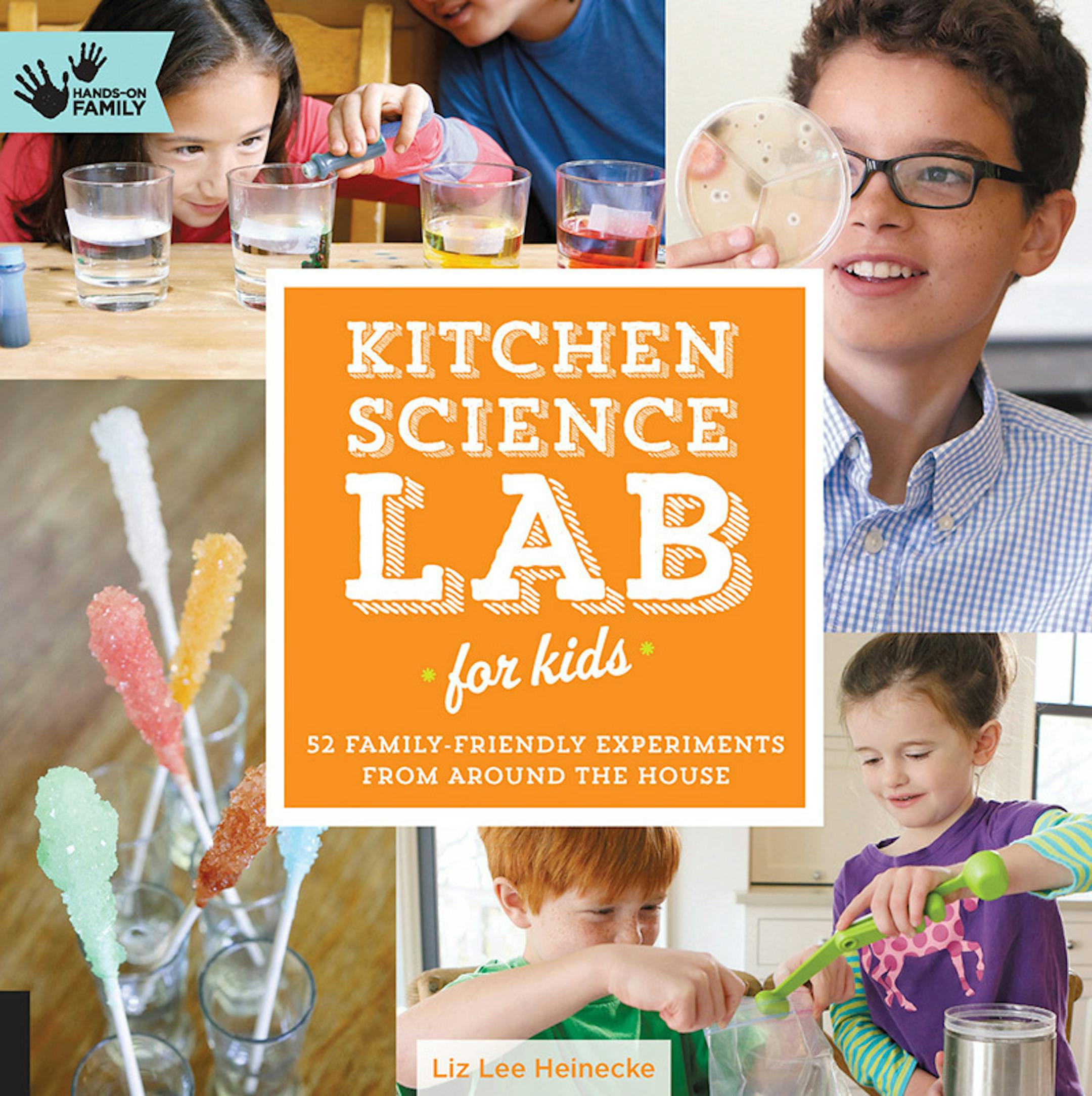
This is one of 52 experiments from Heinecke's first book, "Kitchen Science Lab for Kids" (Quarry Books, 144 pages, $24.99), recently published with 52 family-friendly experiments that make use of supplies readily found around the house. Heinecke takes kids — and their parents — through the step-by-step process of scientific method, with easy-to-follow instructions and photos.
The Minneapolis scientist and mother of three (ages 8, 12 and 14) shifted her attention to the kitchen lab once her children were born. She writes about their experiments — and offers videos, as well — at her website, www.KitchenPantryScientist.com. You can also find the experiments on her iPhone app called Kidscience.
Experiments in the book include: tie-dye milk, a paper bag volcano, marshmallow catapults, pizza box solar oven, red cabbage litmus paper, cornstarch goo and yeast balloons.
Another experiment we're anxious to try, though not until spring: standing on a carton of raw eggs, which shows the strength of eggshells. (The arched shape of eggshells makes them much stronger than they look, though the book notes, "The eggs probably won't break.") To do this, make sure no eggs in the carton (or two — since you have two feet) are cracked, and turn the eggs so they all point in the same direction (either side up). Set the cartons on a flat surface, such as a driveway and, without shoes or socks, carefully step onto the eggs with your entire foot, making sure you keep your feet flat. What better way to use a dozen or more eggs?
Q: Your message seems to be that there's an element of science in everything.