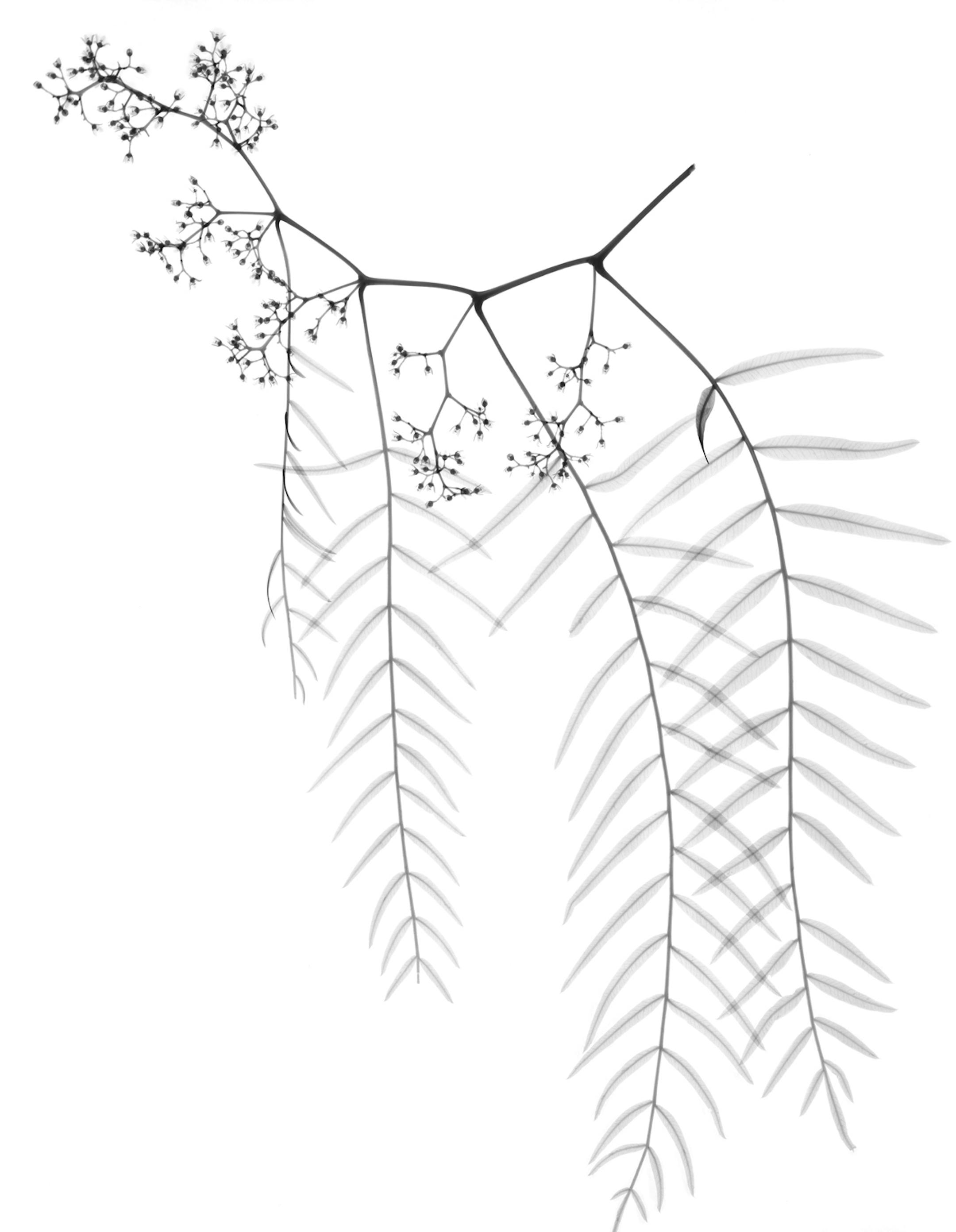
X-Ray Images from Nature
With X-ray technology, doctors can see through the body and spot broken bones, strange growths or malignant tumors that require treatment to save lives. But the same technology can be used to reveal the beautiful, and otherwise invisible, structure of seashells, leaves, seed pods and blossoms of plants as common as lilies, roses and grass.
Trained at the Mayo Clinic as a radiologist, André Bruwer applied his skills to about 20 such garden-variety plants in a poetic show he has called Skiagraphics. "Skia" means "shadow," and "graphic" is "drawing," so Bruwer is literally drawing with the shadows created by X-rays.
Bruwer has produced translucent images of California poppies, Canterbury bells, dill, freesia, magnolia grandiflora, ginkgo leaves, bird of paradise, sweet peas, datura, saguaro thorn clusters and various kinds of lilies, including snake's head, golden spider, stargazer and water lilies.
(10 a.m.-5 p.m. Tue.-Wed. & Fri.-Sat., 10 a.m.-8 p.m. Thu. through June 6. Bakken Museum, 3537 Zenith Av. S., Mpls. 612-926-3878, www.thebakken.org.)
Mary Abbe