
New Age religion Eckankar makes its home in Chanhassen

The international New Age faith has quietly made its headquarters in Chanhassen for 36 years.

June 25, 2016 at 3:38PM
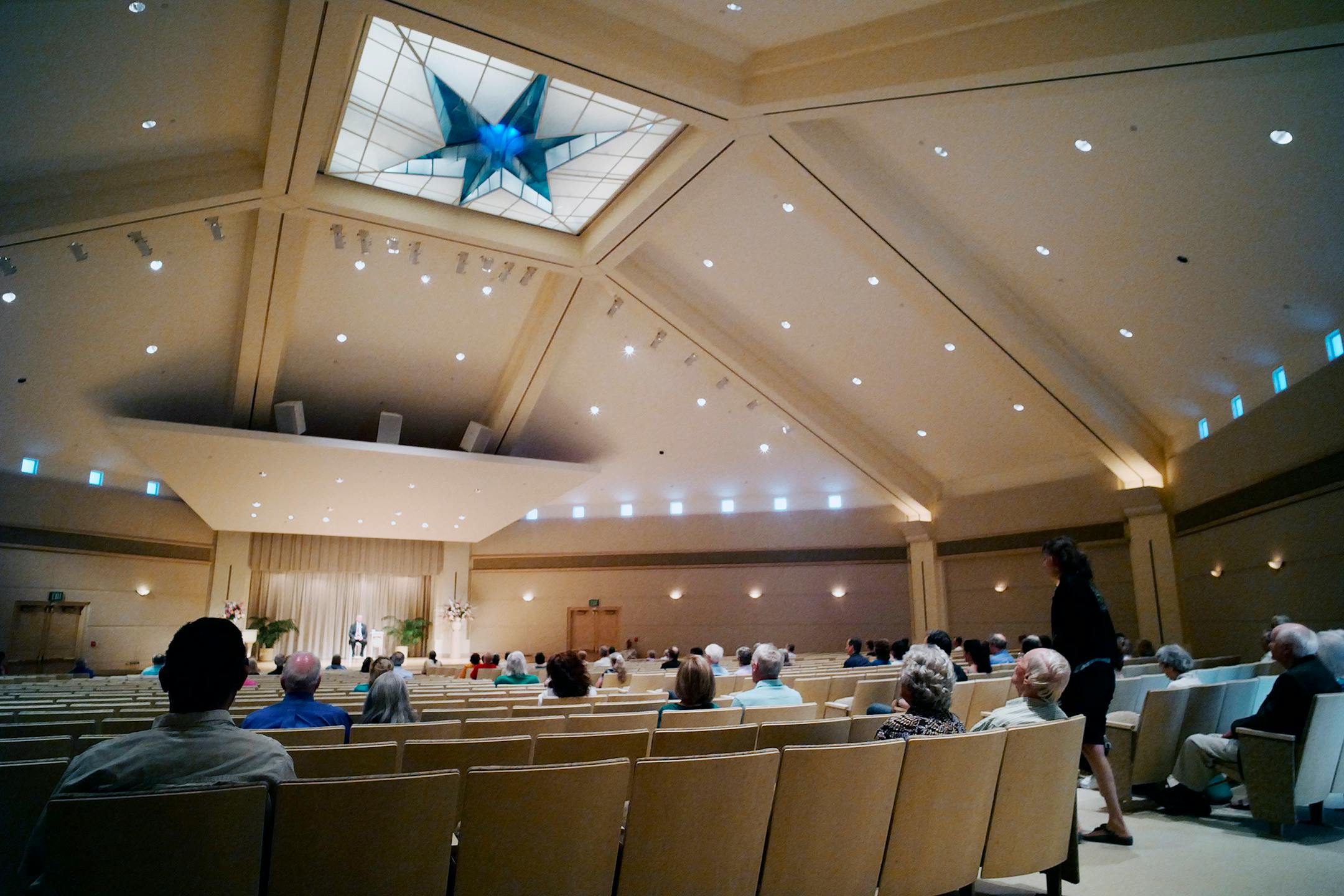
Members remained in their seat for meditation to chant the sacred sound "Hu" in Chanhassen. The blue star is a powerful symbol that appears in dreams for Eckists.
Members remained in their seat for meditation to chant the sacred sound "Hu" in Chanhassen. The blue star is a powerful symbol that appears in dreams for Eckists. (Colleen Kelly — Star Tribune/The Minnesota Star Tribune)

The single-syllable song is quiet, almost an ambient hum. But Eckists believe it's a powerful love song to God.

The singing of Hu — pronounced "hue" — is a central practice of Eckankar, a New Age religious movement that claims tens of thousands of adherents in 100 countries and recently marked its 50th anniversary.

For more than three decades, the unlikely international center for the little-known faith has been Chanhassen.

The religion's tenets — soul travel, reincarnation and the significance of dreams — might seem odd or otherworldly. But the campus has quietly become part of Chanhassen's fabric: hosting Hu singing events, opening its walking trails to local residents, welcoming followers during its international conferences twice a year.

Things weren't always so serene. When Eckankar's leaders were buying land and planning to build their temple in the 1980s, some Chanhassen residents balked at the new neighbor.

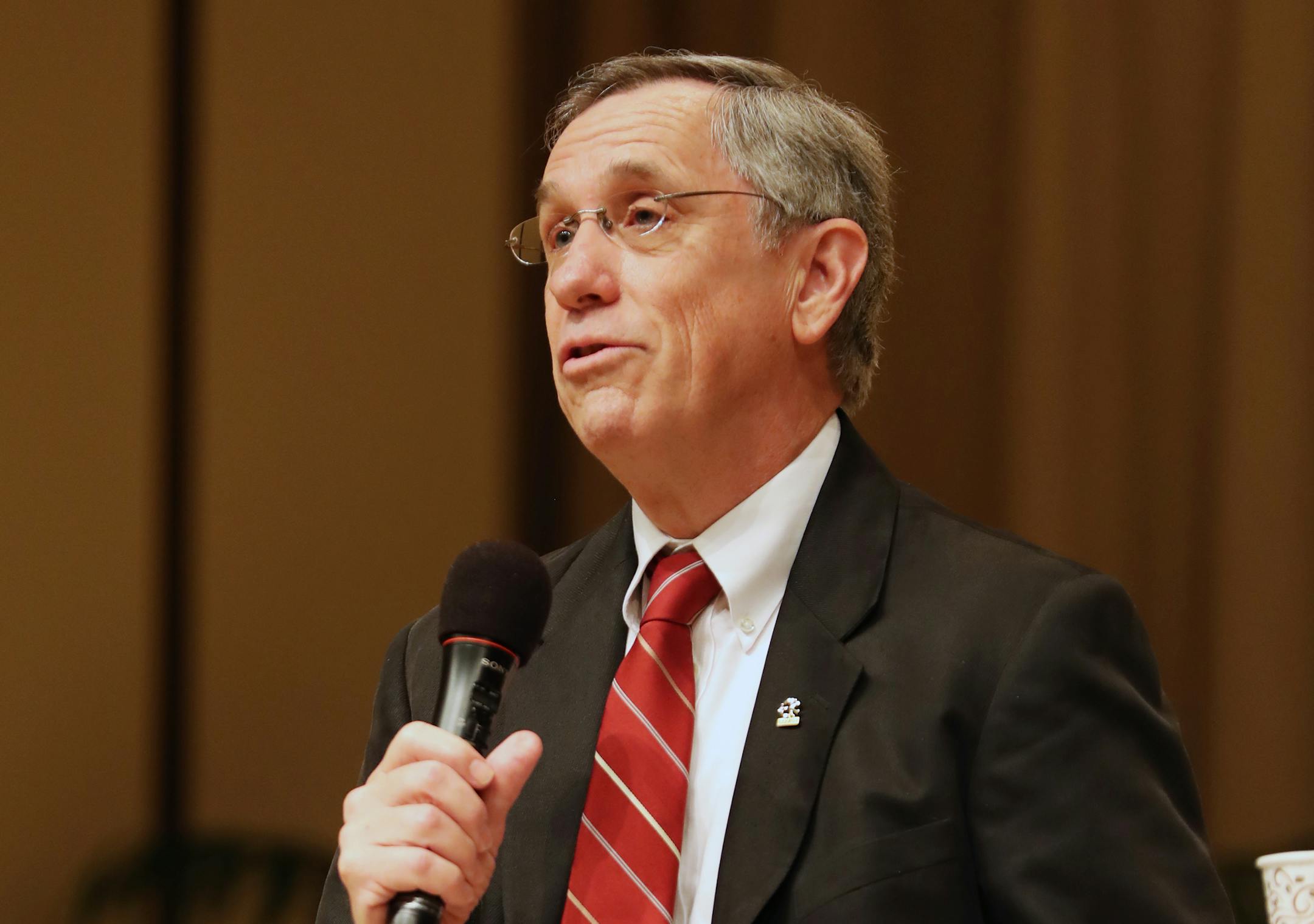
"There's always some trepidation whenever you have a religion outside of the traditional Christian religions we have in Minnesota," said Todd Gerhardt, Chanhassen's city manager. "People were scared of the unknown."

With 173 acres, Eckankar is the fourth-largest landowner in Chanhassen, behind the Minnesota Arboretum, the late musician Prince and Bluff Creek Golf Course, Gerhardt said.

Now, he added, "We have no issues with Eckankar at all. People have accepted it, and everyone kind of goes about their day-to-day life out here."
Eckankar, which means "co-worker with God," has links to other religions, such as Hinduism and Buddhism. Members believe Eckankar's teachings have ancient origins, though they've only recently been written down.

Eckankar is all about personal spiritual experiences, said Benny Callaghan, Eckankar's spokesman. Some members use it to supplement other religious beliefs, while others spend years earnestly studying its teachings.

"We don't have a conversion philosophy," he said, and the religion doesn't track how many members it has.

Many people come to Eckankar "because they want a burning question answered," Callaghan said.

After having an out-of-body experience in high school, Mark Richardson was itching to know what happens after death. Reading about other people's experiences was unsatisfactory: "I wanted to have them myself," he said.

Always afraid of swimming, he once dreamed he was a young boy in the late 19th century. A train he was riding careened off the tracks and into an icy pond, the same pond where he'd skated as a kid. He realized he'd been that boy in another lifetime, and soon his dread of water was gone, he said.

Insights related to dreams and past lives are common for Eckankar members, who believe life on earth is a training ground and that humans will be reincarnated repeatedly until they master the lessons they need to learn.

Believers admit there are elements that may seem foreign, like the concept of a Living ECK Master, a prophet named Harold Klemp who guides believers and writes books and lessons about Eckankar. Klemp, who lives in California, is not worshiped.

A quick internet search also turns up speculation that Eckankar is a cult.

David Lane, a philosophy professor at Mt. San Antonio College in the Los Angeles area and author of several Eckankar books, said Eckankar isn't dangerous or cultlike but "should be more honest about its origins." Lane alleges that paragraphs in several books by Paul Twitchell, Eckankar's founder, were copied from other religious texts.

Member Kristy Walker has heard the plagiarism accusations before and isn't troubled by them. It wouldn't really matter because, she said, "I've had so many experiences on my own."

Abbie Burgess was raised in the faith and visited the temple for Sunday school-type classes as a kid. It gives her "a feeling of harmony," she said.

"I guess I want to stress the normalcy of it," Burgess said.

Erin Adler • 612-673-1781

Patrick Carroll is part of the meditation service where members chant the sacred sound "Hu."
Patrick Carroll is part of the meditation service where members chant the sacred sound "Hu." (Colleen Kelly — Star Tribune/The Minnesota Star Tribune)
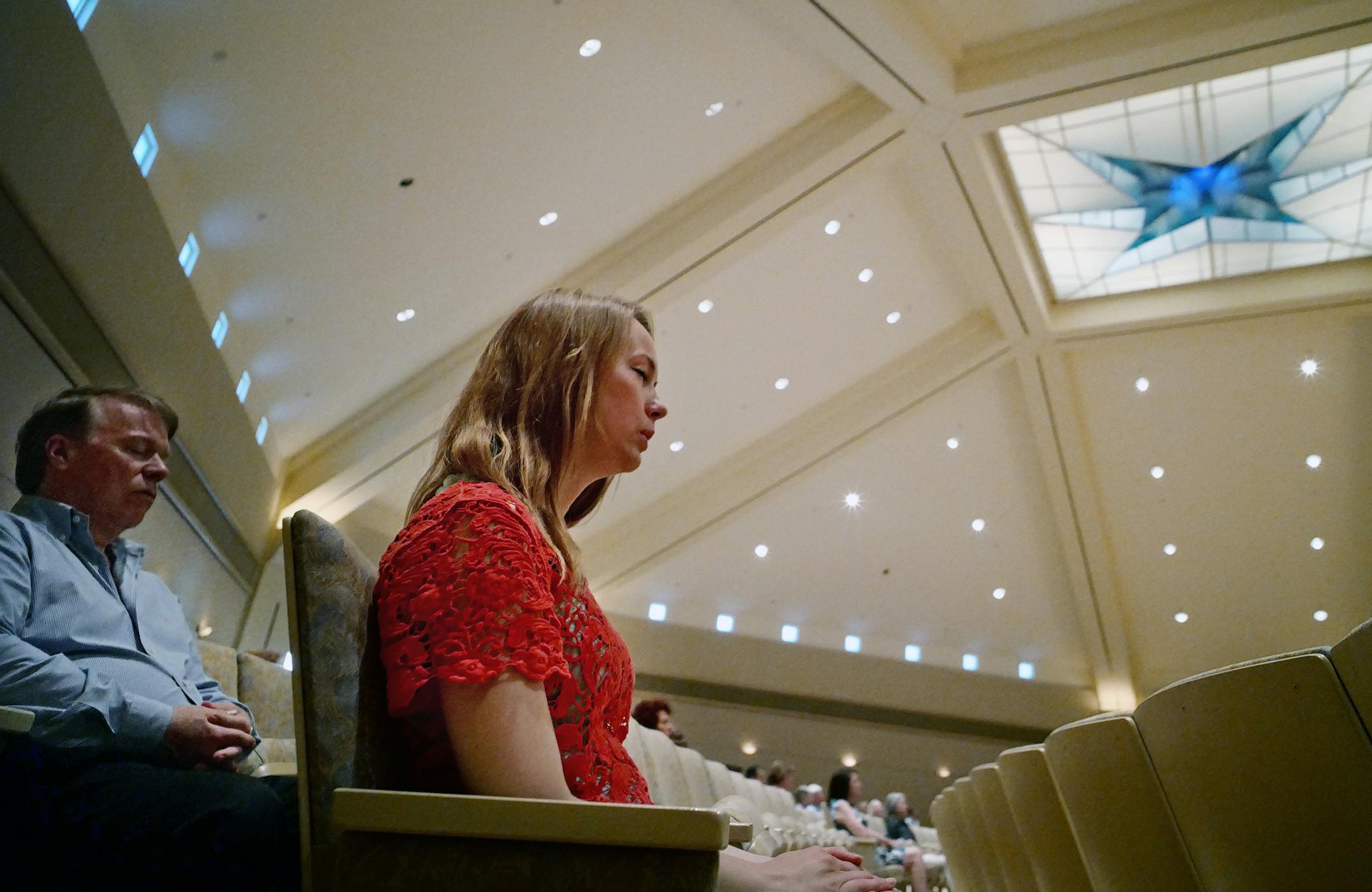
Members Mark Richardson, left and Abbie Burgess, right seated herself for the meditation to chant the sacred sound "Hu."[For 25 years, a little-known religious sect with a worldwide following has made its home in Chanhassen. Called Eckanka, Eckists believe in reincarnation, soul travel and the power of dreams. Richard Tsong-Taatarii/rtsong-taatarii@startribune.com[For 25 years, a little-known religious sect with a worldwide following has made its home in Chanhassen. Called Eckanka, Eckists belie
Eckankar members, known as Eckists, Mark Richardson and Abbie Burgess attended a meditation where they chanted the sacred sound “Hu,” which is a central part of the 50-year-old religion, which has adherents in 100 countries. (The Minnesota Star Tribune)
about the writer

about the writer

Erin Adler

Reporter

Erin Adler is a suburban reporter covering Dakota and Scott counties for the Minnesota Star Tribune, working breaking news shifts on Sundays. She previously spent three years covering K-12 education in the south metro and five months covering Carver County.

See Moreicon