

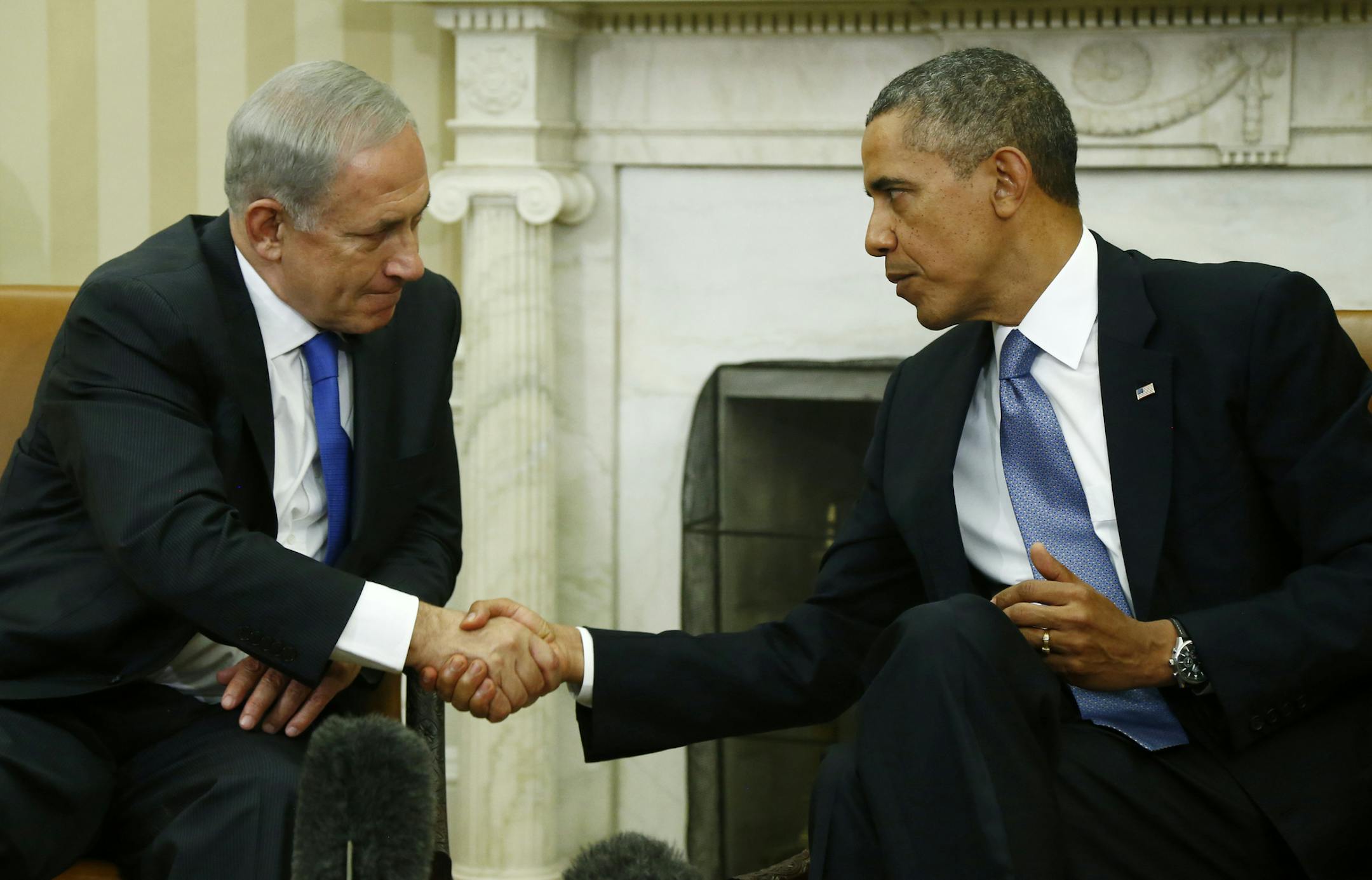
WASHINGTON – Despite soothing assurances from Iran's new leaders, Israeli Prime Minister Benjamin Netanyahu implored President Obama on Monday to keep punishing sanctions in place against Tehran — and even tighten them if the Islamic republic advances its nuclear programs while negotiating with the United States.
Netanyahu nevertheless signaled he would not block Obama's efforts to seek a diplomatic resolution to the nuclear impasse, even as he expressed skepticism about the Iranian government
"If diplomacy is to work, those pressures must be kept in place," Netanyahu said of the sanctions during an Oval Office meeting with Obama.
The two men met three days after Obama's historic phone call with Iranian President Hassan Rowhani, which marked the first direct conversation between a U.S. and Iranian leader in more than 30 years. While the election of Rowhani, a more moderate-sounding cleric, has been viewed optimistically by the Obama administration, Netanyahu has dismissed the new Iranian leader's outreach as a "smiley campaign" aimed at buying Tehran more time to pursue a bomb.
Obama, who has long called for a negotiated solution to the Iranian nuclear dispute, said it was important to test the possible diplomatic opening. But he insisted that U.S. officials were "clear-eyed" as they enter talks with the Iranians.
"As I've said before and I will repeat, that we take no options off the table, including military options," Obama said.
The president did not offer Netanyahu any public assurances about the future of the American sanctions, which have resulted in skyrocketing inflation and unemployment in Iran. But he credited the penalties with pushing Rowhani to seek a nuclear deal in exchange for economic relief.
The sudden prospect of a thaw between the United States and Iran has threatened to further strain the often-tense ties between Obama and Netanyahu. While the relationship has improved somewhat in recent months, Netanyahu has long been skeptical of Obama's preference for negotiating with Iran and has repeatedly pressed his U.S. counterpart to toughen his threats of military action should Tehran get close to producing a nuclear weapon.


