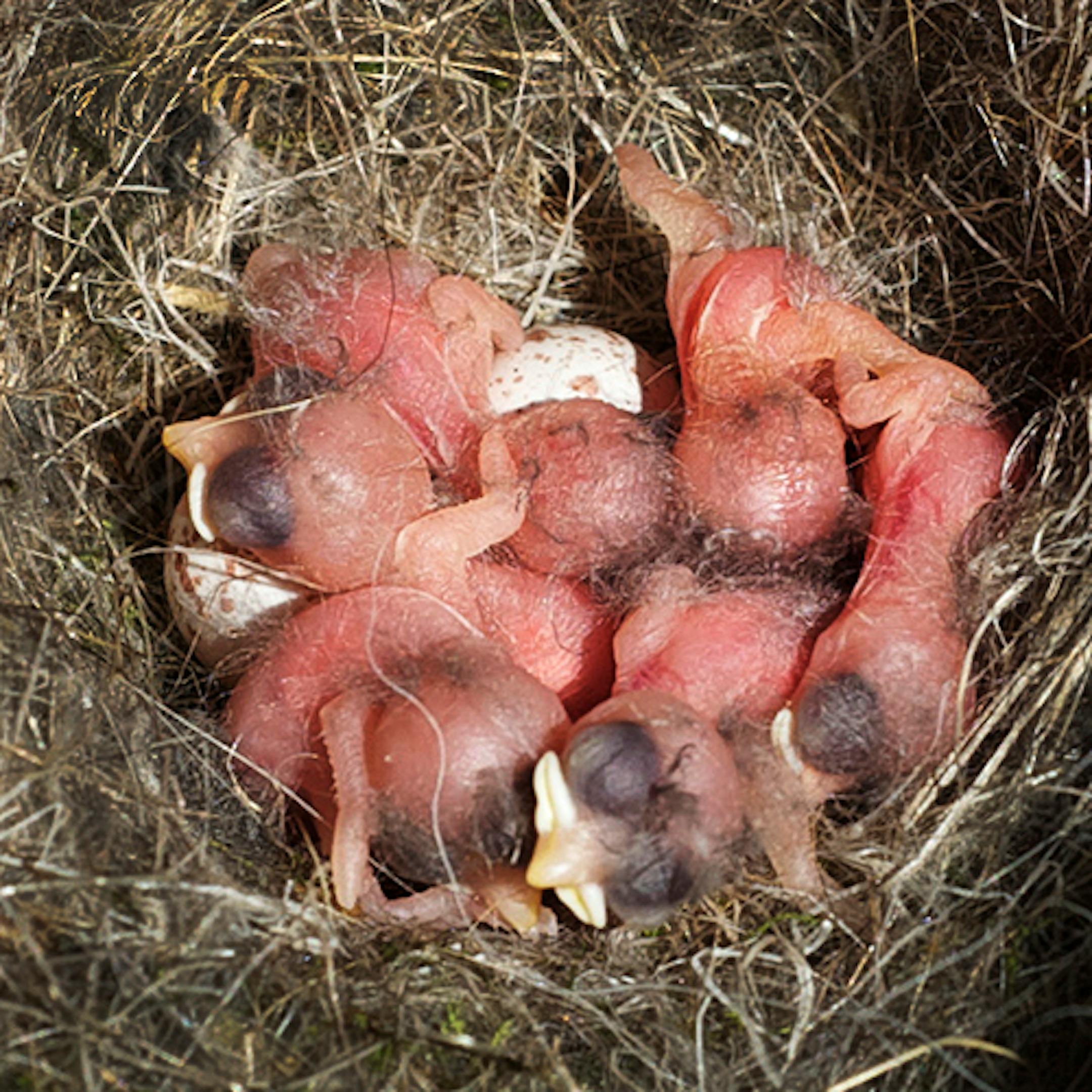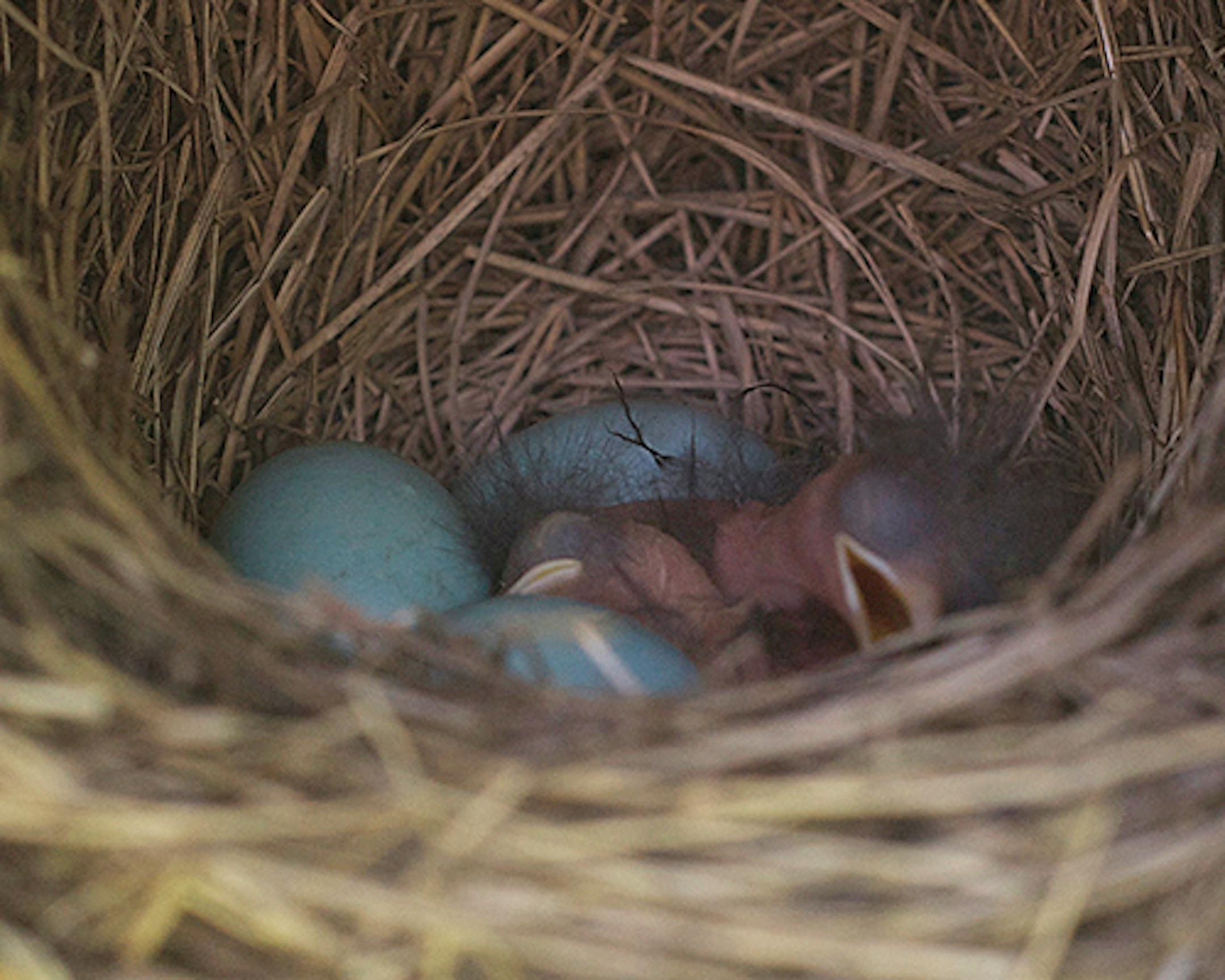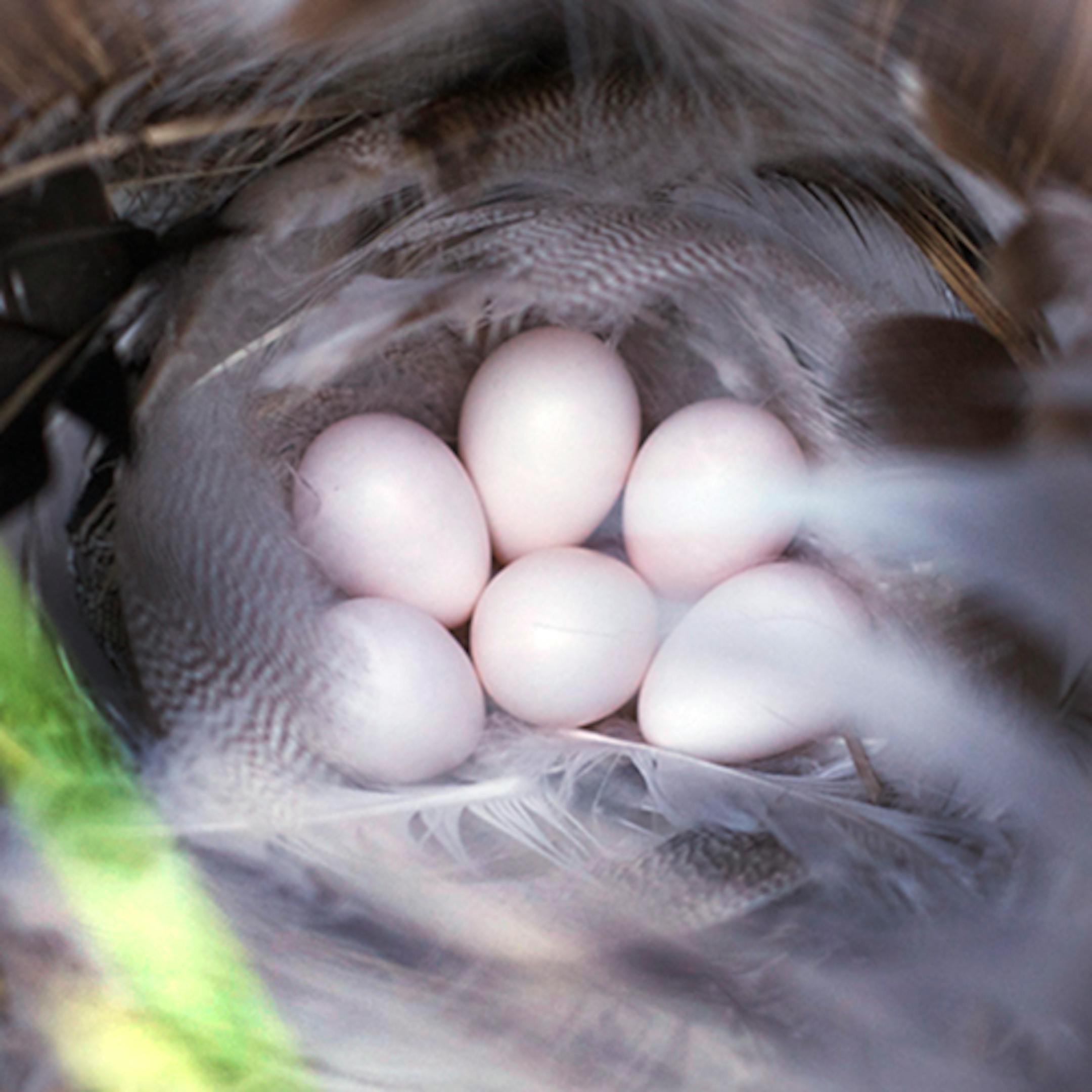
Of the 44 bird nest boxes I tend at a golf course near our home, 36 are occupied as of May 31. There are 15 bluebird nests, 20 Tree Swallows nests, and one chickadee nest. Below are photos from those nests. The first shows Black-capped Chickadee hatchlings. I count six hatched birds and three eggs that had yet to hatch. I believe the chicks hatched just hours before my visit. The round parts are heads. The dark bulging circular parts are unopened eyes. The bird at bottom center show us its beak, the lighter portion defining the gaping mouth the bird will present to a parent delivering food. The eggs are about the size of a dime. The nest is within a four-inch section of PVC pipe. The second photo shows two newly hatched Eastern Bluebirds and three unhatched eggs. Those eggs, measured end to end, are about three-quarters of an inch long. The chick images are blurry, but you can see the bulging round eye and the wide mouth on the bird at right, and a portion of the mouth of the second bird, center. The third photo shows six Tree Swallow eggs, nestled in a nest of grass and feathers. Tree Swallows always include feathers in their nests. The feathers are believed to help in temperature control. The swallow nest also is in a box made from four-inch PVC pipe. The blue bluebird eggs and the white swallow eggs have no markings. Both species are cavity nesters, making egg camouflage unnecessary. The chickadee eggs are spotted even though chickadees use cavities for their nests. That must mean that some chickadee nests are or historically have been exposed to predator eyes.