

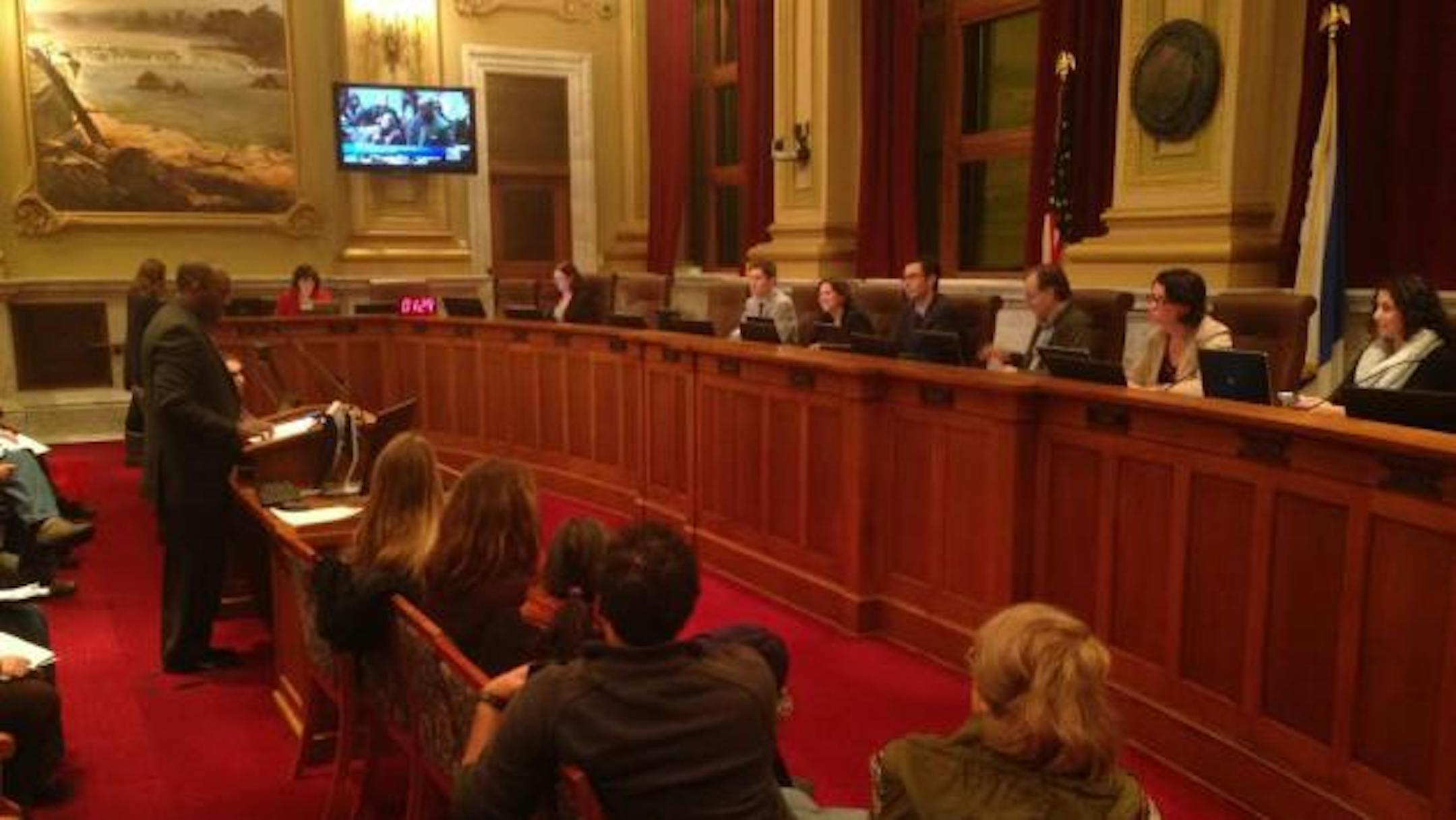
Above: Neighborhood and Community Engagement Commission Chair Ishmael Israel speaking to the council's health, environment and community engagement committee.
Neighborhood groups said Monday they deserve a fair share of the windfall that is projected in a fund that fuels their operations.
Speaking to a council panel, about 20 advocates for neighborhood groups said the mayor's intention to redirect the funds outside the city's neighborhood department deserves more vetting. The excess funds are the first major test of the city's relationship with its neighborhoods since their funding was brought more under city control in 2011.
"It would be very ironic for this policy shift to happen to the community engagement money without any community engagement," said Jenny Fortman, president of the Sheridan neighborhood organization.
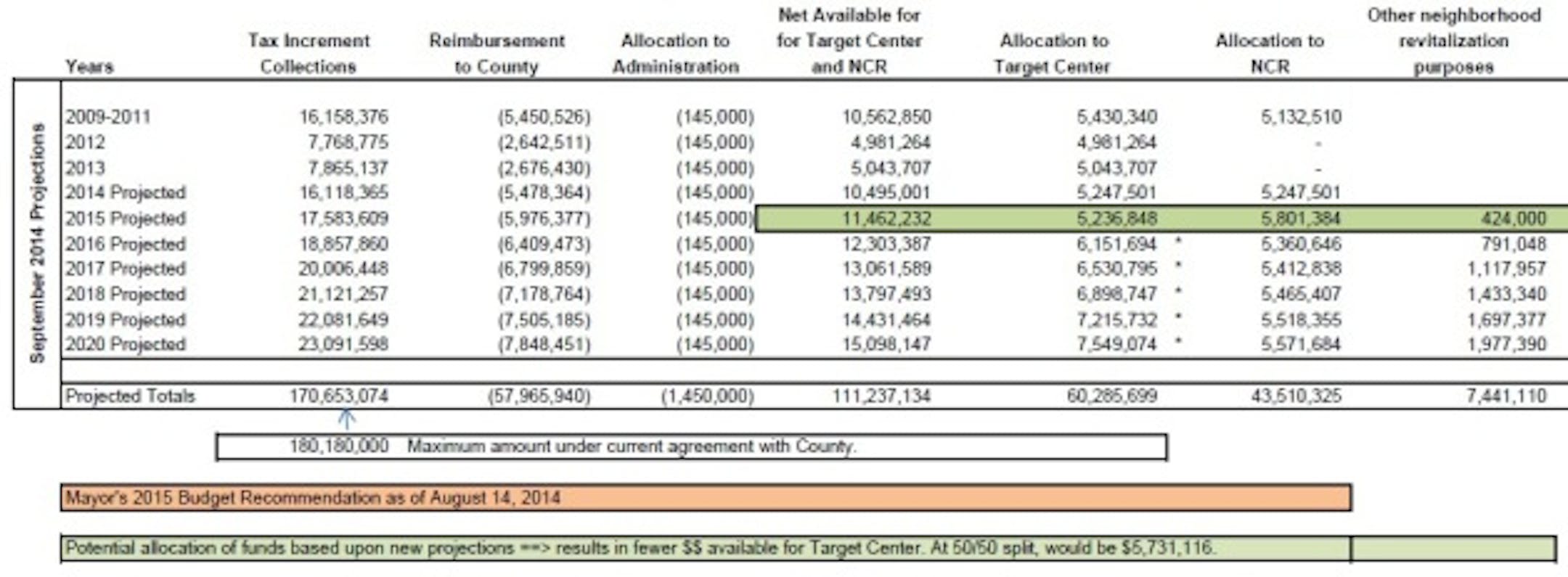
The issue arises out of city projections that a number of special taxing districts will produce at least $14.8 million more over the next five years than originally anticipated in 2011. The districts, established before 1979, include areas like the North Loop and downtown east, which are booming.
Traditionally that money has been earmarked just for the city's 70 neighborhood groups, the city's neighborhood department and paying Target Center debt. But despite the projected growth, neighborhood groups would see just an inflationary increase to their funding in 2015.
The mayor has instead proposed spending $424,000 of next year's excess on closing the city's port and hiring two multilingual communications specialists (see green area below). That annual excess is only expected to grow between now and 2020, when it might near $2 million.
"Allocating these funds to other purposes represents a significant change in policy, one that we believe as a commission deserves a more robust inclusive public process," said Ishmael Israel, chair of the city's neighborhood community engagement commission, which advises the city on neighborhood matters.


