

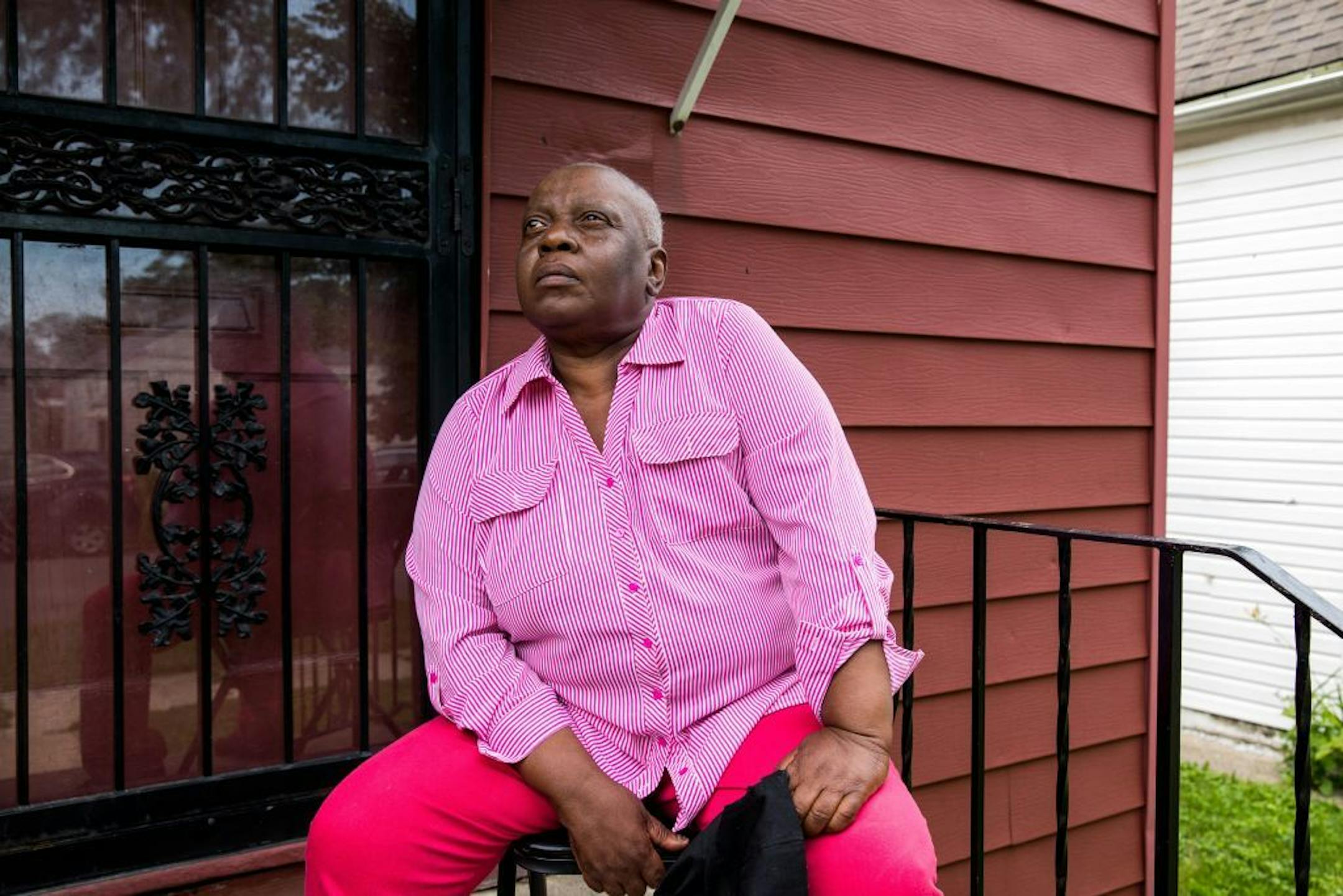
In 2008, South Shore resident Cheryl King found a lump in her right breast.
When she told a health professional at a South Side Chicago facility, he dismissed it, saying many black women have lumps in their breasts. In the three months it took to get appointments and tests with other professionals, it had grown into a stage 2 tumor.
"I feel like if I lived on the North Side or closer to Northwestern or Rush, and I would have gone in for a diagnosis, I think they would have taken my concerns more seriously," King said.
King, 59, is not alone. Racial disparities in breast cancer diagnosis and survival rates may have more to do with neighborhood than race, said a new University of Illinois at Urbana-Champaign analysis.
The study looked at patients ages 19 to 91 from breast cancer registries in six states. More than 93,600 black women living in big cities from 1980 to 2010 were included in the data set, which looked at neighborhood racial composition and segregation, poverty rates and access to mammography.
The study found that residential segregation, defined as living in a neighborhood with a predominantly black population, significantly increased black women's rates of late-stage diagnosis and doubled their odds of dying from breast cancer. White women living in predominantly black neighborhoods had comparable mortality rates.
Dr. Zeynep Madak-Erdogan, study co-author and assistant professor of nutrition at the University of Illinois at Urbana-Champaign, agrees. "Residential segregation, coupled with its high correlation to low-socioeconomic status, is keeping certain communities from having access to essential resources which are pertinent for optimal health," she said.
But not all cities are created equal. Dr. Anne Marie Murphy, executive director of the Metropolitan Chicago Breast Cancer Task Force, points to New York City, which has relatively low breast cancer disparities and lower death rates for black women with breast cancer.


