

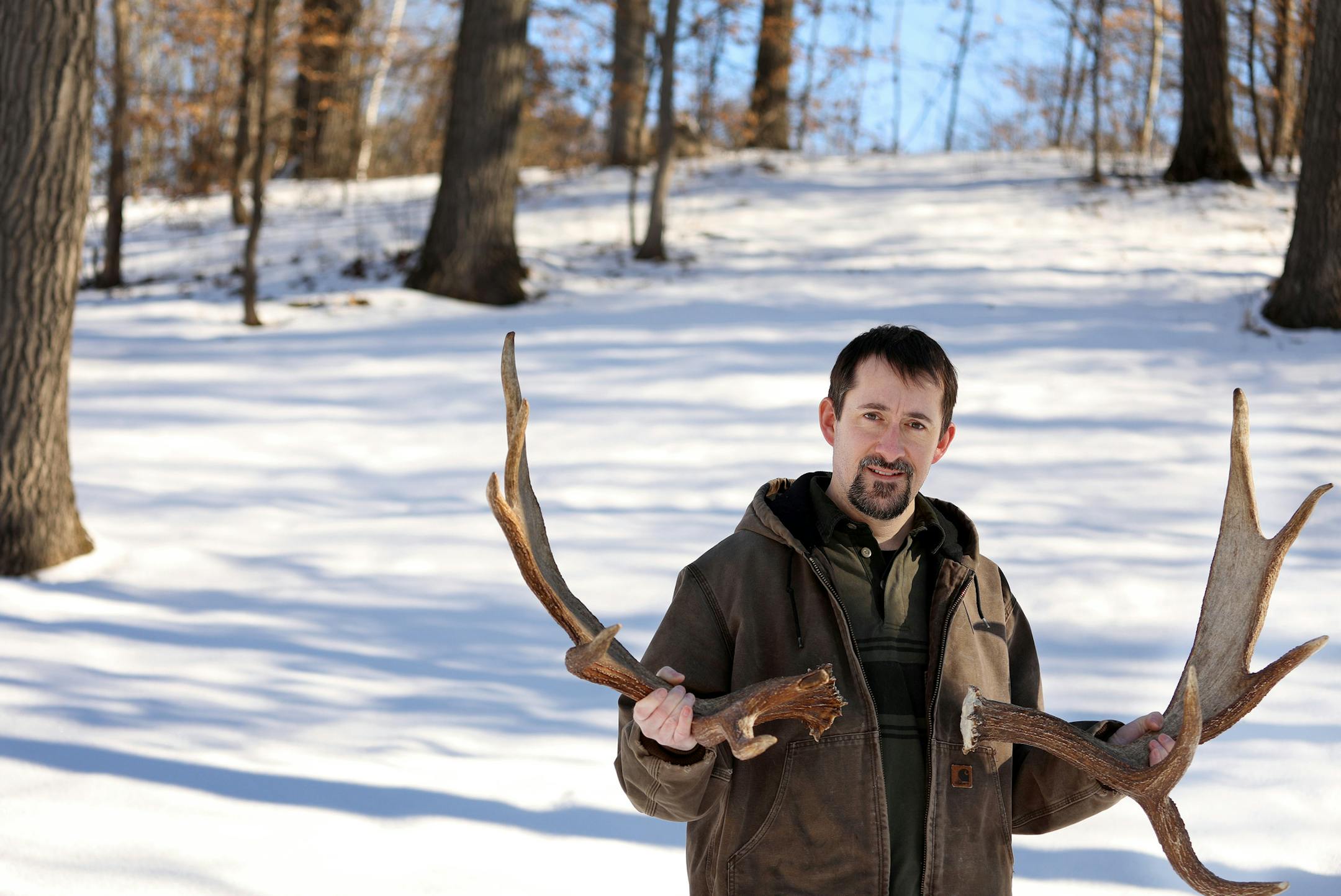
Sam Beamond makes no bones that he wasn't a hunter when he moved 20 years ago to the United States. He arrived here as a teenager, having spent his formative years in England, where people generally are "squeamish" about hunting, he said. Beamond was no different.
And yet talking today to Beamond, 37, it's hard to believe there was a time he wasn't a sportsman. Even so, he had something of a soft entry into hunting.
"In 2005 or so, I was chatting with a guy at work," said Beamond, who lives in Forest Lake and works for Polaris in online advertising. "He had mentioned that he got home from work and there was a buck standing in his driveway. It just stared him down as he pulled in. Then it shook its head and both antlers fell off. Then he proceeded to talk a little bit about finding shed antlers here and there. I was like, 'Is that actually a thing?' A couple of Google searches later and I find out there is this whole kind of underground scene — people are doing it all over."
It wasn't long before Beamond was hooked on shed hunting, which at once is as simple and as complex as searching the fields and woods — generally during the winter and spring — for the antlers that male animals such as deer and moose cast off each year. Save for rules that prohibit physically knocking off antlers from animals, and the need to obtain permission to enter private land, shed antler hunters face little in the way of regulation. Some people hunt sheds as part of their after-season deer scouting. Others want to learn more about animals that survived the hunting season. And still others are basically bone collectors, displaying their trophies in their homes or having them crafted into knife handles or other items.
"It's a great way to get some outdoor exercise in an otherwise tough time of the year to do it," said Mike Kurre, mentoring program coordinator for the Minnesota Department of Natural Resources. "It's really a good way to get kids and families — and dogs — involved."
It's difficult to know exactly how many people search for shed antlers. Shed hunters don't need permits and they don't have to report what they find. Anecdotal reports suggest increased interest in the sport; few and far between are the places shed hunters can go where, for example, there's not already a boot print in the snow. And big-game record books now generally include a category for shed antlers.
Tom Dokken has seen the growth firsthand. The owner of Dokken's Oak Ridge Kennels in Northfield, he's also president of the North American Shed Hunting Dog Association, which formed in 2011 and caters to people who use their dogs as part of their shed antler pursuit.
"It's another thing you can do with your dog," said Dokken, who noted it's not just for sporting breeds. "What are you going to do with your dog in February, March and April? There isn't much going on. It's one more thing to do. It's really a family deal, and you can do it close to home. Suburbia has probably as many sheds to find as [areas in outstate Minnesota]."


