

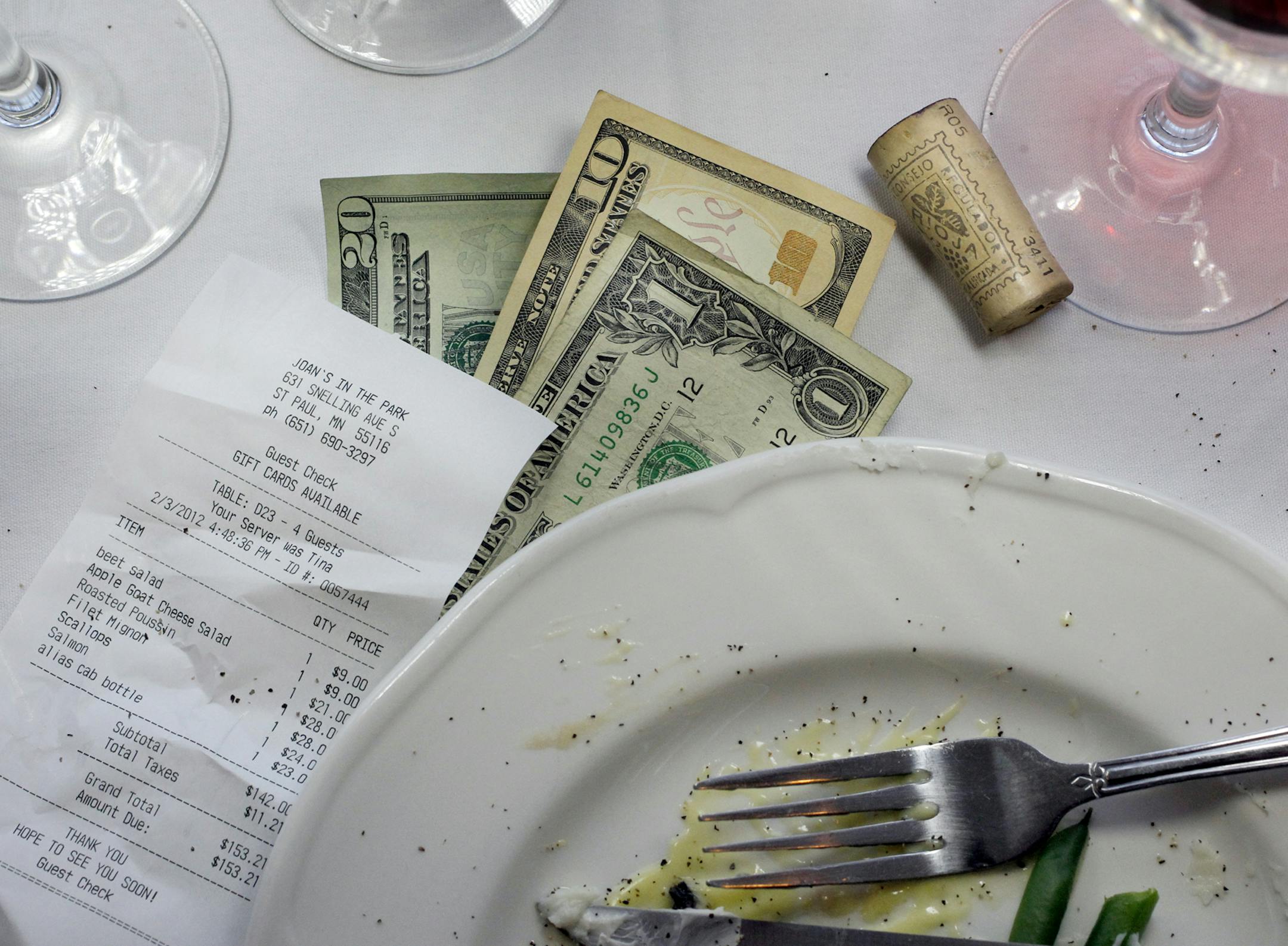
Amy Dickinson, the voice of reason behind the syndicated advice column "Ask Amy," has a practical view on restaurant tipping.
"Some people think of tips as a reward for providing good service, but I think about it as a way of compensating people for just doing their job," she said. "There's a difference."
Angelyn Davis has a different perspective. Davis runs Etiquette, Et Cetera, a Twin Cities consulting firm that offers, among other services, classes in the social graces at the St. Paul Hotel.
"It's a pleasure to reinforce good behavior and reward service people who go out of their way to show their customers a good time," she said. "Don't we all respond to behavior that is rewarded?"
I know I do, which is why this diner falls somewhere in the middle of the reasons-why-we-tip continuum, and view tipping as both a necessary cost of dining out ("Restaurant owners are passing the responsibility for fair compensation to patrons," is how the authors of the 2011 edition of "Emily Post's Etiquette: Manners for a New World" bluntly put it) and an opportunity to express gratitude for a job well done.
My tipping starting point is 20 percent. That probably places me in the minority, which is why I turned to the sage counsel of Laura Barclay, president and founder of the four-year-old Minneapolis Civility and Etiquette Centre in Plymouth.
"My particular range is 15 to 20 percent," she said. "If the server goes above and beyond, that's 20 percent and sometimes more."
That seems reasonable. But what if the service, well, stinks?


